The Liveability of Melbourne – School Geography Excursion

TAKE a voyage through the iconic lanes, streets and buildings of Melbourne, a city voted seven times the most liveable city in the world.
EXPLORE the environmental, social, cultural, economic, identity and infrastructure factors that make Melbourne liveable. This excursion supports studies of Geography and Liveability. It includes Changing nations, the changing human geography of countries, population distribution, and urbanisation in Melbourne.
HOW does ‘walkability’ assist in making Melbourne liveable?
HOW do we assess places for their liveability and sustainability? 
WHAT are the challenges and threats to Melbourne’s liveability?
LIVEABILITY
 is influenced by connections between people and communities. We provide different Liveability identities to each student during the tour to profile people who have been influential in  Melbourne’s liveability. See: Liveability Identities

ROUTE:  Our route may vary depending on construction, time, weather etc. The two-hour school tours usually commence and finish at Federation and usually travel via the Atrium, Birramung Marr, Hosier, Flinders Lane,  Degraves, Collins, Lt Collins, Bourke, Swanston exploring buildings, lanes and the creative spaces of the city centre including aspects such as infrastructure, environmental quality, safety and stability, health care and education, climate, cultural activities, access to shops and services, and recreational facilities.

SEE: BOOKINGS AND PRICES

SEE: Our Other SCHOOL EXCURSIONS

MELBOURNE has witnessed a spectacular regeneration since 1994, having been ranked seven times the most liveable city in the world. Its city centre population has grown from 400 to  181,000 persons. In 2008 it became one of the first United Nations Cities of Literature. In 2016 it joined with 100 Resilient Cities to protect its liveability.  How did this amazing transformation occur in little more than two decades. Can we use this understanding to compare and improve other localities? To better understand similarities, differences and characteristics and how perceptions influence protection?

I write with much appreciation to thank you for the ten wonderfully engaging and professional
Geography Liveability tours you provided for our students.  I have had only the most positive of feedback from staff who seemed to be just as engaged in the tours as our students!  Also, I thank you for the support you provided prior to the tours. 
Thank you once again.
Brentwood Secondary College

Thank you so much for the fantastic liveability/historic walking tour of Melbourne that you provided our five groups of Year 5 students. All of our students were thoroughly engaged throughout the walk ( so much so that not one of the 104 of them complained about walking !!!) and were able to make some real connections between sites, events and people in history ! Their understanding of the changing diversity of Melbourne was enriched by the experience. I would highly recommend your tours to other schools. Feedback from each class was that each of the guides was excellent and we loved the fact that not all groups visited the same thing so they’ve had lots to talk about and compare since! Thanks again for an outstanding educational experience!
Mernda Primary School


Melbourne Design and Technology School Tour

Our Design and Technology School tours (two hours) explore the design and technology processes of both historical and modern buildings around Melbourne. On this tour, we stop regularly to discuss issues with students such as design, technologies, materials and heritage as well as entering buildings. We engage in activities that explore Indigenous design, heritage images, street art, and the acknowledgement of country. Students are each given roles to play as identities important to the story of Melbourne.
Some of the buildings that we view or visit on our tour to discuss their design issues can include, depending on time:

 – Flinders Station 1910: French Empire design, first steam train in Australia, gateway to city.

– Federation Square piazza 2001: abstract modern, use of stone materials, scalene triangle designs and Indigenous design.

– Federation Atrium 2001: designing sustainable biomimicry, thermal labyrinth to reduce fossil fuels.

-Eureka Tower 1989 and Australia 108: Skyscrapers in Melbourne, designs in reinforced concrete, Australian Flag design.

– Birramung Marr Park: redesigning roads to parks.  Melbourne tree strategy, uses art and sculpture in design.

–  Artplay building 2001. Retrofitting brick buildings into modern design purposes. Indigenous design and technologies.

– Jolimont Railway Yards: designing cities of the future in the sky.

– Hosier Lane: Warehouse design, redesigning lanes in Melbourne, agglomeration theory, bluestone as a unique Melbourne material, use of buildings as street art canvases.

– St Paul’s Cathedral 1857: Gothic revival design, buttresses, sandstone.

– Swanston Street: Metro tunnel designs, redesigning transport in Melbourne to promote walking and sustainability, biophilia, and Smart technologies.

– Nicholas Building 1926: Art deco, tiles as design material.

– 271 Collins 1872: Classical design, preserving heritage.

– Block Arcade 1891: Mannerist design

– Royal Arcade 1870: Enclosed lanes, retail design, the oldest arcade in Australia, automatons.

SEE: BOOKINGS
SEE: Our other SCHOOL TOURS
SEE:  Our other 50 TOURS 

See Prices & Bookings

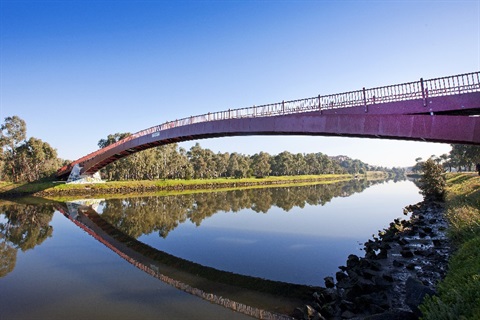
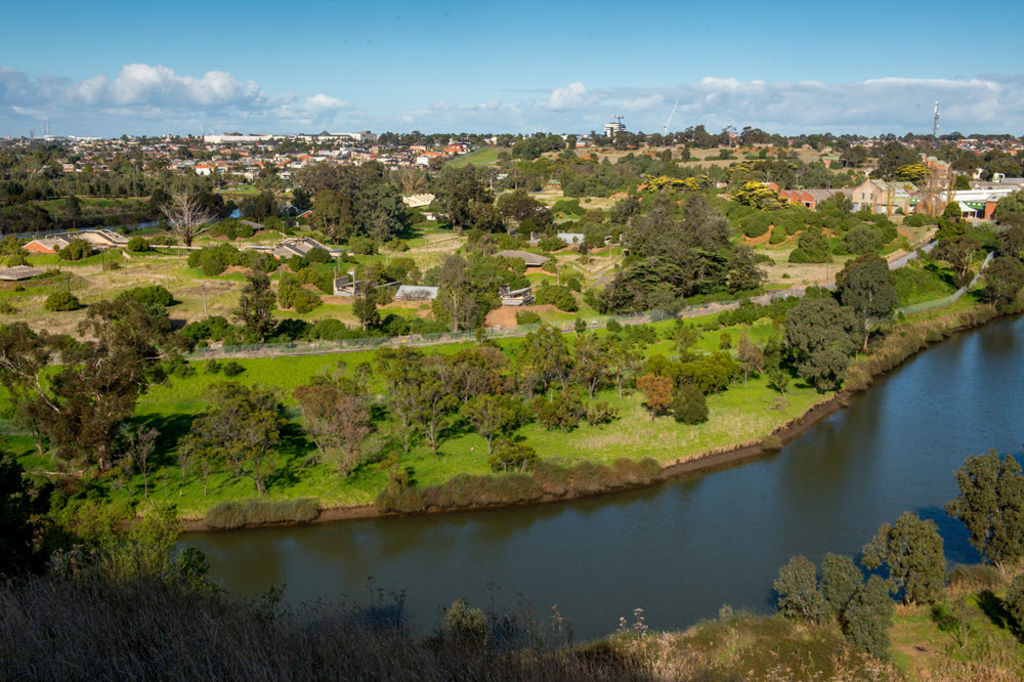
MARIBYRNONG RIVER SCHOOL TOUR

Explore the ecosystems of the mighty Maribyrnong River - Maribyrnong

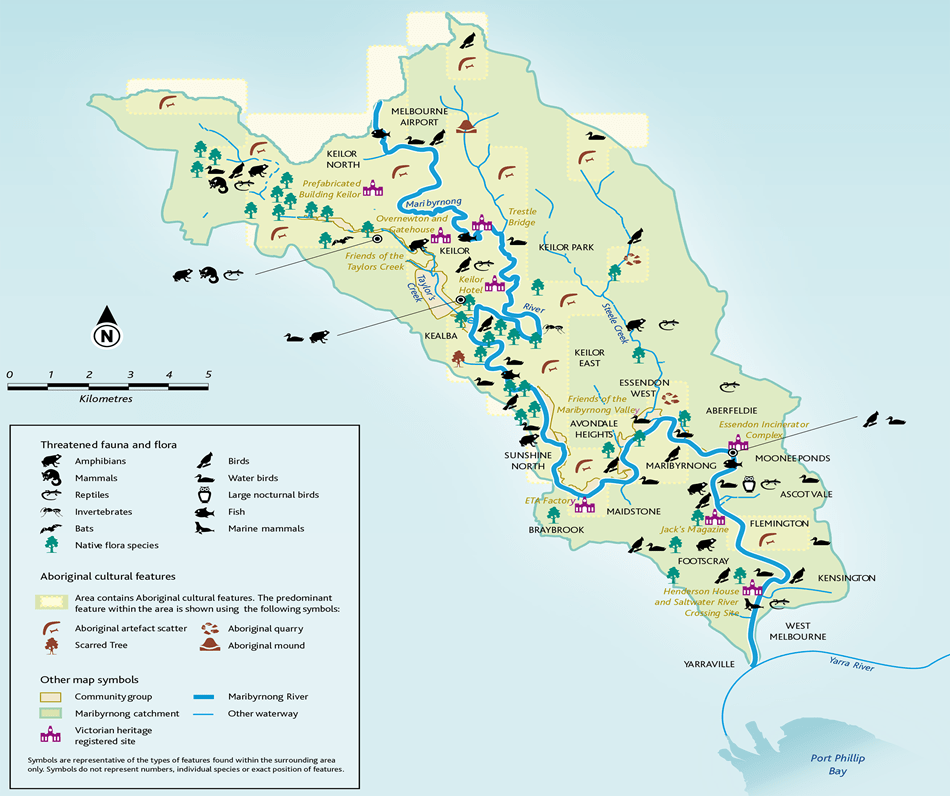
Our walking experience for students explores features of Melbourne’s second major waterway, the Mirring-gnai-birr-nong, home to both old and new living environments. Despite being the second major waterway in Melbourne, many know little about its natural beauty and extraordinary history.

EXPLORE the heritage wharves precinct and natural wetlands in the historic Saltwater River Crossing Site.
LEARN  about its history from geographical beginnings to traditional owners to colonists, bridges, industry, munitions, wharves and the contemporary township of Footscray.
TOURS  are normally 2.5 hours long. School tours are 2 hours.
See pictures

SEE: BOOKINGS
SEE:  Our other SCHOOL TOURS

Bang for buck: Defence selling explosives factory with as much as $500m  expected

See Prices & Bookings

Melbourne Walks Child Safety and Wellbeing Policy

Melbourne Walks Child Safety and Wellbeing Policy

  • Commitment to Child Safety: Melbourne Walks ensures a safe, child-friendly environment for all children and young people.
  • Melbourne walks staff engaged with students are required to have a current Working with Children Check issued by the Victorian Government.
  • Melbourne walks staff engaged with students are required to a First Aid Two certificate
  • Inclusive and Respectful Environment: Melbourne Walks values all children, respects their opinions, and ensures they feel safe and heard.
  • Child Safety Focus: The organization actively identifies and manages risks to students, responding quickly to any safety concerns.
  • Support for Vulnerable Groups: Special attention is given to students with disabilities, Aboriginal students, those from diverse backgrounds, international students, and LGBTIQ+ students.
  • Zero Tolerance for Harmful Behavior: Racism, homophobia, or any harmful behaviour targeting students is not tolerated.
  • Culturally Safe Environment: Melbourne Walks promotes an inclusive, culturally safe environment, especially for Aboriginal students, and involves them in planning and activities.
  • Celebrating Diversity and Equity: The organization supports all students, recognizing their unique strengths and needs, and promotes an environment free from discrimination.
  • Child-Safe Staff: Melbourne Walks ensures that all staff, contractors, and volunteers are thoroughly trained and suitable to work with children.
  • Ongoing Training: Staff receive ongoing training to recognize and respond to child safety concerns, including creating culturally safe environments and managing risks effectively.


Melbourne Walks
melbwalks@gmail.com
www.melbournewalks.com.au

See Prices & Bookings

The Beaumaris Aboriginal Well – a forgotten place of history

For more information:

SEE our Indigenous Landscapes Tour

SEE our Living Wild off the Land Tour

In 2006 a group of Beaumaris secondary students rediscovered the historic Beaumaris Aboriginal Well of Narm (Melbourne) during an excursion with Melbourne Walks,
This activity was a tribute to the Boonwurrung traditional owners and the memory of Beaumaris naturalist Wally Goodbody, who checked and protected the well for over half a century before he died in a boating accident.
For 150 years after settlement, this freshwater well was exposed and visible. Since 1997 however, this rare Indigenous place has largely disappeared under sand movements.
The well is about 50 metres north of the Beaumaris Yacht Club in a flat rock slab that projects from the edge of the dune hillside towards the sea.
The secondary school students dug for an hour to locate the well and then excavate the sand from the interior. It was a significant physical effort with groups of students taking turns to dig with their hands. There was a feeling of pride as the students brought into present view an ancient artefact famous in both settler and Indigenous history. This may have one of the wells described by Joseph Gellibrand, the architect of the Melbourne treaty, when he crossed overland in 1836 to join John Batman’s party at Melbourne.
The well was measured and is approximately 55cm wide at the top, 97cm deep and 25cm wide at the base. It is one of seven well sites on the foreshore between Rickets Point and Black Rock listed by Aldo Massola of Melbourne Museum in the 1950s.
A freshwater well site at Red Bluff, Black Rock beach is now the only one of these sites easily accessible. Wells on the foreshore were fed by freshwater springs running from the dunes into rock cavities which were deepened by hand chipping by the Boonwurrung first people. The collected water would be kept clean with a bark cover. They were possibly further hollowed by colonial visitors to increase the water supply.
We visit the site to check on the health of the Beaumaris well just like Wally used to.  When visiting we sit quietly and reflect on the custodianship of this country for millennia. We think of the good people like Wally who continued this custodianship alone for decades. And remind ourselves that we still bear the duty and honour of custodianship of Narm.


Images below:
Beaumaris well image 1958 with Melbourne walks measurements from 2006.
Beaumaris well 1958 with Wally Goodbody
Beaumaris well 1997
Beaumaris well 1997

Beaumaris Well 1997

See Prices & Bookings

Melbourne Industrial Revolution School Tour

THE INDUSTRIAL REVOLUTION (IR) was a period 1700s to 1800s when new-found energy uses of coal and revolutionary steam-powered machines reduced human labour and dramatically increased production and population. New technologies changed the nature of labour, society and farming.
This Industrial Revolution resulted in the  British settlement of Melbourne in 1835 by accelerating exploration, worldwide commerce and emigration.
Our school tour explores these impacts on Melbourne of the Industrial Revolution including settlement, ports, technologies, transport, inventions, land use, shipping, geography, railways, buildings, mills, emigration and impact on Indigenous people. SEE: IMAGES
WHEN: Our school tour dates are by arrangement and are usually two hours in length normally starting and finishing at Federation Square  Students explore the surrounding river, park and urban CBD.
APPROX ROUTE: From Federation Square we travel east down the Yarra River promenade via Federation Wharf, Princes Bridge and Flinders Street Station, then north to Flinders Lane and Lt Collins Street, returning via Howie Place, Presgrave Lane, Melbourne Town Hall and Swanston Street to St Pauls Cathedral to Federation Square.

SEE: BOOKINGS AND PRICES

SEE: Our other SCHOOL PROGRAMS

PLACES WE VISIT (depending on time available and events in the CBD):

FEDERATION SQUARE:
Federation, industrialisation, colonial borders and trade barriers

KULIN WORLD:
Impacts on Indigenous people by the IR. Firestick farming supplanted by wool, beef, gold and wheat industries using tools including weapons of iron and steel.

HODDLE GRID:
Horses, bullocks, railways, trams and towns

FEDERATION WHARF:
Ships and bluestone, From Dreamtime trail to the highway of British colonists and explorers, steam-powered ships, chronometers, cannons, ports, immigrants and quarries.

PRINCES BRIDGE 1886:
The New Iron Age with concrete and steel and the Watt steam engine. The Melbourne Crest 1842.

FLINDERS STATION:
Following the Iron Horse of the Industrial Revolution. Impacts of rail and suburbs. The first steam train in Australia. The Southbank Factory Hub, Industrial pollution.

FLINDERS LANE:
Gold Rush lanes and warehouses. The Degraves flour mill. Mass immigration. 

BLOCK ARCADE:
Weights and measures. Wool Mills. Photos and promenades. Basements and refrigeration. 1881 World Fair.

GPO:
Mass communication, stamps, telegraphs and phones.

COLES BOOK ARCADE:
Printing presses, books and free education.

PRESGRAVE:
Warehouses, winches, horse­­-posts, bricks and sewage.

MANCHESTER UNITY:
Depressions and occupations. Telephones

MELBOURNE TOWN HALL:
Markets

ST PAULS:
Churches and social services. Eureka, gold and democracy..

NICHOLAS BUILDING:
Medicines.

IMPACTS OF THE INDUSTRIAL REVOLUTION ON MELBOURNE:
The IR era created great wealth for some, great hardships for others and increases and movements in population.  It also created the British colony of Melbourne in 1835:

-Tasmanian wool farmers settled Melbourne to provide wool for the industrial mills of England to make textiles (clothes).

– Ships with new technologies such as compass, chronometers, maps, steam engines (1843)  brought vast numbers of migrants seeking gold and land.

– New transport – railways, steamships, trams, horse coaches, bicycles – enabling mass movement of people and goods and the building of Melbourne’s suburbs.

– New inventions enabling mass communication including stamps, telegraphs, phones, vacuum tubes, printed newspapers.

–  Factories and utilities (eg roads and bridges) using new technologies powered by coal and steam.

–  Free education, books and newspapers enabling people to gain skills.

–  Gold and currency enabling people to transact and exchange goods easily.

–  New weapons, ships and machines enablng occupation of new colonies including the Kulin Nation clan estates.

– New pastoralism using fenced lands, vastly increasing food but shifting most people into cities.

=

See Prices & Bookings

MELBOURNE ARTISTS SCHOOL TOUR

SCHOOLS AND ADULT GROUPS WELCOME
VISIT
a wide variety of public artworks and art locations including painting, engraving, murals, mosaics, street art, sculpture and design. How do artists realise their ideas through different visual expressions, periods and cultures?

HOW have Melbourne arts movements e.g. Impressionism, Contemporary, Sculpture, Street Art, Visual Design, Mosaic and Architecture changed Melbourne’s public spaces? What role do artists play in shaping awareness about our culture and social issues?
LEARN about artists’ works such as those of Matt Adnate, John Brack, Mirka Mora, Frederick McCubbin, Clifton Pugh, Nonda Katsilides, Joan Sutherland, Simon Perry, Jules Lefebvre, Clarice Beckett, John Burtt, Daniel Jenkins, Pamela Irving, William Barak, Tom Roberts, Napier Waller, Vali Myers, Sydney Nolan, Susan Hewitt, Penelope Lee, Invader, Joan Sutherland, Pablo Picasso and others.
SCHOOL STUDENTS are each assigned the identity of a significant artist for the duration of the tour. See: Melbourne Artists Identities

TOURS are usually two hours for student groups, 2.5 hours for adult groups. Tours commence from Federation Square. Dates are by arrangement at a time of choice.

SEE: BOOKINGS AND PRICES 

See Prices & Bookings

MERRI CREEK & DIGHTS FALLS TOUR

This tour explores the extraordinary landscapes of Merri Creek, Dights Falls Park and the Birrarung or Yarra River.  It explores important Indigenous, settler, natural and contemporary history including Dights Flour Mill, the Overlanders’ crossing, Yarra Bend parklands, recreation, waterways, Institutions and wildlife habitat.
The archaeology of the Dights Mill site indicates the different ways that settlers and Indigenous people used the landscape.
This area’s history also includes 1840s Indigenous, trading and camping, Yarra Aboriginal School, Native Police Corps and the Aboriginal Protectorate.

Students or adults can explore locations by foot (or bicycle) with a historian. The tour explores relationships with the environment by settlers, contemporary uses, use by Indigenous people before and after settlement, the impact of the settlement on the traditional owners, impacts on water, geology, fauna and flora.

Tours (2-2.4) hours usually start from Dights Falls Park. Alternative starting points include the Merri Creek in Collingwood, Fitzroy, Clifton Hill, or other locations.

SEE  –  BOOKINGS AND PRICES  –   FOR INDIVIDUALS, GROUPS AND SCHOOLS 

“For the past 3 years, Catholic College Bendigo Outdoor and Environmental Studies students have met at the Merri Creek Junction for a tour of Merri Creek and Yarra River on bikes. It’s the most informative tour they do throughout the year!! During the tour the students are glued to the guide’s stories as he discusses relationships … with the landscape. The knowledge that students get from this tour prepares them so well for SAC’s and the end of year exam.. (Outdoor and Environmental Studies).  Catholic College Bendigo.

https://comxmons.wikimedia.org/wiki/File:Dights_Falls,_Melbourne,_Australia.jpgWikipedia

See Prices & Bookings

Madame Brussells Tour

THE MADAM BRUSSELLS TOUR explores the nineteenth-century history of the famous ‘slum’ and ‘red-light’ districts of Little Lon and Little Bourke, today transformed into a stunning cafe and business precinct.
EXPLORE the lives, hopes and dreams of the people of the era, including the vilified Caroline Lohmar or ‘Madam Brussells’ who operated luxurious bordellos as well as other extraordinary women such as Mary McKillop, Esther Silcock, Vida Goldstein, Constance Stone, Lola Montez, Marie Hayes, Dolly Gray, Margaret Dougan and others.
LOCATIONS of the Melbourne underclass come to life, including opium dens,  ragged schools, missions, gangsters, bilkers, fortune tellers, dance halls,  markets, publicans, ‘Salvation Janes’, gamblers, suffragettes and burlesque theatres. Recent books and novels such as Women of Little Lon by Barbara Minchinton and The Butterfly Women by Madeleine Cleary have explored this fascinating social mix.
LEARN ABOUT the archaeological excavations of Little Lon and Wesley Centre, handle artefacts and discover insights that have transformed our understanding of poverty, crime and housing in Australia.
DISCOVER HOW many of the social welfare rights and privileges that Australians enjoy had their beginnings in Little Lon. Figures such as Mary McKillop, Esther Silcock and Vida Goldstein struggled to assist the poor and powerless through two depressions, two world wars and a deadly pandemic.

MEET: Lonsdale Street, cnr Spring Street.

SEE:  BOOKINGS AND PRICES 

“(Little Lon is) a  loathsome centre in which crime, gambling hells, opium dens and degraded Chinese abound, and where hundreds of licentious and horribly debased men and women are herded like swine…a disgrace to any civilised city on earth.”        Evangelist Henry Varley 1891.
“I just wanted to say thank you for the great tour you gave last night, everyone had a wonderful time and for our line of work, all that history of welfare and everything else about this little corner of Melbourne was absolutely fascinating.
Staff outing, Office of Hon. Daniel Andrews MP.
Thank you again for taking us on the tour of Madam Brussell’s Melbourne, we all found out some fascinating information about our own ‘home’ city, which we didn’t know. So much history!”
Staff outing, Royal Melbourne Hospital.

“I want to thank you for your time and insight today, giving us that fantastic historical walk. We thoroughly enjoyed the experience, and I certainly gained a richer understanding of Madame Brussels and who she might have been. I felt an incredible appreciation for people like you who are passionate and actively working to tell these stories that have shaped the deeply interesting character of our city.”
Emily and friends.

“A BIG thank you for today. it was a great success and I received excellent feedback from the team.”
Staff excursion, Department of Human Services.
Continue reading

See Prices & Bookings

Risk Plan Melbourne Walks

Our SCHOOL TOURS PROGRAM has been inspiring students since 1991 with over forty imaginative excursions. We create, blend and design experiences that excite students to meet specific learning outcomes and curriculum guidelines.  Our popular walks include Indigenous, City Discovery, Squizzy Taylor (Runner), Street Art, Early Melbourne, Liveability (Geography), Explorers, Colonial, Federation and 30 others!  Or ask us to design a unique tour just for you!  We often assign every student with the role of a Melbourne historic identity during our tours.
We maintain Working with Children Check, First Aid Certificate Two, Risk Plans, public liability insurance, accreditation by Professional Tour Guides  Association of Australia and follow a Safety Code on the day.  See   BOOKINGS AND INQUIRIES.

Click on the link to download our Risk Plan:

Risk Plan Melbourne Walks 2019-2020

See Prices & Bookings

Risk Plan 2024-2025 Melbourne Walks Excursions


Our SCHOOL TOURS PROGRAM has been inspiring students since 1991 with over fifty imaginative excursions. We create, blend and design experiences that excite students to meet specific learning outcomes and curriculum guidelines. Safety is our number one priority on excursions.

You can download here our publicly available 
RISK PLAN 2024-2025

SAFETY is our priority on Melbourne Walks.  To get the very best from our tours, we ask participating students and adults to follow our Excursion Safe Conduct Code below: 

  • Please follow the instructions provided by the walk leaders who will ensure road safety and direction.
  • We stop at intervals at a safe location. We ask all students to come up close to the walk leader so they can hear. If hearing is difficult, always advise the walk leader promptly. When the walk leader is speaking we ask students not to converse with each other or use mobile phones. We ask all participating adults to do the same and encourage students around them to be respectful and attentive.  
  • All teachers need to have a copy of the Melbourne Walks booking itinerary with them on the day. This contains essential details of walk leader contacts, meeting location, times and finishing places etc.
  • Participants should follow Melbourne Walks and teacher instructions regarding compliance with current COVID guidelines of the Victorian Government and the Victorian Education Department.
  • If participants are in wheelchairs or other mobility issues, Melbourne Walks should be informed in advance of the excursion so we can ensure appropriate routes.
  • Our walking tours travel moderate distances and proceed at a relaxed walking pace so participants do not need to run or hurry. Participants will benefit from walking together as a single group not trailing behind. We ask schools not to organise students in lines as long lines can disrupt other pedestrians and slow down street crossings.
  • Students should be alert to other pedestrians and courteously give way wherever practical.
  • Participants should always advise the walk leader if they are leaving the group.
  • Participants should note the weather report for the day and dress appropriately for the weather conditions. Students should carry with them as little as practical to avoid tiredness and heat stress.
  • Participants should carry water on hot days or walk leaders can advise of locations with water/taps.
See Prices & Bookings

WHAT DOES MULTICULTURALISM MEAN?

SEE our Melbourne Walks Multicultural Tour

MULTICULTURALISM MEANS:

20160802_142319

Wing Cheong grocery, Heffernan Lane

THAT we accept that we are all Australians regardless of our country or place of birth.
THAT we respect for cultural diversity is not simply an acceptance of diversity, but a recognition of the positive value of diversity in itself and how it enriches our community.
THAT by providing the opportunity for different cultures to flourish in Australia, we have created a society in which different points of view and behaviours can freely interact.
THAT we want all Australians to be able to participate fully and effectively in all aspects of
social, cultural, political and economic life and that there is equal access to appropriate services and resources, to career choices and life chances.
THAT we harness the skills, vigour and vitality of Australia’s richest resource, people, to build a better society.
THAT although some of us are born in other countries, our commitment to Australia is in no
way lessened.
THAT we understand that the cultural values we hold are important to us and to our children.
THAT we understand that people 20160802_140802will want to preserve and express their cultural identity, and that there is nothing threatening in this concept.
THAT we should know more about the cultures of Australia and how those cultures can strengthen and add to an ever changing, ever developing whole.
THAT we help people take a more active role in the whole community.
THAT we work to create an environment within which everyone can participate and contribute equally and in productive ways both for the benefit of the Australian economy and their own economic well-being.

IN SUMMARY: Multiculturalism means that we all have needs and desires; we have likes and dislikes. We are different but there is nothing wrong or threatening in that difference. We are all seeking a better life for ourselves and future generations and there is no place for an ‘us and them’ mentality in our society, today or in the future.

20160802_143126

Lonsdale Street

WHAT IS CULTURE? “A WAY OF LIFE OF A GROUP OF PEOPLE, THE BLUEPRINT FOR LIVING WHICH GUIDES THE ACTIONS, THOUGHTS AND FEELINGS OF THAT GROUP AND MAKES THEM IDENTIFY WITH OTHERS IN IT”.
OUR culture is our routine of sleeping, bathing, dressing, eating and getting to work. It is our household chores and the actions we perform on the job, the way we buy goods and services, write and mail a letter, take a taxi or board a bus, make a telephone call, go to a movie, or attend church. It is the way we greet friends or address a stranger; the admonitions and scoldings of our children and the way they regard what we consider good and bad manners, and even to a large extent what we consider right and wrong. All these and thousands of other ways of thinking, feeling and acting seem so natural and right that we may even wonder how else anyone could do it.
TO millions of other people in the world, every one of these acts would seem strange, awkward, incomprehensible, unnatural or wrong. The people would perform many, if not all of the same acts, but they would be done in different ways that to them would seem 20160802_140908logical, natural and right.
CULTURE is not only the way we do things. It is also our attitudes, thoughts, expectations, goals and values. It is the rules of our society – the norms that tell us what is and what is not acceptable in that society.
We learn these through complex patterns of socialisation, first from our parents who introduce us to the world of ideas and values, then at school and then from a whole range
of people and institutions that affect our lives. Multiculturalism has contributed to a gradual change in lifestyle in Australia. The society is now exposed to a proliferation of restaurants, diverse forms of entertainment, greater recreational use of open spaces, radical and beneficial changes in food habits, less conformism in dress and behaviour, curiosity about other cultures and openness to new ideas and to changes. We should be prepared to learn from other cultures, and never to accept that our way of doing things is necessarily the best way, just because that is the way to which we are accustomed.

From Government of South Australia

See Prices & Bookings

Landmarks, Shapes & Materials Tour

This two hour school  walking tour travels between Federation Square and Eureka Tower via Melbourne’s Birrarung (Yarra  River) and via bridges, roads, iconic buildings and public spaces. This excursion explores:
KEY LANDMARKS
of Melbourne including architectural structures.

HOW the materials to build Melbourne have changed over time, why materials change and the suitability of materials chosen.
STRUCTURES AND SHAPES: how shapes make up a structure, the strength and use of different shapes e.g. triangle vs square, bridges, arches, towers and their materials.

LANDMARKS:
Federation Square: grids, squares and triangles.
Birrarung Marr: Crests, lamps and labyrinths
Federation Wharf: shop vaults and keystones
Princes Bridge: arches and steel
Art Centre spire
Evan Walker Bridge
Eureka Tower Southbank
Queens Bridge and Red Square
Sandridge/Multicultural Bridge. Gaia and the ‘the travellers’ sculpture
Signal box 
Elizabeth Street rail underpass, william Creek and Yarra River
Flinders Street Station Dome
St Pauls gothic spires


Melbourne has changed over time since the first ship Enterprize landed in 1835 and Robert Hoddle laid out the grid in 1837. The vast changes in our landscape reflect the responses by communities as their needs continually changed over time. For example re transport:  Indigenous people walked, settlers rode horses and carts and we ride cars and trains. Indigenous people used natural material such bone, bark, shell, fur and flint. The settlers  built a city for a much larger population with materials such as canvas, bluestone, tin, steel and iron.

Today we have many materials, shapes and structures to choose from such as reinforced concrete, steel plastic, tiles, zinc, aluminium, optic fibres, polystyrene and aluminium.  Our school excursions explores what are the landmarks of our city and what structures, materials and shapes have changed over time to create one of the most liveable cities in the world. Structures and shapes include spires, spirals, domes, triangles, tiles, squares, curves and arches.  Materials include plaster, sandstone, gold, steel, concrete,  iron, bluestone, aluminium, cable, zinc, brick, ceramic and glass.

SEE: BOOKINGS AND PRICES  

SEE: Our Other SCHOOL PROGRAMS


See Prices & Bookings