Marvellous Smellboom Tour – the ‘Low Life’ of Melbourne

dunnyExperience Alternative Melbourne – far more interesting than the glittering ‘Marvellous Melbourne’ of the Victorian era! Behind the shiny facade was an alternative colonial metropolis of ‘low life’: crowded slums,  street industries, pollution, corruption and inadequate infrastructure.

EXPLORE the city centre’s history and ancient infrastructure invisible to most modern Melburnians:  old typographies, former factories, sly grog shops, warehouses, stables, pipes, underworld portholes, bluestone, sanitation traps, hydraulic plates, timber guards, horse troughs and outhouses.
TRAVEL the fascinating maze of inner city lanes.
LEARN about the outcasts on the street: Madam Brussell’s ‘celestials’, musicians, oyster sellers, opium dens, washing women, con men, gangsters and politicians on the take.
ENTER our 1880 world of outcasts in the role of a lowly sanitation worker working the lanes system. We are just seeking to make an honest wage!
TRAIN in the Dunny arts and skills on an 1880s sanitation crew. Successful members will graduate with a Dunny License and a great career.

Where we go:
 About 20-30 lanes starting at Flinders Lane via Desgraves and Manchester Lanes, north to the former Coles Book Arcade and the Bourke Street Mall, then east into the myriad back lanes of Chinatown towards Exhibition Street. 

SEE    BOOKINGS AND PRICES  –   FOR INDIVIDUALS, GROUPS AND SCHOOLS

YOUR MISSION
‘Congratulations. Your application for a trainee as a member of a newly formed sanitation crew, servicing the lanes of Marvellous  Smellboom’ in 1884, has been accepted!
To gain your  full licence, you must however be one of the elite that pass our training session today . But don’t’ despair!  We provide you with expert training in both dangers and dunnyskills. Pay close attention. Some of you will graduate today with a real dunnyman’s licence and a fabulous career. Others will fail.
The first hour we train in Toffsville the wealthy fashion and shopping district.  In the second hour we move to Slumsville or Little Lon and Chinatown and put your training into practice. You will be tested. You will also be trained to recognise the other outcasts working the streets. We need them badly. They provide us with our day jobs. We share the lanes with them. Their carts provide us with food, light and heat.

You will work in two competing teams each with your own foreperson. There is the Number One’s Team and Number Two’s team. Your mission is to count dunny traps, dunny pipes and outhouses. The winning team will have the highest score. The lane system is growing rapidly and the last crew was sacked for missing too many dunnies.
Do not miss any.  Don’t get lost. Do not fail. Remember you have eleven hungry bairns at home! So up with your cans and on with your shift.’

Melbourne dunnyman tour www.melbournewalks.com

 
Further Reading about Melbourne’s history
 

St Kilda Walking Tours

Explore Fantastical St Kilda, one of Melbourne’s most popular and historic suburbs.  Absorb its extraordinary atmosphere, architecture, pubs, mix of people, pleasure palaces, cosmopolitan cafe, Indigenous sites and heritage Mediterranean foreshore (see historic images below)

SEE  –  BOOKINGS AND PRICES  –   FOR INDIVIDUALS, GROUPS AND SCHOOLS

Melbourne Walks has delivered over 30 different walks in St Kilda (below). Or ask us to combine themes or design a new one just for you!

Fantastical St Kilda
Join Meyer Eidelson, former president of the St Kilda Historical Society, and explore St Kilda’s roller coaster of history since settlement from traditional owners, wealthy mansions, Victorian hotels, boarding houses, art deco flats, music venues, and iconic  foreshore venues such as the baths, theatres, amusement park, tea houses, yacht club etc.

St Kilda Schools Tour
Fascinating ‘mystery history tours’ of 30  or so iconic places. More.

St Kilda Cemetery:
Explore extraordinary lives in one of Australia’s oldest and most beautiful cemeteries. More.

St Kilda Foreshore Walk:
The legendary pleasure palaces, baths, theatres, amusement park, tea houses, yacht club, monuments, seaside hotels, sports clubs, cinemas and gardens of an a Mediterranean outdoor precinct created by Carlo Catani.

St Kilda Ghost & Paranormal Tour:   
Visit historic and haunted places from Luna Park to the Espy. More.

St Kilda Hill:   
Explore St Kilda’s architecture since settlement from its wealthy seaside mansions, great hotels, amusement palaces, seabaths, boarding houses, flats, brothels, punk venues and immigrant cafe.

St Kilda Dreaming:   
Explore St Kilda’s Aboriginal history from sacred Corroboree tree and pre-history including dream times stories, tools, bush tucker and wildlife.

Historic Pub Crawl  St Kilda:   
Discover fascinating stories behind 150 year old hotels including The Gorge, Esplanade, Elephant and Castle, Prince of Wales and others.

Unsolved Crimes of St Kilda:
Solve 175 years of crimes where so many others have failed. More.

St Kilda Murder, Mystery and Unsolved Crime Tour:   
Walk St Kilda at night  or day to murder, arson, sly grog, cannibalism,  occult, bushrangers,  cold cases, theft and the redoubtable Squizzy Taylor. More.

St Kilda Road – The Grand Boulevard:
Explore the fascinating history of  Kilda Road  by tram and foot from indigenous estate to cattle route, bushrangers, former mansions, parks, churches, schools and synagogues, office blocks and memorials.

Acland Street:   
Walk the length of legendary Acland Street to visit the amazing architecture, history, cafes, cake shops, pubs, mansions, theatres, churches, artists, writers, and more.

Literary St Kilda:   
St Kilda is Melbourne’s greatest setting for thrillers, books, screenplays and writers.  Experience places used in up to fifty Australian books and films.

Elwood: Fire Flood and Fever:   
Explore the Elwood village and streets to discover the history of its early settlers, wetlands, poets, landscapes, homes, transport, businesses and local identities.

East St Kilda Heritage:
Explore the designated heritage precincts and how they operate from Alma Road to Inkerman Street from Queen Anne streets, to former mansion estates, Victorian cottages mission bungalows, heritage trees, a war hero’s home and a rabbinical college.

Art Deco St Kilda:   
Visit the great art deco buildings of the St Kilda foreshore.

Art Deco Elwood:
Visit the delightful art deco flats and buildings of Elwood

Sporting St Kilda:   
Visit historic and famous sporting venues of St Kilda that have played host to football, cricket, yachting, bowls, athletics, swimming as well as lesser known recreations such as marngrook and two-up.

Bushrangers to Biopolis: 
Explore the fascinating history of the St Kilda Road precinct by tram and foot from indigenous estate to cattle route, bushrangers, mansions, parks, churches and synagogues, office blocks and envisioned biopolis.

Marvellous Middle Park:   
Learn about the recent heritage study of Middle Park undertaken by the City of Port Phillip and discover the fascinating range of architecture, streets, building styles and historic personalities revealed in the landscape.

Angels and Battlers:   
Visit Fitzroy and Grey Streets and surrounding areas to learn about the extraordinary range of support places in St Kilda that support disadvantaged Melbournians in need.

Poetry Streets of Elwood:   
Take turns to read the poetry of the thirty or so authors and poets whose names are borne aloft on street signs such as Dickens, Tennyson, Byron, Browning, Barrett and Gordon.

The Charge of the Light Brigade:   
Relive the events and personalities of the Crimean War by traveling the score of war-named streets such as Odessa, Malakoff, Nightingale, Alma, Balaclava and Inkerman.

The Spirit of St Kilda:   
Discover 180 years of spiritual heritage of St Kilda’s places of worship established by Aboriginals, settlers, refugees, today’s communities and the persecuted for ‘matching, hatching and dispatching’

Elwood Canal:    
Explore the Elwood canal (formerly Elster Creek) at Point Ormond near its junction with the sea and discover the history, wildlife, flora, early settlement, and indigenous places of this ancient swamp and coastline.

Wildlife of St. Kilda:   
Discover the wildlife of St Kilda Harbour including the urban penguin breeding colony, possums, birds, water beavers.

The Lost Schools of St Kilda:
The private and public lost schools of a past era.

St Kilda Town Hall:
The town hall is a repository of a community’s memories with three sections built respectively in the 19th 20th and 21st centuries.

Images: Cooper’s History of St Kilda, Vols 1 and 2

See Prices & Bookings

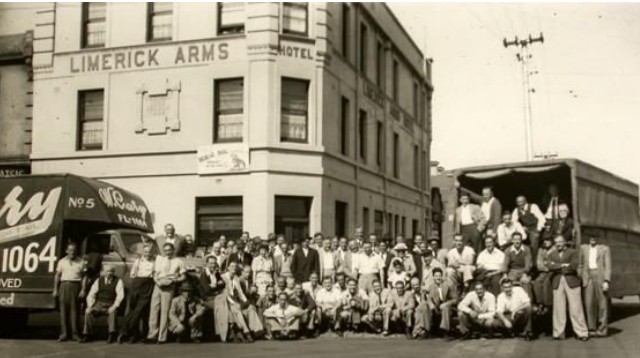
Historic Pubs of South Melbourne

Explore up to 20 past and present historic hotels of South Melbourne from the 1850s to today. South Melbourne is the second-oldest suburb of Victoria and is rich in heritage, iconic stories and landscapes.

Once there were 98 hotels in South Melbourne going back to the gold rush, Its location directly opposite the CBD across the Yarra, meant its population included many wharf workers and seamen, given its proximity to the port. As a result, a very working-class character developed, and the pubs that emerged reflected this culture. The tensions of the painters and dockers’ union played out in violence in hotels in South Melbourne and culminated in the 1973 shooting of union secretary Pat Shannon at Druid’s Hotel in Park Street.

The success of the Temperance Movement’s campaigns against the evils of drink ultimately affected the number of hotels in these areas. Between 1906 and 1916, the Licensing Reduction Board closed 1527 hotels in Victoria. In 1908, thirteen hotels were closed in South Melbourne alone. In response to these closures, hotel owners knew that in order to survive, they would need to upgrade their services and premises, and renovations to existing hotels reflect these changes.

Over the years many have wept over the apparent imminent demise of the relatively humble hotel. The live music scene is often under threat by opposition from neighbouring residents. The advent of techno music and gambling has also raised many concerns. Changes to licensing laws and the growth of alternative venues to consume alcohol have also changed the traditional role of the pub. The gentrification of South Melbourne has meant new residents with different needs. Several hotels, including those on Fitzroy Street, have become ‘up-market’ venues with more expensive wine lists, catering to younger and more affluent drinkers. The Gunn Island Brew Bar, formerly the Middle Park Hotel, even had its own micro-brewery and attracted the Grand Prix crowd. The commercial modern developments that accompany this gentrification may threaten heritage buildings or places that have important social associations that the community wants to preserve. The vociferous campaigns against the proposed changes to the Esplanade and Victoria hotels over the past decade reflect the strong community concerns about these changes.

Despite the pessimism, many of our oldest public buildings – the pubs – have weathered all these changes. Go down to one of the many hotels listed in this book and experience the historical ambience. Stand on the footpath and visualise past events in pubs converted long ago to private houses. Alternatively, try a local survivor that is still open today. In some, the carpet may be a bit grotty and the scent of stale beer may prove a bit overpowering. In others, perhaps, the place has been refurbished with trendy lime-green walls, marble bathroom sinks, and even its own microbrewery. Either way, it is impossible that there will not be at least a few good stories in its past.

While this book includes many historical accounts, there are doubtless a million more stories to be told. Ask the old-timers, or examine the architecture for signs of the past. Perhaps its name gives you some clue as to the nature of its original clientele (the Cricket Club or the Greyhound, for example). Transport yourself back to a time when bushrangers overran the Elsternwick Hotel, or when the Golden Gate was a popular late nineteenth century post-football match venue. Celebrate their rich and varied pasts and drink to their future.

SEE: SOUTH MELBOURNE HOTELS

SEE: BOOKINGS

See Prices & Bookings

Dunny Lanes of Melbourne Tour

This is Melbourne as you have never seen it before: industrial signage, factories, warehouses, stables, pipes, underworld portholes, bluestone, sanitation traps, hydraulic plates, timber guards, horse troughs and outhouses.  

You have applied to join a Dunny’ (Sanitation) Crew in 1884. After training in the Dunny arts and skills, you will compete to locate dunnies through the ancient infrastructure of Melbourne’s historic lanes. Successful members will graduate with a Dunny License and a great career.  

The setting: In the 1880s, ‘Marvellous Melbourne’ was outwardly one of the wealthiest cities in the world. The truth was that it was facing a disaster of its own making: pollution  of water and air, poor infrastructure, high mortality, hidden poverty, and imminent financial collapse. This is the world we enter, just seeking to make an honest wage as the lowly sanitation worker.

Where we go: Our two-hour tour travels through 20-30 lanes starting at Flinders Lane via Desgraves and Manchester Lanes, north to the former Coles Book Arcade and the Bourke Street Mall, then east into the myriad back lanes of Chinatown towards Exhibition Street. 

SEE  –  BOOKINGS AND PRICES  –   FOR INDIVIDUALS, GROUPS AND SCHOOLS

YOUR MISSION
‘Congratulations. Your application for a trainee as a member of a newly formed sanitation crew, servicing the lanes of Marvellous  Smellboom’ in 1884, has been accepted.
To gain your  full licence, you must be one of the elite few that pass our training session today . But don’t’ despair!
 We provide you with expert training in both dangers and dunnyskills. Pay close attention. Some of you will graduate today with a real dunnyman’s licence and a fabulous career. Others will fail.

The first hour we train in Toffsville the wealthy fashion and shopping district.  In the second hour we move to Slumsville or Little Lon and Chinatown and put your training into practice. You will be tested. 
You will also be trained to recognise the other outcasts working the streets. We need them badly. They provide us with our day jobs. We share the lanes with them. Their carts provide us with food, light and heat.

You will work in two competing teams each with your own foreperson. There is the Number Ones Team and Number Twos team. Your mission is to count dunny traps, dunny pipes and outhouses. The winning team will have the highest score. The lane system is growing rapidly and the last crew was sacked for missing too many dunnies. Do not miss any.  Don’t get lost. Do not fail. Remember you have eleven hungry bairns at home! So up with your cans and on with your shift.’

Further Reading about Melbourne’s history


See Prices & Bookings