Melbourne Crime Tour

EXPLORE different crimes, mysteries and dark history connected to the Melbourne CBD. Crimes can include major unsolved cold cases, robbery, missing persons, cyber-crime, fraud and prohibition.
LEARN
about the role of forensic science and evidence gathering in solving crimes.
OUR TOURS are interactive including activities, images, news articles and readings. We do adapt the content to suit the age of the participants.

WHERE WE GO:  iconic Melbourne locations including heritage venues, lanes and arcades, street art spaces and gold rush architecture.
WHEN: By arrangement.  Tours are normally 2.5 hours (students two hours) or as requested.
SCHOOL TOURS are normally two hours or as requested. Tours by arrangement start from Federation Square and finish Bourke Street near Parliament.
WE VISIT the significant locations,  consider forensic evidence, and discuss important questions.

SEE: BOOKINGS AND PRICES FOR INDIVIDUALS, GROUPS AND SCHOOLS

SEE ALSO OUR: St Kilda Crime Tour

WHY CRIME TOURS?
Crime, solved or unsolved, can highlight important social justice issues. Crimes, especially unresolved crimes, reveal challenges and social issues for vulnerable people that society needs to confront. Forensic science is a growing field of study and inquiry to many.  Greater awareness of crime may prevent or solve crimes: Victoria Police asks members of the public to come forward if they have any information that may assist. Contact Crime Stoppers 1800 333 000. 

“Thank you for your tour last night.  The range of insightful places, stories and activities was great.”      Haigs Staff Team.
“I really enjoyed our family walk and have been on it twice. My friend raved about it to her friends in Perth.  Thanks for engaging with our teenagers as well, your walk came out on top.”   
Win and friends.
“The students and I were especially engaged by the interactive activities and the crime stories in Melbourne locations”.              
Vermont College.
“Thank you so much for the tour. It was incredible and the students thoroughly enjoyed the exercise, your energy and enthusiasm as well as your amazing knowledge and hands-on activities. I didn’t know what to expect, but it was honestly the greatest school experience I’ve had”.      Excursion Coordinator Year Ten, Doncaster College.

Some of the many crime mysteries and stories we may explore on the day:

  • Federation Square Morgue
  • Preventing terror attacks – modus operandi 2017
  • The Batman ‘Treaty’ 6 June 1935
  • Tragedy in St Paul’s Cathedral 7 March 1997
  • Can artists solve crimes? The Missing Persons Street Art Network (MPAN)
  • Femicide 2026
  • Evading detection, Hosier 2019
  • The Case of the Stolen Picasso 4 August 1986
  • Operation Tidelands- the gun in the Yarra 2014
  • Smash and Grab, 130 Russell Street 7 July 2017
  • Facebook and Crimes 2017
  • Who stole Larry Latrobe?  1987
  • The Missing Mace 9 October 1891
  • Six tons of Missing Sky Sign 2001
  • Sly Grog Gambling – who Killed Squizzy? 27 October 1927
  • Chocolate Frogs and Justice 2009
  • The Pajama Girl Mystery September 1934
  • Manchester Unity Unsolved 5.25pm, March 17, 1978
  • The Ned Kelly Curse 11 November 1880
  • The UFO and the Pilot 21 Oct 1978
  • Justice failed – Gun Alley 30 Dec 1921
  • Madam Ghurka and other Mediums
  • Chopper! Myers Place Hostage Drama 31 March 1978
  • Tobacco Wars
  • Gold Heist $4m 2020
  • Tram CrimesOTHER:
  • The Parliament Snipers 1860
  • Ronald Ryan 1966
  • The Great Bookie Robbery 21 April 1976
  • Tunnerminnerwait  20 January 1842
  • The Wok Case 4 April 1989
  • Lola Montez and John O’Hara Bourke 1860
  • Scandal in Bohemia, Molly Dean 1930

See Prices & Bookings

Indigenous Landscapes Tour

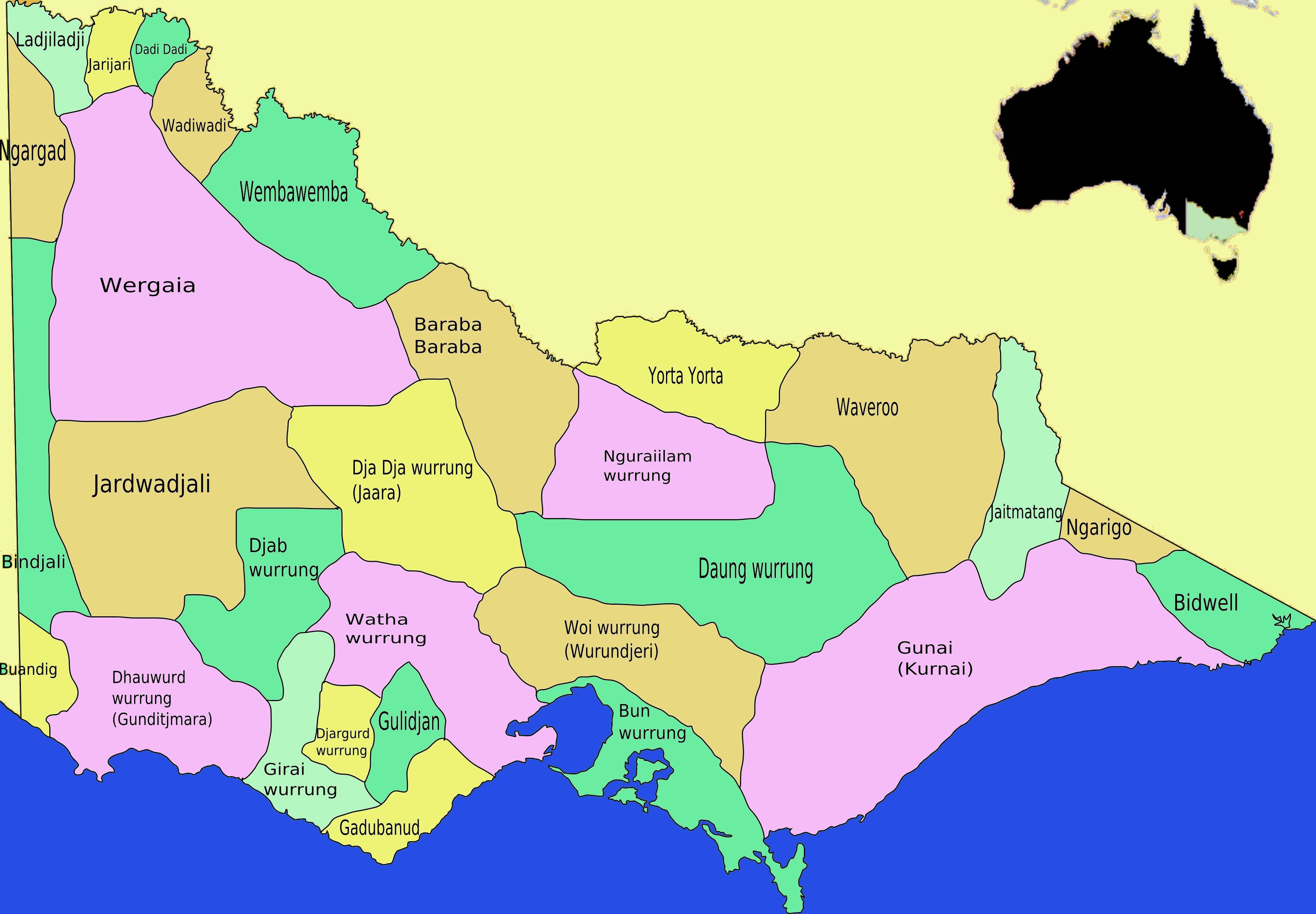
We acknowledge the traditional owners of the Kulin Nation including the Boonwurrung and Wurundjeri/Woiwurrung peoples and pay our respects to elders past, present and emerging.

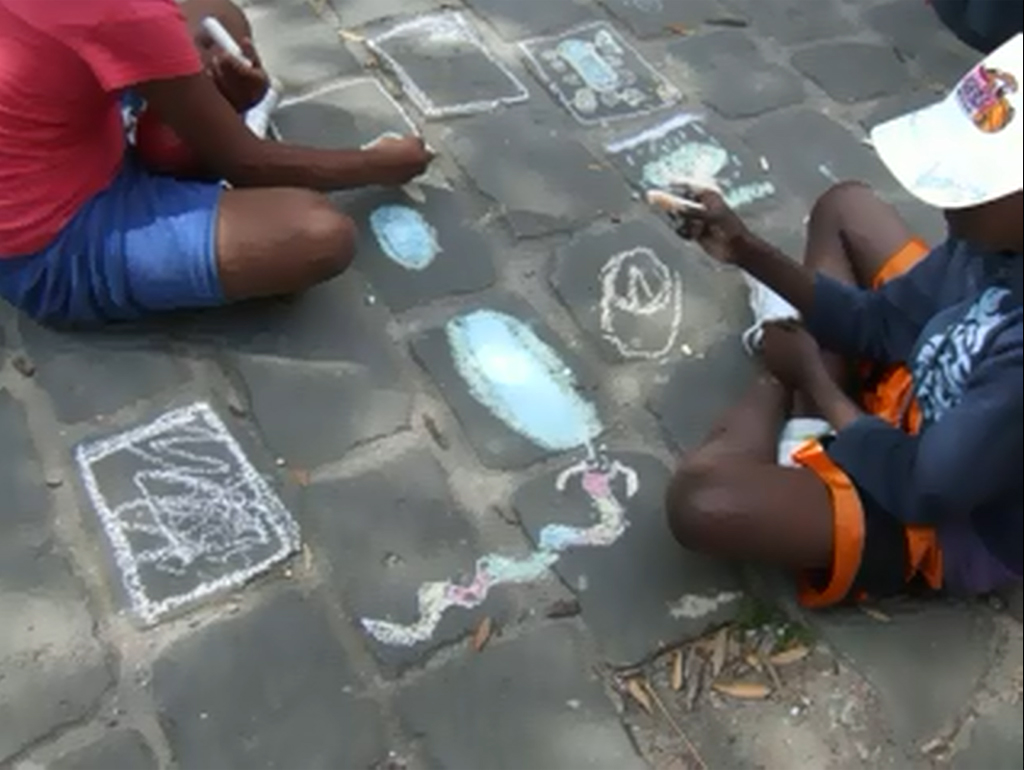
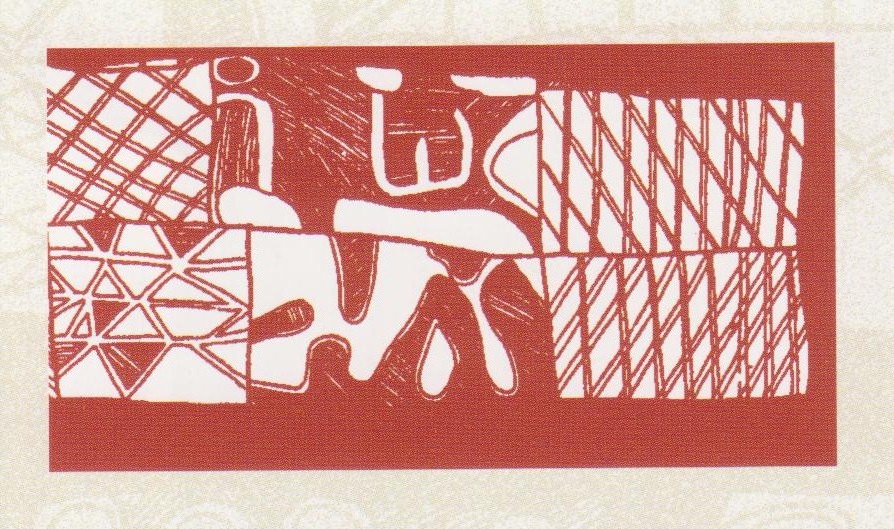
DISCOVER how European occupation impacted on Indigenous people, Indigenous landscapes, our waterways, fauna and flora and the impact today on modern Melbourne.
VISIT Melbourne landscapes that have supported the economic and cultural life of First Nations peoples, colonial settlers, immigrants and Melbournians today.
LEARN
how Indigenous knowledge is used by the City of Melbourne to fight climate change (Care for Country Strategy). This includes understanding traditional uses of land
for food, tools, shelter and medicine by traditional owners, colonists, immigrants as well as by modern Melbournians.
EXPLORE landscapes connected to the Batman Treaty, Indigenous Seasons, landmarks, and territories.
RECEIVE our history book written by ourselves in partnership with the Boon Wurrung Foundation and the City of Port Phillip.

NOTE: O
ur guides are not ususually Indigenous, we come from the Reconciliation perspective of how contemporary Australians can learn from  the use of our landscapes by traditional owners, settlers, immigrants and cities to create a sustainable Australia.

SEE: BOOKINGS AND PRICES  –   FOR SCHOOLS, GROUPS, INDIVIDUALS
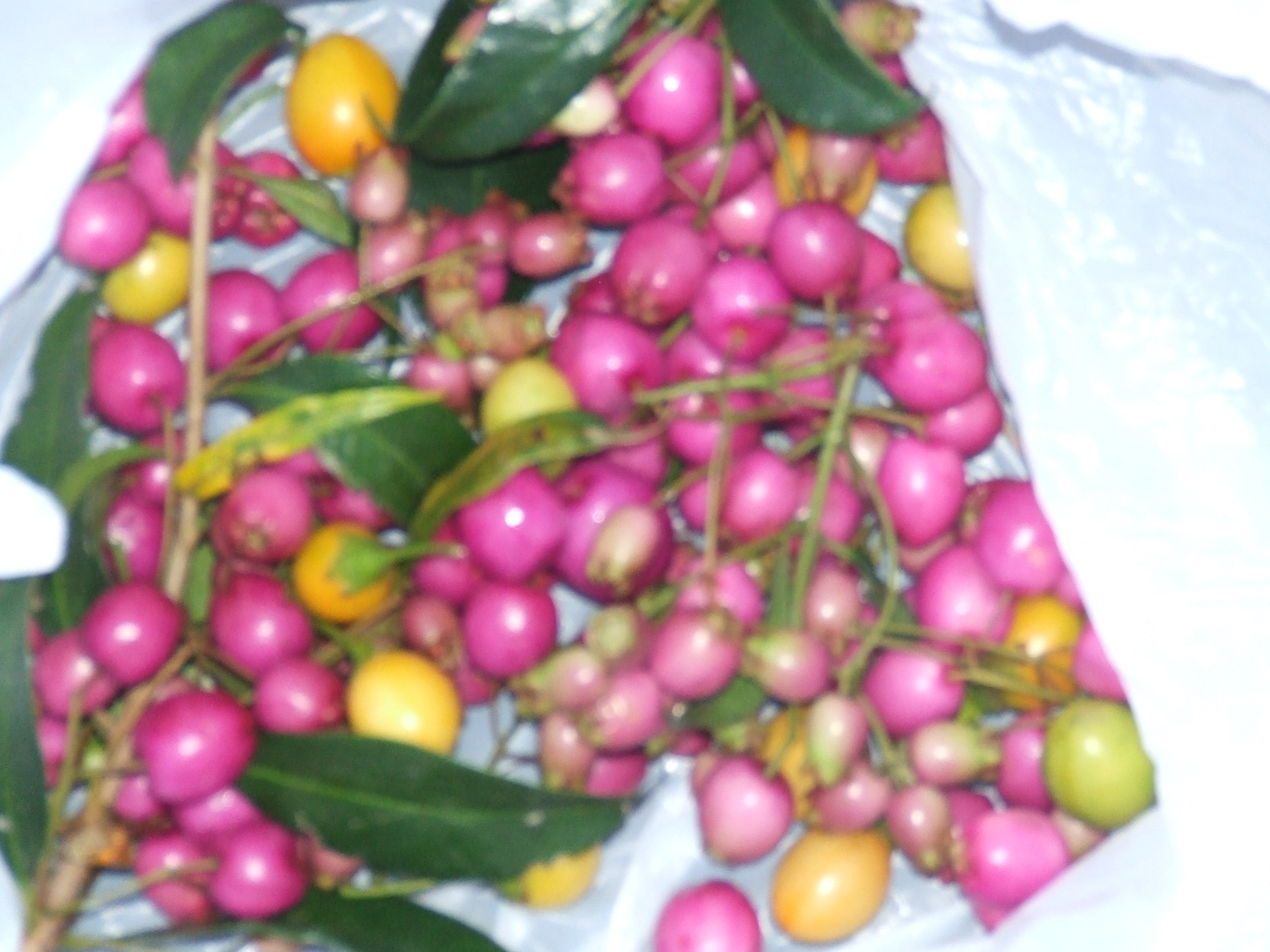
(An additional surcharge may apply for bushtucker materials).


”People thought the route you chose for our walk was fantastic. The content was informative, educative, enjoyable and so interesting.”
Port Phillip Reconciliation Action Group.

‘We thoroughly enjoyed the walk by the Yarra River in the CBD. The students all completed detailed reflections and summaries from the information shared. Thanks for making it so interactive, real, and relevant to the lives of the Year Nine students!”

Caulfield Grammar

“We all thought it was excellent: interesting, informative, and very hands-on. The students certainly learned a lot and enjoyed themselves.”

Athol Primary School.

“For Outdoor and Environmental Studies, this tour is a must!!”
Bendigo Catholic College.

ROUTES:
MELBOURNE CITY CENTRE:  Our city tours usually start and finish at Federation Square and explore Birramung Marr Park, the Birrarung (Yarra River), Federation Wharf and surroundings.

SUBURBSOur Indigenous landscape tours have also been conducted in suburban locations including Black Rock, St Kilda, Albert Park, Port Melbourne, Elwood, Merri Creek, Maribyrnong, Brighton,  Bulleen, Elwood, Fitzroy, Clifton Hill, Ascot Vale, Kananook Creek, Footscray,  Gardenvale Creek, Gasworks Park, Carlton Gardens, Hawthorn, Richmond, Alphington, Reservoir and others. 

Melbourne Walks is the author of two award-winning guide books written in collaboration with the Wurundjeri Council, Boon Wurrung Foundation, Koorie Heritage Trust, Aboriginal Affairs Victoria and Aboriginal Studies Press:
Melbourne Dreaming. A Guide to Important Places Past and Present’
 and Yalukit Willam, The  River People of Port Phillip (City of Port Phillip).

SEE also our foraging tour: LIVING WILD OFF THE LAND


FURTHER READING

  • Site at  Ricketts Point and Black Rock
  • Indigenous Plant Use (online). A booklet on the medicinal, nutritional and technological use of indigenous plants, Zena Cumpston, Melbourne University 2020.
  • Koorie Plants. Koorie People.  Beth Gott.
  • Melbourne Dreaming. A Guide to Important Places Past and Present, 2014, Meyer Eidelson, Aboriginal Studies Press.
  • The Biggest Estate on Earth, Bill Gammage.
  • Yalukit Willam. The River People of Port Phillip, 2014,  Meyer Eidelson, City of Port Phillip, Boonwurrung Foundation.
  • Aboriginal Melbourne: the Lost Land of the Kulin People, Gary Presland.
  • Aboriginal Victorians. A history since 1800, Richard Broome, Allen and Unwin 2005.
  • Meerreeng-an. Here is my Country. The Story of Aboriginal Victoria told through art. Chris Keeler and Vicky Couzens 2010. I Succeeded Once. The Aboriginal Protectorate on the Mornington Peninsula, Marie Fels 2011.
  • 1835: The Founding Of Melbourne And The Conquest Of Australia by James Boyce 2011.
  • Eight Wurundjeri Seasons in Melbourne.  Jim Poulter
  • Archaeology of the Dreamtime, J Flood, Angus and Robertson, 2001.
  • Remains to be Seen. Archaeological Insights into Australian pre-history.
  • David Frankel. Good Men and True. The Native Police of Port Phillip. Marie Fels.
  • A Bend in the Yarra : a history of the Merri Creek Protectorate Station, Ian Clark, Toby Heydon.


See Prices & Bookings

Bearbrass: Early Melbourne Tour

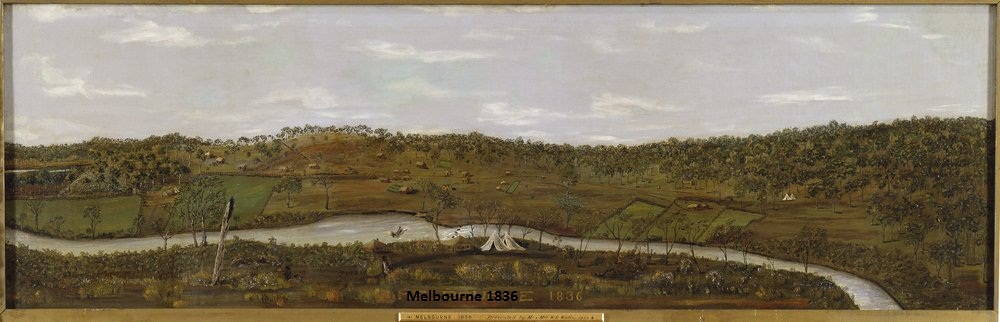
EXPLORE the early Melbourne township known as  ‘Bearbrass’  or ‘Batmania’. This includes the sites of settlers’ homes, Batman Hill, gaols, pub, church, docks, woolstore, warehouses, auction house, market, customs, newspaper office, Melbourne Club, Yarra Yarra falls, Aboriginal camp and others.
LEARN about the founding settlers, their challenges, and the events that led to a settlement in defiance of British law.
VIEW dozens of paintings, maps and documents by by early settlers and  artists eg, historic pictures, timelines
DISCOVER the impact of settlement on the Aboriginal people of the Kulin Nation.

WHEN: Tours are normally 2.5 hours by arrangement at a time of your convenience. 

SCHOOLS: See our SCHOOLS TOUR OF EARLY OR COLONIAL MELBOURNE 

SEE  –  BOOKINGS AND PRICES  –   FOR INDIVIDUALS, GROUPS AND SCHOOLS 

SCHOOL GROUPS:  See also our other Early Melbourne School Excursions below:
MELBOURNE CITY SCHOOLS TOUR..More
MELBOURNE ABORIGINAL TOUR…More
A NEW LAND – PORT PHILLIP DISTRICT 1830-1860….. More
MELBOURNE GEOGRAPHY TOUR….More
TRADERS AND EXPLORERS.. More
MELBOURNE EXPLORERS SCHOOL EXCURSION… More
THE GOLDEN MILE – MARVELLOUS MELBOURNE    …..More

I just wanted to thank you for the marvellous walking tour for our group. It was an incredibly interesting morning, and very much appreciated.  As I’ve been telling people about it, what struck me was your detailed knowledge of early Melbourne history, the maps and photos you showed us, the Batman pole that will soon be a thing of the past, your insight into the Aboriginal community, the former waterfall which marked the Yarra River crossing and freshwater mark, the idea of the young Tasmanian girl about to give birth to the first European child in Melbourne, and the artifacts that we examined at the Rialto.
Mary Jo and friends

Amazing! I thought I knew Melbourne but I was wrong. Under our noses is the whole village.  Christine.

On 11-12 March 2012, 160 of the 4500 descendants of the Solomons convened in Melbourne. Many attended our Bearbrass Tour to celebrate their reunion. The Solomons have an extraordinary history. A Solomon was an early settler with John Batman, another the fire chief at Broken Hill, four fought at Gallipoli, one went down on the Titanic, one was Premier of South Australia, another helped write the Australian Constitution. See Age article

We pursue the political, social, and economic reasons that created this village on First Nation land in defiance of British law. Learn how Melbourne began and who were the personalities that shaped it. Discover the characters living in what was once a muddy, stump-infested collection of shanties. grog houses, shepherds, and gentrified speculators.  Pioneer ancestors of Melbourne regularly come on the Bearbrass tour to experience the resurrection of Old Melbourne Town in 1835.

We encounter John Batman and John Fawkner on route, the original larrikin and wowser,  explore their opposed characters and the contentious question of who was the original European founder of the city. Or was it Charles Evans and Captain Lancey?  We peruse and debate the original treaty. We also examine the impact of settlement on the Boon Wurrung and Wurundjeri people of the Kulin Nation.

And why is it called Bearbrass anyway?

See our video: ‘Old Melbourne Town’

See our list of  Characters of Early Melbourne

Bearbrass or Melbourne 1839

Bearbrass or Melbourne 1839

Some of the places we go.  We start either at the Melbourne Aquarium or Southern Cross Station.

John Batmans House (also church services, Hoddle Grid, also La Trobe’s office. (near Southern Cross Station)
Batmans’ sheep run (Collins Streeet)
Bay-ray-rung/Yarra River
The Rialto wool store (Collins Street)
Turning Basin on Yarra (Enterprize Park) where the Enterprise landed.
The Falls (Yarra)
Scar Poles/ Enterprize Park: Seven Victorian indigenous artists have sculpted their stories into totemic wharf piles.
Customs House Flinders Street
Early Post Office Flinders Street
Fawkner’s House Williams Street
Fawkners Hotel, The Patriot Office and Melbourne Club (1837)

Town Square (Collins Street)
Gaol, hospital, the stocks and Captain Lonsdale’s office (Collins Street)
John Batman’s statue  (Collins Street)
John Fawkners Statue (Collins Street)
The Lambs Inn  (Collins Street)
The stockade, Aboriginail escape, Aboriginal freedom fighters, prison, (Collins and King Streets)
Auction House where the Kulin lands were first sold to speculators. (Collins Street)
Early port warehouses (King Street)


Further Reading about Melbourne’s history


See Prices & Bookings

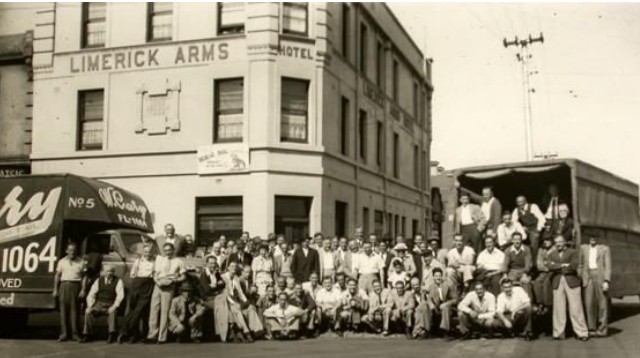
Historic Pubs of South Melbourne

Explore up to 20 past and present historic hotels of South Melbourne from the 1850s to today. South Melbourne is the second-oldest suburb of Victoria and is rich in heritage, iconic stories and landscapes.

Once there were 98 hotels in South Melbourne going back to the gold rush, Its location directly opposite the CBD across the Yarra, meant its population included many wharf workers and seamen, given its proximity to the port. As a result, a very working-class character developed, and the pubs that emerged reflected this culture. The tensions of the painters and dockers’ union played out in violence in hotels in South Melbourne and culminated in the 1973 shooting of union secretary Pat Shannon at Druid’s Hotel in Park Street.

The success of the Temperance Movement’s campaigns against the evils of drink ultimately affected the number of hotels in these areas. Between 1906 and 1916, the Licensing Reduction Board closed 1527 hotels in Victoria. In 1908, thirteen hotels were closed in South Melbourne alone. In response to these closures, hotel owners knew that in order to survive, they would need to upgrade their services and premises, and renovations to existing hotels reflect these changes.

Over the years many have wept over the apparent imminent demise of the relatively humble hotel. The live music scene is often under threat by opposition from neighbouring residents. The advent of techno music and gambling has also raised many concerns. Changes to licensing laws and the growth of alternative venues to consume alcohol have also changed the traditional role of the pub. The gentrification of South Melbourne has meant new residents with different needs. Several hotels, including those on Fitzroy Street, have become ‘up-market’ venues with more expensive wine lists, catering to younger and more affluent drinkers. The Gunn Island Brew Bar, formerly the Middle Park Hotel, even had its own micro-brewery and attracted the Grand Prix crowd. The commercial modern developments that accompany this gentrification may threaten heritage buildings or places that have important social associations that the community wants to preserve. The vociferous campaigns against the proposed changes to the Esplanade and Victoria hotels over the past decade reflect the strong community concerns about these changes.

Despite the pessimism, many of our oldest public buildings – the pubs – have weathered all these changes. Go down to one of the many hotels listed in this book and experience the historical ambience. Stand on the footpath and visualise past events in pubs converted long ago to private houses. Alternatively, try a local survivor that is still open today. In some, the carpet may be a bit grotty and the scent of stale beer may prove a bit overpowering. In others, perhaps, the place has been refurbished with trendy lime-green walls, marble bathroom sinks, and even its own microbrewery. Either way, it is impossible that there will not be at least a few good stories in its past.

While this book includes many historical accounts, there are doubtless a million more stories to be told. Ask the old-timers, or examine the architecture for signs of the past. Perhaps its name gives you some clue as to the nature of its original clientele (the Cricket Club or the Greyhound, for example). Transport yourself back to a time when bushrangers overran the Elsternwick Hotel, or when the Golden Gate was a popular late nineteenth century post-football match venue. Celebrate their rich and varied pasts and drink to their future.

SEE: SOUTH MELBOURNE HOTELS

SEE: BOOKINGS

See Prices & Bookings

Dunny Lanes of Melbourne Tour

This is Melbourne as you have never seen it before: industrial signage, factories, warehouses, stables, pipes, underworld portholes, bluestone, sanitation traps, hydraulic plates, timber guards, horse troughs and outhouses.  

You have applied to join a Dunny’ (Sanitation) Crew in 1884. After training in the Dunny arts and skills, you will compete to locate dunnies through the ancient infrastructure of Melbourne’s historic lanes. Successful members will graduate with a Dunny License and a great career.  

The setting: In the 1880s, ‘Marvellous Melbourne’ was outwardly one of the wealthiest cities in the world. The truth was that it was facing a disaster of its own making: pollution  of water and air, poor infrastructure, high mortality, hidden poverty, and imminent financial collapse. This is the world we enter, just seeking to make an honest wage as the lowly sanitation worker.

Where we go: Our two-hour tour travels through 20-30 lanes starting at Flinders Lane via Desgraves and Manchester Lanes, north to the former Coles Book Arcade and the Bourke Street Mall, then east into the myriad back lanes of Chinatown towards Exhibition Street. 

SEE  –  BOOKINGS AND PRICES  –   FOR INDIVIDUALS, GROUPS AND SCHOOLS

YOUR MISSION
‘Congratulations. Your application for a trainee as a member of a newly formed sanitation crew, servicing the lanes of Marvellous  Smellboom’ in 1884, has been accepted.
To gain your  full licence, you must be one of the elite few that pass our training session today . But don’t’ despair!
 We provide you with expert training in both dangers and dunnyskills. Pay close attention. Some of you will graduate today with a real dunnyman’s licence and a fabulous career. Others will fail.

The first hour we train in Toffsville the wealthy fashion and shopping district.  In the second hour we move to Slumsville or Little Lon and Chinatown and put your training into practice. You will be tested. 
You will also be trained to recognise the other outcasts working the streets. We need them badly. They provide us with our day jobs. We share the lanes with them. Their carts provide us with food, light and heat.

You will work in two competing teams each with your own foreperson. There is the Number Ones Team and Number Twos team. Your mission is to count dunny traps, dunny pipes and outhouses. The winning team will have the highest score. The lane system is growing rapidly and the last crew was sacked for missing too many dunnies. Do not miss any.  Don’t get lost. Do not fail. Remember you have eleven hungry bairns at home! So up with your cans and on with your shift.’

Further Reading about Melbourne’s history


See Prices & Bookings