Melbourne Symbols School Tour

02_great_petition

We explore the theme of Symbols in Melbourne’s CBD through the medium of street art, cultural typography and iconic architecture focusing on lines of inquiry, key concepts and questions. We also provide an activity for students where they also create their own piece of street, art, signage or symbolism in the lanes.

Transdisciplinary Theme:
How We Express Ourselves

Central Idea:
People use symbols to be expressive and communicate.

Lines of Inquiry:
– Symbolism.
– Why people use symbolism.
– How specific groups use symbolism.

Key Concepts:
– Connection
– Perspective
– Form

Questions:
– What is a symbol?

– How are symbols created?
– Why do groups use symbols?
– How can we use symbolism to express ideas?

‘Our Primary school kids had a wonderful time despite the wet weather and also gained an understanding of how important places can become symbolic over time. They also loved the art work and and lanes and symbols and many are keen to follow up with further work…’
Footscray Primary School

SEE: BOOKINGS

SEE ALSO:
Street Art Tour

Typography Tour

See Prices & Bookings

Walking Tour of Black Rock (Half Moon Bay)

This walking tour explores the history, geography and indigenous landscapes of the Black Rock foreshore from its geology and foreshore fauna and flora to Aboriginal occupation to early settlers to contemporary society. We discover how the landscape and structures have changed over time in response to changing needs and populations.

ONLINE TOUR We can also provide this tour Online for school students using Zoom, Web-Ex, Microsoft Teams, Google Slides etc. Written permission is required before school use of this presentation. Cost is approx $7.50 per student.

Meeting place: Meet in the upper (not lower) car park corner Cerberus Way and Beach Road, Sandringham. Cerberus Way leads to Black Rock Yacht Club and marina. 

Hi Meyer, 
Thanks for yesterday, the 100 students have learnt so much and your lovely humour meant they had a fabulous time!        Gill, East Bentleigh Primary School
We do this excursion every year and find it invaluable for our Year Seven students, these insights and practical activities could be gained nowhere else.
Cornish College, Bangholme

From the days of the Boon Wurrung people to the present day, Half Moon Bay has been a valued gathering place. It shows evidence of the occupation of the Boon Wurrung through protected camping locations or middens in the dunes, which contain shells and charcoal from cooking fires. On our tours we demonstrate how the Indigenous flora provided a wide range of food, tools and medicine for the Boon Wurrung and the early colonists and even the modern era.

In earlier times it was also popular with people who travelled from many parts of Melbourne for day picnics, and with the holidaymakers who regularly stayed at Black Rock in the summer months.

The seawall in front of the Black Rock Yacht Club was constructed by Sustenance workers during the Great Depression. The Life Saving Club is the successor to the smaller club – Black Rock Royal Life Saving Club – built in the early 1900s and the first of such clubs on the shores of Port Phillip Bay.

Artists have painted the sea and shore; and the former Sandringham and present Bayside Councils, assisted by volunteers, have planted Indigenous trees and plants in order to maintain the character of the foreshore.

After the Great War (1914–1918) the Red Bluff was used as the location for a film about the Gallipoli landing. Painters, photographers and film-makers have depicted the weathered desert-like cliff face of the Red Bluff, which stands at the northern end of Half Moon Bay.

Early pictures show that the Bluff once projected further out to sea but it has been affected by erosion. Run-off after heavy rain and people scrambling on the rock has contributed to the gullying.

Black Rock is a suburb in Melbourne, Victoria, Australia, 18 km south-east of Melbourne’s central business district. Its local government area is the City of Bayside. At the 2011 Census, Black Rock had a population of 5,944.

The suburb was named after Black Rock House, a grand residence built by Charles Ebden in 1856, who had taken the name from Black Rock, Dublin. Ebden was an early Port Phillip pastoralist as well as being a businessman and parliamentarian representing the seat of Brighton in the Victorian Parliament. Black Rock House is on the Register of the National Estate.

The northern part of the suburb between Beach Road and Bluff Road was one of the early estates in the parish of Moorabbin developed by Josiah Holloway in the 1850s. Named Bluff Town, sales were slower than in other areas and the suburb grew slowly.

One of the notable characteristics of the Black Rock shoreline is Red Bluff. The bluff’s name comes from the oxidised iron in the cliffs which gives off a burnt orange colour. Either side of Red Bluff are many popular beaches and seaside destinations, including Half Moon Bay. Half Moon Bay had been setting for yachting since the 1890s, and a branch of the Brighton Yacht Club formed the Black Rock Yacht Club in 1919. A rock breakwater was constructed and in 1926 the hull of the colonial naval vessel HMVS Cerberus was added to further protect the boat haven.

In 1888, the year after the railway was extended to Sandringham, a horse tram was provided between Sandringham and Black Rock, running on to Beaumaris. The service, which lasted until 1914, was replaced by an electric tram service (operated by the Victorian Railways) in 1919, which ran slightly inland of the horse tram service. In 1931, the line was cut back to Black Rock, and the entire line closed in 1956. In 1910 a State primary school was opened in Black Rock which continues to operate to this day.

The first Post Office in the area was Red Bluff to the north, which opened on 17 April 1901 and closed in 1969. The first Black Rock Post Office opened on 23 April 1902, was renamed Half Moon Bay in 1922 and closed in 1968. The second Black Rock Post Office opened in 1922 near the corner of Bluff Road and Balcombe Road

See SLV Images

See BOOKINGS AND PRICES


(1) Image H2010.18/62


cover

cover

cover

See Prices & Bookings

Early Melbourne Identities

Characters from our Tour of Early Melbourne Town that you may well have bumped into while walking the stump-filled streets of Bearbrass or Batmania (before it was renamed the respectable ‘Melbourne ‘ after the English Prime Minister.)
1. Jane Gibson
Jane came to court in early Melbourne after Jane called her neighbour Judith Croaker ‘a dirty Irish woman’ and hit her in the head by throwing an earthenware jug from her window. The court found the charge unproven.

2. Judith Croaker
Judith charged her neighbour Jane Gibson with assault after Jane had called Judith ‘ a dirty Irish woman’ and hit her in the head by throwing an earthenware jug from her window. The court found Jane innocent.

 3. Catherine Doyle
Catherine Doyle was charged with assault after visiting neighbour Jane Coglan to borrow a cup of groats and a scrape of dripping. Doyle pulled off Coglan’s wig and shoved her over a bucket after Coglan called her a drunk and a thief.  Doyle was acquitted.

 4. Jane Coglan
Jane Coglan called her neighbour, Catherine Doyle, a drunk and a thief after Catherine visited to borrow a cup of groats and a scrape of dripping. Catherine was charged by Jane with assault after she pulled off Jane’s wig and shoved her over a bucket. The charge was dismissed.

 5. Eliza Cobb 1800-1879
The successful partner of John Fawkner for 51 years. She was sentenced to 7 years in Tasmania in 1818 for kidnapping a baby. When men rushed to her ship to choose a ‘wife’. John Fawkner said he chose the ‘plainest woman on board’ – after someone stole his first choice. Together they came from Tasmania on the Enterprize to found the European city of Melbourne after arriving.  She became a wealthy woman. Her house was on the corner of Market Street and Williams Street.

 6. Martha Baxter
The first postmistress was a ‘handsome woman’, who ran the first Post Office at the corner King Street and Flinders Lane. People came night and day. She and her husband Benjamin later leased the foreshore from Port Melbourne to St Kilda to graze cattle.

 7. Eliza Callaghan 1802-1852
In 1820, the police caught her trying to use counterfeit notes in London and she was sentenced to Australia for 14 years. Her jail report said ‘Bad’. She escaped into the bush in 1823 and hid with John Batman. She later married John and had seven children. Together they helped found the City of Melbourne in 1835. John died only four years later. Eliza was later murdered in Geelong.

 8. Georgiana McCrae 1804 –1890
Georgiana Gordon McCrae was an early portrait painter and observant writer of early Melbourne who helped found the town of McCrae. She often accompanied Governor La Trobe to functions. Her fortunes varied but she maintained her

Georgina McCrae

wit and sense of humour. Her published diaries are famous.

 9. Catherine or ‘Kitty’ Carr
She and her husband Michael were the owners of the notorious Governor Bourke Hotel near the corner of Queens Street and Flinders Lane. They were both charged at various times with theft and ‘sucking the monkey’. In 1838 she was charged with stealing 22 pounds from Tim Hall and a suit of clothes from William Nicholson.

 10. Mary Payne
Mary Payne charged her husband with wife beating in Melbourne in 1842.

The Bench: Well my good woman speak out, what do you want?
Jane: To swear the peace on him. I keeps a lodgin’ house and works blessed hard. This feller goes a cutting about the town an’ when he’s tired o’ that, comes home and insults my gentleman lodgers, and winds up by pitchin’ into his wife. He ain’t no feeling your worships. I’ve given that man six childer but it only makes him wus – nothin’ will please the savage.
The Bench:
Will you swear you are in fear of your life?
Husband
: Your worship, she’d swear the hind legs off a bullock.

 11. Mrs Hilton
Her husband was the owner of a hotel in Flinders Street and was gaoled for fraudulent debt in the 1840s. Mrs Hilton then drowned herself and her baby in the Yarra River opposite her husband’s hotel.

 12. Trugernanner 1812–1876
Often referred to as Truganinni, she had an adventurous life. She survived the’ black wars’ with white settlers in Tasmania and came to Melbourne in 1839 with Chief Protector George Robinson and her husband Woodreddy. She joined a

Trugannini

Aboriginal rebel band in Mornington and was wounded. She was captured and exiled back to Tasmania. A cast of her skeleton was exhibited in the Melbourne Museum until 1960s.

 13. Fanny
‘Fanny’ was a Tasmanian Aboriginal who accompanied Truganinni to Melbourne in 1839 and with her joined an Aboriginal rebel band in Mornington Peninsula robbing and burning farmhouses. They were captured, the men were hung and she was exiled back to Tasmani with Truganinni.

 14. Sophie La Trobe
On 3 October 1839, Sophie of Swiss-French background came to Melbourne with her husband Charles, the Superintendent and later Lieutenant-governor’ of Melbourne. She had a baby daughter Agnes but she was often ill and died in 1854. Her house is outside the Botanical Gardens.

 15. Elizabeth Pearce
Housekeeper of John and Eliza Batman. Was charged with theft when their stuff was found in her cottage in February 1938 including a silver pencil case, two gold earrings, two silver clasps, a neck chain, a waist buckle, a tablecloth, seven silk handkerchiefs, three silver drinking horns, two decanters, boots, three pounds in a glove, a sword belt and 30 other items!

 16. Lizzie Nash
Well known sly grog dealer with four children. She dealt illegal grog from her hut on the government block on the south west corner of King and Collins Street from 1837 to1839. Her husband was a private of the 80th Regiment. When five months pregnant, she had a punch-up with a customer. A spying police constable was knocked out.

 17. Mary Dobson
Her boyfriend John Gunn was arrested by Chief Constable Henry Batman when Mary was found cooking three pounds of boiled mutton in a house in Collins Street. The mutton was claimed to be from a sheep stolen from a Flinders Lane yard. Mary Gilbert was a witness but the charge was dropped because the witnesses were ‘of bad character’.

 18. Mrs Swindell
Her husband, police constable Dick Swindell was sacked after Mrs Swindell was found doing her husbands round in 1845, dressed in his police uniform, because her husband was drunk. Apparently she did it every night after he collapsed usually near Lt Bourke and Queens Street.

 19. Mary Gilbert 1817-1878
When Mary arrived on the Enterprize on 30 August 1835 she was pregnant, 18 years old, and the only white woman in Melbourne. She was given Melbourne’s first cat for company. Her son was John Melbourne Gilbert was born four months later. The Lady Mayoress unveiled a statue of her by Ailsa O’Connor in Fitzroy Gardens in 1975.

 20. Margaret Whelan
In 1841 she was charged in Melbourne with assaulting her husband by throwing a brickbat at him. Three weeks later she testified in court that a woman had assaulted her and as evidence brought the thrown objects to court: a knife, two half bricks and a ginger beer bottle.

 21. Connie Waugh
Connie was the mistress of the rich squatter Sir Rupert Clarke. Her ghost haunts the famous Mitre Tavern in Bank Place, off Collins Street opposite Sir Rupert’s house, today the Savage Club.

 22. Elizabeth Parsons 1831- 1897
Victoria’s best known woman painter as well as a lithographer and teacher of art. She loved to paint the St Kilda foreshore as well as Brighton, St Kilda and Caulfield.

 23. Caroline Chisholm
Caroline Chisholm was born in England in 1808 and migrated to Australia in 1838 where she worked tirelessly to improve life on board ships bringing migrants to Australia, she helped poor families gain passage including free passage of transported convicts, she. In 1994 she was posthumously awarded the Order of Australia.

 24. Kate Kelly 1863 – 1898
Was the legendary sister of bushranger Ned Kelly with many newspaper articles, books, bush-songs and ballads written about her. She campaigned to save her brother Ned, was a skilled rider and played an important part in the Kelly saga.
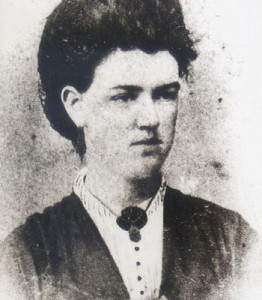
Kate Kelly

 25. Nellie Stewart (1858–1931)
Nellie was a talented, considerate and versatile actress, a beautiful woman with expressive eyes, a finely tilted mouth and dimpled smile, a darling of the Australian public. She was one of the first world-class performers to be filmed when she acted in the popular six-reel Australian film Sweet Nell of Old Drury in 1911.

Robert Hoddle 1794 -1881
Robert was Melbourne’s official surveyor in the 1830s. In 1937 he created the ‘Hoddle Grid’ which laid out the streets of Melbourne known as the Golden Mile with the street 99 feet wide, they say to accommodate the bullocks. He also laid out Geelong and many Melbourne suburbs.

 Derrimut 1810c – 1864
Derrimut was the elder and leader of the Boon wurrung clan of Melbourne. He saved the settlers from attack on the settlement in 1838 by telling John Fawkner of the planned assault. He bitterly complained about the loss of his land to the settlers in later years. He is buried in Carlton Cemetery with a tombstone acknowledging his saving of the settlement.

Russell, Robert (1808–1900)
Russell was an architect, artist and the surveyor, who did the original survey layout of Melbourne with his assistants draughtsman Frederick D’Arcy and chainman William Darke in 1836. He painted many watercolours of the early settlement.

 Sir Redmond Barry (1813–1880)
As a young man from Ireland, he was the Aboriginal Advocate and defended Truganinni and Jack Napoleon in 1841. Eventual judge of the Supreme Court, he founded Melbourne University and the State Library.  He died twelve days after condemning Ned Kelly.

 William Buckley (1780-1856)
William Buckley, the ‘wild white man’, was an escaped convict from Sorrento in 1803. He lived with the Aboriginals in Victoria for 32 years. This huge man walked out of the bush at Indented Heads to meet the new settlers in 1835. He then became a translator for John Batman’s party.

 George Smith
George Smith was the owner of the Lambs Inn near the corner of Collins and Williams Streets in the 1840s. Itwas notorious for ‘fleecing’ stockmen, its billiard room was the courthouse and occasional morgue and squatters used it as an employment exchange to get stockmen that were broke.

 John Batman (1801 –1839)
Was a sheep farmer and explorer who is best known for his role in arranging the signing of a ‘treaty’ with Aboriginal elders to found  Melbourne and the colony of Victoria.   He captured bushranger Mathew Brady and married a runaway convict Eliza Callaghan with whom he had seven children.

 Warrora or John Pigeon
John Pigeon was one of the seven Aboriginals who accompanied John Batman on his treaty expedition to Indented Heads in May 1835. His conduct impressed the Kulin and assisted the treaty negotiations. He later lived in Batman’s home.

 Johninbia or Tommy Crook
Tommy Crook was one of the seven Aboriginals who accompanied John Batman on his treaty expedition to Indented Heads in May 1835. The others included Bullett, Bungett, Old Bull, and Joe the Marine.. He had assisted Batman in hunting the Aboriginals in Tasmania.

James Gumm
James Gumm was a convict who received a pardon as one of three seamen including William Todd and Alexander Thomson and seven Aboriginals, who accompanied John Batman on his treaty expedition to Port Phillip in May 1835.

 Joseph Gellibrand (1792–1837)
A lawyer, he drew up the Melbourne treaty used to ‘purchase’ land from the Aboriginals by John Batman. He vanished near Geelong on an expedition to explore Port Phillip in 1837. His mysterious disappearance has never been solved.

 William Thomas (1793–1867)
William Thomas (1793-1867), assistant protector and guardian of Aboriginals from 1837 was born in Westminster, England, of Welsh parents.  He tried his to protect the Melbourne Aboriginal people best but never received sufficient support from the government.

 John Wedge (1793-1872).rnanner 1812?%nd explorer, was a member of John Batmans party. He surveyed the area around Melbourne and named the River Yarra mistakenly. The Aborigines were actually talking about the Falls (‘yarra yarra = falling water’) at Queens Bridge.

 Ned (Edward) Kelly (1855–1880)
Ned Kelly a horse thief, bushranger and rebel was captured at the siege of Glenrowan after he and his gang donned their home-made armour. He was sentenced by Judge Redmond Barry for murder despite public calls for a reprieve. His supposed last words were ‘such is life’ or ‘ I suppose it has come to this’. There are many films and books about his life.

 George Coppin (1819-1906)
A comic actor credited with fathering the Australian theatre and introducing tours of famous celebrities. George built many famous early theatres in Melbourne including the Royal Hotel, Theatre Royal, the Olympic and Cremorne Gardens.

 Edward Cole (1832–1918)
Created Melbourne’s greatest attraction – the Cole’s Book Arcade in Howey Place with 2 million books, a  monkey house, Band and a Chinese teahouse His wrote the brilliant Cole‘s Funny Picture Book, released Christmas Eve 1879. He met his wife Eliza by advertising for a wife on the front page of the Herald.

John Christie, (1845–1927)
Detective Christie was Melbourne’s Sherlock Holmes a master of disguises and a successful pursuer of criminals, idolised by the public. He was also a champion rower and boxer.

 Robert O’Hara Burke (1821-1861)
Burke was generous and charming, but also impulsive, quick-tempered, and arbitrary. He was ill suited for the great expedition he led to the north of Australia in 1860 which ended in disaster. Seven men died.

See Prices & Bookings

PORT MELBOURNE REBORN

WWW.MELBOURNEWALKS.COMEXPLORE the historic suburb of Port Melbourne, transformed in recent years from working-class docks and suburb to one of Victoria’s most desirable locations. As a result, Port Melbourne is a diverse and historic area, featuring industrial and port areas along the Yarra, to open parklands, bayside beaches, amazing views, heritage buildings, apartments, Bay Street’s restaurants and cafes and striking modern architecture.

We also investigate the important Indigenous Boon Wurrung history of the area.

This walk also celebrates the contribution to the City of Port Phillip by immigrants and settlers. For many of these new arrivals, Station Pier was their first landfall in Australia after a long and hazardous journey by sea. This shipping trade has left its historic imprint on Port Melbourne, which retains many public buildings from settler days. Tasmanians were the first to arrive in 1835, keen to open up the country to expand the wool trade. Other pioneering settlers followed, particularly English, Scottish and Irish, travelling in wind- powered ships on extraordinary journeys round the Cape of Good Hope and through the Rip.

The Gold Rush in 1851 brought a huge influx of eager immigrants from all over the world. Post-war migration saw hundreds of thousands of immigrants, many from Southern and Eastern Europe, first setting foot on Australian shores at Station Pier, seeking refuge from persecution, war and economic hardship. Later arrivals from Asian, African and many other countries have added to a diverse multicultural community.

The suburb also has important  World War history and sites. A third of Australia’s solders departed from Princess and Station Pier. For many who did not return, this was their last glimpse of home.

SEE: BOOKINGS


See Prices & Bookings

HOW COMMUNITIES EVOLVE & CHANGE – SCHOOLS TOUR

Our tours examine who lived in a community and how do we know? How has our community changed over time? What features have been lost and what features have been retained? What is the contribution has been made by different groups and individuals in the community? How and why do people choose to remember significant events of the past? What iconic stories are represented by buildings and places? What milestones have occurred in a community from traditional owners, to settlers to gold rush to war and depression to modern society?

Popular places we run this tour include the central city (CBD), Port Melbourne, St Kilda, Elwood, Footscray.

SEE: BOOKINGS AND PRICESFOR INDIVIDUALS, GROUPS AND SCHOOLS
SEE: Our Melbourne CBD Tour – CITY DISCOVERY

Our popular interactive tour takes your Primary, Secondary or International students to iconic places that tell the story of evolution of the community of Melbourne through the epic Milestones of its buildings, culture, identity, events and people.

LOCATIONS:

ST KILDA
Students undertake a walking history tour of up to 30  or so iconic places which tell important stories of how diversity and heritage have constructed the identity of the St Kilda community. Locations include Fitzroy Street, Acland Street, the St Kilda Esplanade and foreshore. Students learn to identify change over time and traces of the past in architecture, landscapes, symbols, monuments and key events using observations and questioning. See also a choice of St Kilda Walks.

ELWOOD WALKING  TOUR:  
Explore the extraordinary built and natural heritage and community evolution of Elwood with the author of the ‘History of Elwood’ including the canal, the Ormond Road village, the foreshore, architecture and indigenous sites. More…

FOOTSCRAY WALKING TOURS:
Take a stroll through the heart of Footscray and explore the fascinating evolution of its, community, people, homes, hotels, businesses, immigration, warehouses, transport and changes over time. Also we have a Footscray Heritage Wharf  Tour of the original settlement, bridges, pubs and indigenous sites on the Maribyrnong River. See pictures. 

YARRAVILLE  WALKING TOUR:  
Explore the delightful village of Yarraville and community evolution with its fascinating mix of railways, picture theatre, traders, clubs and community groups. See pictures.

PORT MELBOURNE WALKING TOUR:
Discover the amazing transformation of Port Melbourne and Station Pier, the greatest immigration and transport hub in Australia. Explore the places of early settlement and community evolution along Bay Street and learn the history of indigenous people, settlers, soldiers, dock workers and immigrants.  More…

“Thank you for the wonderful guided tour. We received great positive feedback from students, parents and teachers.”
Melbourne Grammar School: Grimwade House

“So stimulating and informative. The students have so many ideas they are busily following up as we speak“
St Kilda Park Primary School


See Prices & Bookings

Melbourne Gothic Literature Tour

Our Gothic Literature Tour for school groups or adults explores a range of Gothic literature with links to Melbourne city locations. We visit lots of these interesting locations and engage in discussion about the literary works, the plots, the authors and their intentions.
Gothic fiction often thrive on fear, supernatural threats such as vampires or evil magic, hauntings and clashes between past and present. There may be eerie settings such as old and dark buildings, spooky lanes, traps or ruins. Included could be themes of unsolved murder mysteries, revenge, persecution, imprisonment and psychological or social conflicts. Gothic stories can incorporate horror elements, such as live burials, doubles, family secrets, eerie landscapes, haunting dreams, and apocalyptic events.
The most popular genre of Gothic literature in Melbourne is murder mysteries, both true and fictional. The first great Gothic Australian novel is The Mystery of the Hansom Cab, with settings in the back lanes of Melbourne’s Chinatown.  This 1886 novel inspired murder mystery fiction around the world. Sisters in Crime, founded in Melbourne, has 600 members who write crime mysteries.
Another Gothic genre is film screenplays set in Melbourne, such as the futuristic Mad Max, the supernatural Ghost Rider, and the vampire series Queen of the Damned.
There is even Gothic children’s literature such as The Grandest Bookshop in the World, The Arrival and The Rabbit. 


Below we list some important Gothic literature with connections to Melbourne.

BOOKINGS

See also our City of Literature Tour

Other 30 Tours

GOTHIC LITERATURE CONNECTED TO MELBOURNE PLACES
Chloe, Revolution Art and Intrigue in Bohemian Paris by Kristina Kell. Where: Young and Jackson.
The Portrait of Molly Dean 2018 by Katherine Kovacic. Where: Flinders Station.
Vampires of Melbourne. Trilogy (3). 2008 by Narelle Harris. Where: City Library.
Murder in Punch Lane. Gothic Crime in the Laneways of Melbourne by Jane Sullivan. Where: Chinatown.
Ghostriders. Marvel Comics by Stan Lee. Where: Hosier Lane, Princess Bridge.

Mad Max by George Miller and Byron Kennedy 1979.  Where: Federation Square.
The Mystery of the Hansom Cab by Fergus Hulme. Where: Scots Church.
Sisters of Crime, peak body of female crime writers. Where: Degraves Street.
Phryne Fisher and Corinne Chapman series by Kerry Greenwood. Where: Centre Lane, Windsor Hotel.
Ned Kelly Gang by Peter Carey. Winner Booker Prize. Where: Forum and Athenaeum Theatres.
Picnic at Hanging Rock by Joan Lindsay 1967, 1975. Where: NGV, Lyceum Club.
Grandest Bookshop on Earth by Amelia Mellor (trilogy). Where: Howey Place.
1001 Arabian Nights. Aladdin. Sinbad. Ali Baba. Scheherzade. Where: Forum Theatre.
Gun Alley: Murder, Lies and Failure of Justice by Kevin Morgan. Where: Gun Alley.
The ANZAC Ode by Horace Bingham 1914.  Where: Princes Bridge.
Queen of the Damned by Anne Rice (3rd in trilogy). Where: ACDC Lane.
The Toff (Series sixty novels) by John Creasey. Where: Curtin House.
The Arrival. The Rabbits. The Lost Thing. By Shaun Tan. Graphic novel. Academy Award. Where:  SLV, Melb Uni.
Gothic buildings: Stock Exchange/ANZ Bank Museum,  Manchester Unity. Melb Magistrates Court. Wesley Church, Lingham Lane, Centre Place, QV Market car park.
House of Sighs by Aaron Dries. 
Once Upon A Time In Melbourne by Liam Houlihan. Where:
Anguli Ma by Chi Vu. 
Contrition by Deborah Sheldon. 
****

See Prices & Bookings

Melbourne Halloween Tours

On the evening of Hallows Day on 31 October the boundaries  with the Otherworld fade and the dead can cross to the world of the living. Experience the lost cities of the dead at Flagstaff Gardens and Queen Victoria Market. Or travel though the haunted back world of St Kilda at night.

Tours are normally 2.5 hours by arrangement at any time of your convenience with a minimum of 3 people. At any time – day time, weekends or evenings.
Cost: $55 each up to 5 persons;  $39 each if you organise a group 6-10 persons; $25 each for more than 10 persons.

School groups: $300 (half day/one class) – $450 (all day/2 classes). Ask us for a quote. If cost is a problem, talk to us!
Bookings and inquiries:
Phone: (03) 9090-7964  Mobile: 0408 894 724  Email:  melbwalks@gmail.com

Cemetery at Victoria Market

Cemetery at Victoria Market under the stalls and car park bounded by  Fanklin, William and Queen Streets.

Halloween or Hallowe’en (a contraction of “All HallowsEvening“), also known as All Hallows’ Eve, is a yearly celebration observed in a number of countries on October 31, the eve of the Western Christian feast of All Hallows (or All Saints). According to many scholars, it was originally influenced by western European harvest festivals and festivals of the dead with possible pagan roots, particularly the Celtic Samhain. Others maintain that it originated independently of Samhain and has Christian roots.

Samhain was seen as a time when the ‘door’ to the Otherworld opened enough for the souls of the dead, and other beings such as fairies to come into our world. The souls of the dead were said to revisit their homes on Samhain. Feasts were had, at which the souls of dead kin were beckoned to attend and a place set at the table for them. Lewis Spence described it as a “feast of the dead” and “festival of the fairies”. However, harmful spirits and fairies were also thought to be active at Samhain. People took steps to allay or ward-off these harmful spirits/fairies, which is thought to have influenced today’s Halloween customs.

Wearing costumes may have originated as a means of disguising oneself from these harmful spirits/fairies, although some suggest that the custom comes from a Christian or Christianized belief (see below). In Ireland, people went about before nightfall collecting for Samhain feasts and sometimes wore costumes while doing so. In Moray during the 18th century, boys called at each house in their village asking for fuel for the Samhain bonfire.  The modern custom of trick-or-treating may have come from these practices.


Map Victoria Market cemetery

See Prices & Bookings

Marvellous Smellboom Tour – the ‘Low Life’ of Melbourne

dunnyExperience Alternative Melbourne – far more interesting than the glittering ‘Marvellous Melbourne’ of the Victorian era! Behind the shiny facade was an alternative colonial metropolis of ‘low life’: crowded slums,  street industries, pollution, corruption and inadequate infrastructure.

EXPLORE the city centre’s history and ancient infrastructure invisible to most modern Melburnians:  old typographies, former factories, sly grog shops, warehouses, stables, pipes, underworld portholes, bluestone, sanitation traps, hydraulic plates, timber guards, horse troughs and outhouses.
TRAVEL the fascinating maze of inner city lanes.
LEARN about the outcasts on the street: Madam Brussell’s ‘celestials’, musicians, oyster sellers, opium dens, washing women, con men, gangsters and politicians on the take.
ENTER our 1880 world of outcasts in the role of a lowly sanitation worker working the lanes system. We are just seeking to make an honest wage!
TRAIN in the Dunny arts and skills on an 1880s sanitation crew. Successful members will graduate with a Dunny License and a great career.

Where we go:
 About 20-30 lanes starting at Flinders Lane via Desgraves and Manchester Lanes, north to the former Coles Book Arcade and the Bourke Street Mall, then east into the myriad back lanes of Chinatown towards Exhibition Street. 

SEE    BOOKINGS AND PRICES  –   FOR INDIVIDUALS, GROUPS AND SCHOOLS

YOUR MISSION
‘Congratulations. Your application for a trainee as a member of a newly formed sanitation crew, servicing the lanes of Marvellous  Smellboom’ in 1884, has been accepted!
To gain your  full licence, you must however be one of the elite that pass our training session today . But don’t’ despair!  We provide you with expert training in both dangers and dunnyskills. Pay close attention. Some of you will graduate today with a real dunnyman’s licence and a fabulous career. Others will fail.
The first hour we train in Toffsville the wealthy fashion and shopping district.  In the second hour we move to Slumsville or Little Lon and Chinatown and put your training into practice. You will be tested. You will also be trained to recognise the other outcasts working the streets. We need them badly. They provide us with our day jobs. We share the lanes with them. Their carts provide us with food, light and heat.

You will work in two competing teams each with your own foreperson. There is the Number One’s Team and Number Two’s team. Your mission is to count dunny traps, dunny pipes and outhouses. The winning team will have the highest score. The lane system is growing rapidly and the last crew was sacked for missing too many dunnies.
Do not miss any.  Don’t get lost. Do not fail. Remember you have eleven hungry bairns at home! So up with your cans and on with your shift.’

Melbourne dunnyman tour www.melbournewalks.com

 
Further Reading about Melbourne’s history
 

Historic Pubs of South Melbourne

Explore up to 20 past and present historic hotels of South Melbourne from the 1850s to today. South Melbourne is the second-oldest suburb of Victoria and is rich in heritage, iconic stories and landscapes.

Once there were 98 hotels in South Melbourne going back to the gold rush, Its location directly opposite the CBD across the Yarra, meant its population included many wharf workers and seamen, given its proximity to the port. As a result, a very working-class character developed, and the pubs that emerged reflected this culture. The tensions of the painters and dockers’ union played out in violence in hotels in South Melbourne and culminated in the 1973 shooting of union secretary Pat Shannon at Druid’s Hotel in Park Street.

The success of the Temperance Movement’s campaigns against the evils of drink ultimately affected the number of hotels in these areas. Between 1906 and 1916, the Licensing Reduction Board closed 1527 hotels in Victoria. In 1908, thirteen hotels were closed in South Melbourne alone. In response to these closures, hotel owners knew that in order to survive, they would need to upgrade their services and premises, and renovations to existing hotels reflect these changes.

Over the years many have wept over the apparent imminent demise of the relatively humble hotel. The live music scene is often under threat by opposition from neighbouring residents. The advent of techno music and gambling has also raised many concerns. Changes to licensing laws and the growth of alternative venues to consume alcohol have also changed the traditional role of the pub. The gentrification of South Melbourne has meant new residents with different needs. Several hotels, including those on Fitzroy Street, have become ‘up-market’ venues with more expensive wine lists, catering to younger and more affluent drinkers. The Gunn Island Brew Bar, formerly the Middle Park Hotel, even had its own micro-brewery and attracted the Grand Prix crowd. The commercial modern developments that accompany this gentrification may threaten heritage buildings or places that have important social associations that the community wants to preserve. The vociferous campaigns against the proposed changes to the Esplanade and Victoria hotels over the past decade reflect the strong community concerns about these changes.

Despite the pessimism, many of our oldest public buildings – the pubs – have weathered all these changes. Go down to one of the many hotels listed in this book and experience the historical ambience. Stand on the footpath and visualise past events in pubs converted long ago to private houses. Alternatively, try a local survivor that is still open today. In some, the carpet may be a bit grotty and the scent of stale beer may prove a bit overpowering. In others, perhaps, the place has been refurbished with trendy lime-green walls, marble bathroom sinks, and even its own microbrewery. Either way, it is impossible that there will not be at least a few good stories in its past.

While this book includes many historical accounts, there are doubtless a million more stories to be told. Ask the old-timers, or examine the architecture for signs of the past. Perhaps its name gives you some clue as to the nature of its original clientele (the Cricket Club or the Greyhound, for example). Transport yourself back to a time when bushrangers overran the Elsternwick Hotel, or when the Golden Gate was a popular late nineteenth century post-football match venue. Celebrate their rich and varied pasts and drink to their future.

SEE: SOUTH MELBOURNE HOTELS

SEE: BOOKINGS

See Prices & Bookings

Melbourne Ancient Greece School Tour

HOW has the philosophy, architecture, science and arts of ancient Greece influenced Melbourne?
OUR walking tour visits important buildings, architecture and historic places in the Melbourne CBD and examines their influence by Hellenic culture.
WE allocate an Ancient Greece Identity to each student during the tour to enable their learning goals and enhance their experience on the Greek everyday influence on the cities of tthe world.

SEE: BOOKINGS AND PRICES – FOR INDIVIDUALS, GROUPS AND SCHOOLS

“We learned so much on this tour, so much content I knew little about and so many interesting places for our Year Nine students.”
Oakleigh Grammar College

Examples of Hellenic-influenced places in Melbourne include:

  • Greek Centre for  Contemporary Culture, Lonsdale Street
  • QV  Centre and the Hippocratic Oath. Artemis Lane
  • Sister city monument Thessalonika, Lonsdale Street
  •  The Greek Precinct and the annual Antipodes Festival.
  • Olympic Games Melbourne 1957, Bourke Street
  • Melbourne Town Hall and the Acropolis
  • The Pythagorean theorem and Federation Square
  • Eureka, St Pauls and Demokratsia
  • The Athenaeum 1842
  • Zeus and 271 Collins Street
  • Maps, Hoddle and the Hippodamus Grid
  • Royal Arcade: Gog and Magog and Chronos
  • Meditteranean culture and the lane system: piazzas, cafes and coffee-culture.
  • Nicholas Buildings 27-41 Swanston Street Greek Revival and Doric commercial palazzo
  • Caryatid Maidens, Block Arcade
  • The GPO is composed of three levels built over 48 years: Doric, Corinthian and Ionic architecture. The extraordinary spiral staircase was an invention at the Greek City of Selimunte.  Its architecture adheres to classical Greek with French Second Empire influences.The Former Mail Exchange is of architectural significance as a major example of the early work of the Commonwealth Department of Works and its first chief architect, J.S. Murdoch. The building is a distinguished example of beaux-arts classical design, and its Greek flavour was ten years ahead of Melbourne’s mainstream Modern Greek revival.
  • Olympic Park, Olympic Blvd, Melbourne VIC 3000. The Former Port of Melbourne Authority Building is of architectural significance as one of the most accomplished examples in Melbourne of 20th century Beaux-Arts-influenced Greek Revival architecture.
  • Argus Building, Elizabeth Street, Beaux Arts.
  • Athenaum, Collins Street is a club, library, theatre and art centre inspired by the sanctuary of Athena at Athens 7th century BC which was frequented by poets and scholars.
  • Nonda Katsilidis the Greek-born architect from Athens is one of Melbourne’s most influential architects through landmark buildings such as Eureka, Phoenix, Republic Tower, and many others.
  • The Main Hall of the Old Customs House (now the Immigration Museum) is an inside-out version of the Erechtheon, a temple near the Parthenon in Athens.
  • The Shrine of Remembrance is based on the Mausoleum of Halicarnasos, one of the seven wonders of the ancient world.

Greek cultural contributions include:

  • Olympic Games;
  • Democracy;
  • Hippocratic Oath;
  • Philosophy e.g Aristotle, Socrates, Plato, Pythagoras;
  • Ionian, Doric and Corinthian architectural styles;
  • Theatre styles e.g drama, comedy, tragedy, tragicomedy;
  • Literary classics e.g Iliad & Odyssey, myths, fables, poetry and mythology;
  • Early public libraries;
  • Inventions including
    • Geometry,
    • Libraries,
    • Anchor,
    • Alarm Clock,
    • Automatic Doors,
    • Cement,
    • Central Heating,
    • Clock Tower,
    • Coin money,
    • Crane,
    • Lighthouse,
    • Maps,
    • Odometer,
    • Plumbing,
    • Sinks,
    • Showers,
    • Spiral Staircases,
    • Steam Engines,
    • Surveying tools,
    • Thermometer,
    • Urban Planning,
    • Vending Machines,
    • Olympics,
    • Water Mills.

See Prices & Bookings

Melbourne Chinatown School Tour

OUR walking tour provides opportunities to gain an understanding into key locations within one of the oldest continuous Chinatown in the world and its influence on Chinese history and culture in Australia. We provide students with multicultural identities, quizzes, food samples and activities as well as access to both historic and contemporary locations e.g. street art.

The Chinese New Year Festival is held in February/March each year.  Celebrations feature traditional and contemporary Chinese cultural activities and festivities, dances, Chinese opera and singing, karaoke competitions, numerous stalls of culinary delights, arts and crafts, Feasting, firecrackers, Chinese chess competitions, lion dances, dragon parades, calligraphy and children’s events. Several lanes are illuminated.  During the Dragon’s Awakening Ceremony, the Millennium Dragon parades through the streets of Melbourne starting in Little Bourke Street. Mabel and David  Wang helped restore the craft of Dragon-making to the world when they assisted a town in China to build Dai Long, our second dragon.

SEE: PRICES & BOOKINGS

KEYNOTE PLACES

  1. Corrs Lane in China town is the smallest lane in Melbourne and connects to the Greek Precinct
  2. Corner Market Lane is the Chinese Mission and the former Kuo Ming Tang building. The lane houses the famous Flower Drum restaurant founded by the Lau family.
  3. China Square holds the Heavenly Gates of Nanking, the monument to China’s first president and the Cohen brother’s cabinet-making building, now the Chinese museum.
  4. Sun Yat Sen memorial.
  5. The Chinese Museum houses the three historic dragons of Melbourne. Other dragons can be found engraved and marked around the city.
  6. The Chinese warehouse 1888 is at 112-114 Little Bourke Street, a historic Boom period 1887 Sum Kum Lee building owned by ship-owner and philanthropist Sum Kee. The name of the architect is in the lane beside it: Charles De Lacey Evans.At 116-18 is a former Chinese Gospel Hall now called Ancient Times House (former home of the Archaeological Association).
  7. The Chinese Evangelist Hall is corner Lt Bourke and China square.
  8. Croft Lane is the former home of stables, ragged schools, brothels, brawls and gambling dens. It is also the rear of the Chinese Mission Church once led by famous civil rights campaigner Reverend Cheong. Today it is also a well-known Street art venue.
  9. Waratah lane is the home of Chinese gambling halls and, Squizzy Taylor two-up schools.
  10. Queen Victoria centre is the home of the former suffragette hospital and today Women Centre.
  11. On the corner of Heffernan Lane and Lt Bourke Street is the oldest church in China town the beautiful and tiny Chinese Methodist Church 1865, still used each Sunday morning.
  12. At 11 Heffernan Lane is the former first purpose-built Chinese restaurant (1890s) the Chung Wah.. 
  13. The oldest Chinese temple in Australia Num Pon Soon 1861 is at 200 – 202 Little Bourke Street.
  14. Celestial Lane (Chinese immigrants were once referred to by westerners as ‘celestials’) has several Chinese boarding houses from the nineteenth century built at numbers 15-17, 16-18 by the See Yup Society.
  15. Tattersall Lane is a glimpse of old Melbourne before the recent boom. The two Shanghai Noodle Houses represent 1800s cuisine.

OTHER IMPORTANT CHINATOWN HERITAGE

  • Early social welfare reforms
  • Melbourne boom, 1920s heritage and modern architecture
  • Street Art in the Lanes
  • Early Christian Missions
  • The Labour movement
  • Suffragette movement
  • Outcasts of Slum Melbourne e.g 1920 crime eg gambling, sly grog, Squizzy Taylor etc.
  • Greek precinct Lonsdale Street
  • Theatre District

See Prices & Bookings

Dunny Lanes of Melbourne Tour

This is Melbourne as you have never seen it before: industrial signage, factories, warehouses, stables, pipes, underworld portholes, bluestone, sanitation traps, hydraulic plates, timber guards, horse troughs and outhouses.  

You have applied to join a Dunny’ (Sanitation) Crew in 1884. After training in the Dunny arts and skills, you will compete to locate dunnies through the ancient infrastructure of Melbourne’s historic lanes. Successful members will graduate with a Dunny License and a great career.  

The setting: In the 1880s, ‘Marvellous Melbourne’ was outwardly one of the wealthiest cities in the world. The truth was that it was facing a disaster of its own making: pollution  of water and air, poor infrastructure, high mortality, hidden poverty, and imminent financial collapse. This is the world we enter, just seeking to make an honest wage as the lowly sanitation worker.

Where we go: Our two-hour tour travels through 20-30 lanes starting at Flinders Lane via Desgraves and Manchester Lanes, north to the former Coles Book Arcade and the Bourke Street Mall, then east into the myriad back lanes of Chinatown towards Exhibition Street. 

SEE  –  BOOKINGS AND PRICES  –   FOR INDIVIDUALS, GROUPS AND SCHOOLS

YOUR MISSION
‘Congratulations. Your application for a trainee as a member of a newly formed sanitation crew, servicing the lanes of Marvellous  Smellboom’ in 1884, has been accepted.
To gain your  full licence, you must be one of the elite few that pass our training session today . But don’t’ despair!
 We provide you with expert training in both dangers and dunnyskills. Pay close attention. Some of you will graduate today with a real dunnyman’s licence and a fabulous career. Others will fail.

The first hour we train in Toffsville the wealthy fashion and shopping district.  In the second hour we move to Slumsville or Little Lon and Chinatown and put your training into practice. You will be tested. 
You will also be trained to recognise the other outcasts working the streets. We need them badly. They provide us with our day jobs. We share the lanes with them. Their carts provide us with food, light and heat.

You will work in two competing teams each with your own foreperson. There is the Number Ones Team and Number Twos team. Your mission is to count dunny traps, dunny pipes and outhouses. The winning team will have the highest score. The lane system is growing rapidly and the last crew was sacked for missing too many dunnies. Do not miss any.  Don’t get lost. Do not fail. Remember you have eleven hungry bairns at home! So up with your cans and on with your shift.’

Further Reading about Melbourne’s history


See Prices & Bookings
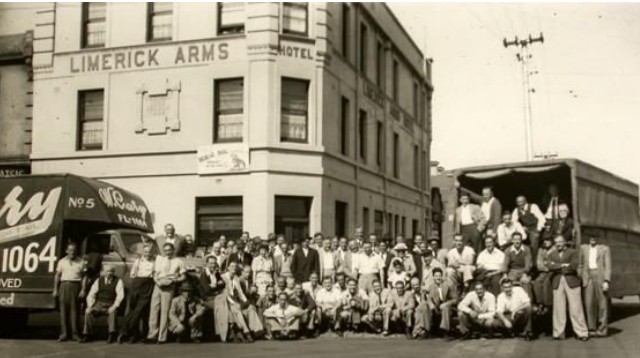
Historic Markets of Melbourne Tour

https://melbournewalks.com.au/wp-content/uploads/2012/04/eastern-market21.jpg

Explore the locations, images and stories of ten of Melbourne’s markets including the current Queen Victoria Market and famous lost markets e.g the Western Market, Eastern Market, Paddy’s Market, Melbourne Corporation Market, the Fish Markets, Hanton’s Fruit and Veg, Kirk’s Horse Bazaar, Banana Alley and the Hay and Corn Markets.  Their colourful histories and roles provides unique insights into what has made Melbourne the city it is today. In fact the Melbourne City Council was formed in the first place (1842) to manage the markets!

How long: Normally 2.5 hours or a period that suits you.
Cost: $55 each up to 5 persons;  $39 each if you organise 6-10 persons; $25 each for organising more than 10 persons.  Discounts for special needs groups.
School groups: $300 (half day/one class) – $450 (whole day/2 classes) depending on how many classes and students. Seek a quote. If the cost is a problem, talk to us!
Bookings: 0408894723; 0390907964; melbwalks@gmail.co

Melbourne ‘New’ Fish Market 1891

Kirk's Horse Bazaar

Kirk’s Horse Bazaar 1840

There have been at least seven historic market sites in Melbourne with different markets sometimes occupying a single site or succeeding each other.  Queen Victoria Market is the last of the great historical markets still operating.

WESTERN MARKET
1841 General Market

1841 Hay and Corn Market

1841-1961 Western Market, first official fruit and vegetable market

Hanton's Fruit and Vegetable Market

Hanton’s Fruit and Vegetable Market

KIRKS HORSE BAZAAR

Established 1840, Bourke Street West

HAY AND CORN MARKET
1842-1846 Unofficial Hay and Corn (St Paul’s site)

 EASTERN MARKET
1841 Hay and Corn Market, Bourke Street (unofficial)

1842 MCC established to manage the City’s markets

1846 General Market proclaimed.

1846 Official Hay and Corn Market transferred from St Paul’s site.

1847-1878 Paddy’s Market

1879-1960 New Eastern Market, demolished for Southern Cross 1962

1871 Eastern Arcade, after Haymarket Theatre burned

OLD FISH MARKET, 

1860-1891 ‘Old’ Fish Market,

1891 Hanton’s Fresh Fruit and Vegetable Market and Bicycle Stables

Western Market 1840 onwards

QUEEN VICTORIA
1857 The Lower Market

1857-1967 Livestock and Hay Market

1867 Wholesale Meat Market, relocated to Metropolitan Meat Market, North Melbourne, Courtney Street

1867 Retail Meat and Fish Market and slaughterhouse.

1877 Upper Market (G, H, I ,J built), northern edge of cemetery, A-F constructed

1878 Wholesale and Retail Fruit and Vegetable Market,

1880, Market Shops, Elizabeth Street constructed

1929 Dairy Produce Hall ( Deli Hall)

1969 Wholesale Market Footscray (relocated from Queen Victoria after Royal Commission)

1929-30 Wholesale Agents and Merchants Brick Stores (60) on car park.

INDIAN BAZAAR
Coles Book Arcade 1890s

MELBOURNE CORPORATION MARKETS,

Fish Market (later Hanton) 1865

‘Old’ Fish Market 1865

1891-1959 The ‘New’ Fish Market

BANANA ALLEY

1891 Banana Alley Vaults constructed under the Flinders Viaduct.

See Prices & Bookings

Squizzy Taylor Identities

These are some of the identities we use on our Squizzy Taylor School Tour 
This tour has assisted hundreds of students over the past five years on our Runner school tour to experience the drama, localities and characters of this outstanding school text by Robert Newton. 

SEE BOOKINGS

Theodore Leslie Taylor 1888-1927  
They called me Squizzy Taylor cos I had drooping eyelid making me ‘squint’. My nicknames included ‘The Turk’ and ‘The Artful Dodger’. I was leader of the ‘Bourke Street Rats’ and the Richmond Gang or ‘Push. I was convicted 18 times just because of my hobbies eg murder, race-fixing, illegal gambling, jury fixing, stand over, blackmail, sly grog, cocaine and prostitution. The coppers framed me!  They say was killed in a shoot-out in Fitzroy with Snow Cutmore, leader of the Fitzroy ‘push’, in 1927. But that’s not the full story!

Albert Fox
I was a real greengrocer in the Eastern Market in the 1920. Mathew Newton reincarnated me to appear in ‘The Runner’ as being stood over by Squizzy who sends Charlie Feehan to pick up the protection money payment. As I told the little runt: ‘And what makes ya think I’d and over my ‘ard-earned ta a pipsqueak like yourself?

‘Brownie’ Cotter
I’m a Fitzroy gang member. In 1921 I shot Squizzy on the crowded corner of Bourke and Russell Streets. In October I shot John Thomas ‘Fivo’ Olson in Fitzroy but I was acquitted. Some think I also assassinated Taylor in 1927 at Snowy Cutmore’s house. What a load of old cobblers. I wouldn’t hurt-a fly.  Look at my kind face – is that the face of a guilty man?

Henry Stokes
I was the ‘Two-up King’ of Melbourne’s illegal gambling. Taylor and I were heads of the Bourke Street Rats that had a gang war with the Fitzroy ‘Push’ including Henry ‘Long Harry’ Slater for several months in 1919. I accidentally bumped into Henry Slater in Little Collins Street in May 1919. Naturally, I had to shoot him five times but I was acquitted for self defence. It was so obvious I was innocent. not my fault the gun accidentally went off 5 times.

Henry ‘Long Harry’ Slater
I was a leading member of the Fitzroy gang. We fought a gang war with Henry Stokes and Squizzy Taylor’s Richmond gang for several months in 1919.  I accidentally bumped into Henry Stokes in Little Collins Street in May 1919 and he shot me five times. How rude! I survived. Stokes was acquitted for self defence. Go figure that out? If I meet again, he is a dead man walking!

Charlie Feehan
I am a character in The Runner. I won Squizzy’s race and my mate Nostrils came second. All was well until we met Barlow’s gang in Fitzroy Gardens. In real life? Norman ‘Nostrils’ Heath and I were Squizzy apprentices until we became leaders of the sixty-strong Barco Boys Gang  who terrorised the Block Arcade 1924-1929 with drug dealing and extortion.

Norman ‘Nostrils’ Heath
I am a character in The Runner. As Charlie’s loyal friend, even after losing a race to him, I assisted him on the sly grog runs (between playing games for Richmond at Yarra Park) until we met Barlow in Fitzroy Gardens. In real life? Charlie Feehan and I were Squizzy apprentices and leaders of the sixty-strong Barco Boys Gang who terrorised the Block Arcade 1924-1929 with drug dealing and extortion.

Barlow 
As leader of the Barlow Gang, I finished Nostrils ambition to be a footballer in the Fitzroy Gardens. Nostrils got lucky on the football field against me but no more! I dumped Feehan on the corner of Spring and Wellington on route but why didn’t those eggs smash?  Alice deserves better than him. MYSELF!!  Besides I need the cake more than him.

Snowy Cutmore
I was the leader of the Fitzroy Gang or ‘Push’. Squizzy and I fell out over the jewellery robbery from Fitzpatrick’s Jewellery store at 39 Collins Street. We shot it out at 50 Barkly Street, Carlton in 1927. That’s the last thing I remember before waking up in a sly grog bar in heaven. Or was it hell?

Knuckles aka Bill Loughnan
Just call me Knuckles. I was Squizzy’s bondsman. When he needed bail to be freed from jail or court I put up the cash to ensure he got out. Where I got it is none of your business unless you want a broken nose or worse. My usual job was with the Builders labourers Union. Don’t mess with me!

Francis Clapp, 1833–1920 – creator of Melbourne’s trams
In 1885 I ran the first tram or cable car in Bourke Street. Before then there were 18,000 horses and I owned 1600 of them. Next year we carried sixteen million passengers! Squizzy’s gang, the Bourke Street Rats travelled to many crimes on my trams. Squizzy ran down and killed Daphne Alcorn stepping from my St Kilda Road tram. He just drove off, the bastard. Could you imagine Melbourne without trams for 130 years? And for 113 of those years, until 1997, there were ‘connies’ collecting fares and punching tickets  and shouting ‘TICKETS PLEASE!!. Bring ‘em back I say!

Micky Powell
I was a famous dancer who married Squizzy’s wife, Ira ‘Jazz Baby’ Pender shortly after Squizzy was killed. We opened up a dance school at 73 Bourke Street, today the Tuscan Bar, before we divorced. ‘Babe’ really had the moves but you can trust her as far as you can kick her.

John William Hall
I was a taxi driver, hailed by Squizzy Taylor in Lonsdale Street and told to drive to several locations looking for Snowy Cutmore ending at 50 Barkly Street, Carlton. After shots were fired Squizzy staggered out and I drove him to hospital. I took the long way and Squizzy died without paying my fare, the rat!

Edward ‘Ted’ Whiting
My name is Ted Whiting an ex-boxer from the Fitzroy Gang. I was shot six times in the head in Fitzroy by Taylor’s gang in the Fitzroy War in 1919. The newspapers reported that I was only saved by my ‘exceptionally thick skull’.

Bob Pratt
I was the champion full forward of South Melbourne Football Club. I was getting off a tram when I was hit by a brick truck on the evening before the 1935 Football Grand Final. I blamed Squizzy Taylor for running me down to ‘fix’ the match. I’d forgotten he’d been dead for 7 years.!

 ‘Bush’ Thompson
The police believed that Taylor and I robbed Arthur Trotter, a salesman from MacRobertson’s chocolate factory, of £200 and shot him in front of his family at his home in Fitzroy in January 1913. I was tried for murder but got off. Taylor got off too. We was innocent, we just dropped by for some chocolate.

Arthur Trotter
I was a salesman from MacRobertson’s chocolate factory. In January 1913 I was robbed of £200 and shot in front of my family at my own home in Fitzroy. The police believed that Squiz Taylor and  that bastard ‘Bush’Thompson did it but couldn’t prove it. They are never going to get any chocolate from me for Xmas.

Frederick Thorpe
I was a member of the Fitzroy Gang arrested for throwing a bomb at the home of a police detective who was investigating gang shootings and Squizzy’s jewellery robbery at Kilpatricks. I was sentenced to five years’ imprisonment. How unfair!

 Thomas Berriman
On 8 October 1922, I was the bank-manager who was robbed and shot in the underpass at Glenferrie railway station after I pulled out my pistol. Angus Murray was hung for my murder. Taylor was charged with organising the crime, and helping Murray escape from Pentridge prison. He got off. Perhaps I shouldn’t have carried all that money home each day.

William Haines
I was a cab driver from the Globe Motor & Taxi Company who was shot by Squizzy after I refused to participate in the hold-up of a bank manager in Bulleen in 1916. There were a dozen witnesses who identified Squizzy but they suddenly ‘lost’ their memory at the trial.

Benjamin Isaiah Taylor
My name is Benjamin Isaiah Taylor, father of Squizzy Taylor. I built horse coaches. I suffered great poverty in the 1893 depression and we had to leave our house and move to the Richmond slums with my wife Rosina and the children when Squizzy was five. I don’t care what people say, Squizzy was a good boy really, except when he was awake.

Paddy Boardman
With Squizzy, I coordinated a lucrative business in jury-rigging. If you were accused of a crime you hired me or Squiz and the witnesses got a visit. Suddenly they seemed to lose their memories or go on distant trips or vanish.

Richard Bentley
Twelve police cars raided 443 Barkly Street, St Kilda where Ira Pender, Taylor, prison escapee Angas Murray and myself were holed up after I shot and killed a bank manager during a robbery at Glenferrie Station, Thomas Berriman.  Angas got himself hung. I went to

Hugh Buggy
I was a Herald reporter who knew Taylor, used the name Theodore Joseph Lestor Taylor. Others used Joseph Leslie Theodore Taylor. Hugh claimed that Taylor had hypnotised the media creating a sensational star out of a petty gangster.

Snoopy Tanner
I am Snoopy Tanner, a nasty character modelled on Squizzy Taylor in a famous book by Frank Hardy called Power and Glory. In the novel I am a violent gangster hired by John Wren, a corrupt gambling baron from Richmond.

John West
I was, the biggest gambler in Victoria and ran the famous ‘Richmond tote’. I had police, politician and judges in my pocket. Squizzy did jobs for me. Muriel Starr who ran the Exford Hotel, corner Lt Bourke and Russell Street, was my bag lady. She passed gambling earnings from John West to Squizzy and also delivered it across Australia for crooked businesses.

Daisy Moloney  – ‘The Runner’
I am a character in Robert Newton’s novel of Squizzy Taylor called ‘Runner’. I am the street worker but one of the only moral street characters. I advised Charlie Feehan to watch out for those ‘right nutters in the Richmond push’.‘Use that money fer something good, ya hear?

Margaret Dougan – Bilker
I was a notorious ‘bilker’ or pickpocket in the lanes of Melbourne relieving rich men of gold sovereigns. In October 1912 my friends brawled with Squizzy’s gang – the Bourke Street Rats – who ended in QV hospital full of hat pin holes. Newspapers said I was glamorous, attractive, charming, beautifully dressed with expensive jewellery. I changed the colour of my stylish dresses daily to confuse the police and the witnesses. I carried a nickel-plated pistol in my handbag and wore razor sharp hatpins.

Ida ‘Babe’ Pender
I married Squiz in 1924. My nickname was ‘Jazz Baby’, because of my obsession with jazz dancing at the Palais de Danse in St Kilda. Just call me ‘Babe’. I was arrested on the run from shoplifting charges in July 1922 while window shopping in Flinders Street. After Squiz was killed I opened a dance school with dancing champion Micky Powell at today’s Tuscan Bar at 79 Bourke Street.

Bridget Cutmore
I was treated at Melbourne Hospital after the shooting of my son Snowy, leader of the Fitzroy who ‘as shot in the bedroom at my house at 50 Barkly Street, Carlton in 1927. There were rumours that I finished off the wounded Squizzy with my pistol as he lay on the floor of my home. Good riddance to the little runt!

Dolly Grey
I was Squizzy’s girlfriend and helped him rob the Jewellery store at Fitzpatrick at 39 Collins Street. I had a talent for luring men into the back lanes where they were mugged or blackmailed in Little Lonsdale and Bourke Streets. I was sent to a sly-grog joint to test the feeling of the Fitzroy ‘push’ but had all my jewels stolen. Within three weeks, eighteen bullets had been extracted from men who couldn’t ‘remember’ what happened.  I starred in a Squizzy film ‘Bound to Win.’

Constance Stone, first doctor 1856 – 1947
Despite opposition I became the first woman doctor in Australia, In fact I inspired my sister, cousin and daughter all to became doctors after me and together we dispensed free treatment to the poor in La Trobe Street in Melbourne. We asked every woman on Victoria to give us one shilling each and with the Shilling Fund we built Australia’s first Women’s Hospital!  Go see my building – the Womens Centre at 210 Lonsdale Street.

Alice Cornwall – ‘The Runner’
I am a character in Robert Newton’s novel of Squizzy Taylor called ‘The Runner’. The daughter of a cake shop owner in Fitzroy, I take a shine to Charlie Feehan after a bad start. He is not bad looking which won’t last as he eats a lot of cake!

Madam Ghurka
I was a well-known figure at the Eastern Market where I read people’s fortunes illegally, I sold cosmetic powders (Charlie’s mother included) and practised as a phrenologist i.e reading people’s characters from bumps on their head. I sued newspapers who criticised me, for large amounts of money, and won! Please let me read the lumps on your head for you. Only five quid!

Nellie Stewart, Actress (1858–1931)
My reviews  described me as ’a beautiful woman with expressive eyes, a finely tilted mouth and dimpled smile, a talented, considerate and versatile actress’. . Squizzy came to my shows to impress his girlfriends. I was certainly a darling of the Australian public in many plays and films in the Bourke Street theatres. In 1911 I was one of the first performers ever to be filmed when I acted in the hit Australian film: Sweet Nell of Old Drury.

Dame Nellie Melba, Opera Singer (1861–1931)
I was a Prima Donna i.e an opera singer. Squizzy came to my shows to impress his girlfriends. My real name was Helen Porter Mitchell and I was the eldest of ten children. I called myself Melba because I loved Melbourne and Melbourne loved me From 1904 I produced over one hundred records for the new invention of the gramophone. Peach Melba a dessert is named after me – go and eat one, they are definitely delicious

Muriel Starr
I was a ‘bag’ woman for John West, the biggest gambler in Victoria. He had police and politicians in his pocket and Squizzy worked for him. I ran the Exford hotel, cnr Lt Bourke and Russell Street. I passed gambling earnings from John West to Squizzy and secretly delivered it across Australia for crooked businesses.

Mrs Fred Thorpe.
My darling husband Fred was a Squizzy gang member. When the police raided our house I reluctantly had to give up the fully loaded gun I kept in my silk stocking. Ain’t a girl entitled to any privacy? That gun was just for domestic purposes like killings rats (like the Fitzroy Gang).

Vida Goldstein, Campaigner 1869-1949
I was a Suffragette for the Womens’ movement and proud of it. In 1891 we went from door to door collecting signatures for the ‘Monster Petition’ demanding that women have the right to vote. We got 33,000 signatures. We ran the Peace Commune at RMIT’s Storey Hall in Swanston Street and were very unpopular but a person without principles is nothing! I became the first woman to stand for parliament in the British Empire. Finally in 1908 women in Victoria could vote. A sculpture of my Monster Petition is in Spring Street. Stand up and be counted!

Ma – The Runner
I am a character in Robert Newton’s novel of Squizzy Taylor called ‘The Runner’. The mother of Charlie Feehan and his baby brother Jack, I am widowed and am having hard times in the slums of Richmond. And where the hell is Charlie when I need him. Always running around.

Rosina Taylor
I was the mother of Squizzy Taylor and the wife of Benjamin Taylor the coach builder. We suffered great poverty in the 1893 depression and had to leave our home and move to the slums of Richmond with our children. Squizzy was five. He was not a bad boy really and he bought me home some lovely things. (Or did he steal them I wonder?).

Harriet – ‘The Runner’
I am a character in Robert Newton’s novel of Squizzy Taylor called ‘The Runner’. I am Charlies Feehan’s very annoying and aggressive duck who won’t lay eggs. Actually my name is ‘Harry’.

Mary MacKillop, first Australian Saint 1842-1909
I was born in Brunswick Street not far from the Parliament. As the eldest daughter I looked after my brothers and sisters. Together with Father Julian Woods, I founded the Sisters of St Joseph of the Sacred Heart in order to run free schools for the poor around Australia including in Little Lonsdale Street in Melbourne. The church kicked me out at one point – they certainly thought I was no saint. In 2010 however the Pope declared me Australia’s first Saint, so there!

Irene Lorna Kelly
Taylor married me at St James’s Congregational Church, Fitzroy, on 19 May 1920. He stashed me in Albert Park at his brother’s home to keep his girlfriend Dolly Grey off the track but Dolly located me and dragged me to see Squizzy. He divorced me 6 May 1924 to marry Ira Pender. Good riddance. Her bad luck, my good luck!

Shopkeeper, Little Lonsdale Street – ‘The Runner’
I am a character in Robert Newton’s novel of Squizzy Taylor called ‘The Runner’. I smack Charlie Feehan in the ear after he practices boxing on my mannequin outside my tailor’s shop in Lonsdale Street:‘Ow missus that hurts! One of Melbourne’s oldest tailor is C. Maimone in Crossley Street.

Patsy Taylor
I was the daughter of Squizzy’s third marriage to Ida Pender. I was very young when my father was shot in 1927 so I never equally knew him. Perhaps he should have stayed home and did more babysitting.

Daphne Alcorn
I was a young woman when Squizzy Taylor accidentally ran me over when I was alighting from a tram in St Kilda Road. The coward drove away and denied being there. He got off. I’ll catch up with him on the tram in heaven and shove him off!

Jacki Weaver
I am actress Jacki Weaver, born 1947, who played Dolly Grey, Taylor’s first wife, in the 1982 film ‘Squizzy Taylor’. Squizzy had a film about him ‘Bound to Win.’

Kim Lewis
I am Australian actress Kim Lewis, born 1963, who played Ida Pender, Taylor’s third wife, in the 1982 film ‘Squizzy Taylor’

Gun Alley Ghost
I was a young girl, Alma Tirshke (12) who died in Gun Alley opposite the Eastern Market in 1921. Squizzy offered a reward to be popular but an innocent man was convicted. I still wander around Melbourne as the Ghost of Gun Alley. Let’s do coffee!


See Prices & Bookings