Madame Brussells Tour

THE MADAM BRUSSELLS TOUR explores the nineteenth-century history of the famous ‘slum’ and ‘red-light’ districts of Little Lon and Little Bourke, today transformed into a stunning cafe and business precinct.
EXPLORE the lives, hopes and dreams of the people of the era, including the vilified Caroline Lohmar or ‘Madam Brussells’ who operated luxurious bordellos as well as other extraordinary women such as Mary McKillop, Esther Silcock, Vida Goldstein, Constance Stone, Lola Montez, Marie Hayes, Dolly Gray, Margaret Dougan and others.
LOCATIONS of the Melbourne underclass come to life, including opium dens,  ragged schools, missions, gangsters, bilkers, fortune tellers, dance halls,  markets, publicans, ‘Salvation Janes’, gamblers, suffragettes and burlesque theatres. Recent books and novels such as Women of Little Lon by Barbara Minchinton and The Butterfly Women by Madeleine Cleary have explored this fascinating social mix.
LEARN ABOUT the archaeological excavations of Little Lon and Wesley Centre, handle artefacts and discover insights that have transformed our understanding of poverty, crime and housing in Australia.
DISCOVER HOW many of the social welfare rights and privileges that Australians enjoy had their beginnings in Little Lon. Figures such as Mary McKillop, Esther Silcock and Vida Goldstein struggled to assist the poor and powerless through two depressions, two world wars and a deadly pandemic.

MEET: Lonsdale Street, cnr Spring Street.

SEE:  BOOKINGS AND PRICES 

“(Little Lon is) a  loathsome centre in which crime, gambling hells, opium dens and degraded Chinese abound, and where hundreds of licentious and horribly debased men and women are herded like swine…a disgrace to any civilised city on earth.”        Evangelist Henry Varley 1891.
“I just wanted to say thank you for the great tour you gave last night, everyone had a wonderful time and for our line of work, all that history of welfare and everything else about this little corner of Melbourne was absolutely fascinating.
Staff outing, Office of Hon. Daniel Andrews MP.
Thank you again for taking us on the tour of Madam Brussell’s Melbourne, we all found out some fascinating information about our own ‘home’ city, which we didn’t know. So much history!”
Staff outing, Royal Melbourne Hospital.

“I want to thank you for your time and insight today, giving us that fantastic historical walk. We thoroughly enjoyed the experience, and I certainly gained a richer understanding of Madame Brussels and who she might have been. I felt an incredible appreciation for people like you who are passionate and actively working to tell these stories that have shaped the deeply interesting character of our city.”
Emily and friends.

“A BIG thank you for today. it was a great success and I received excellent feedback from the team.”
Staff excursion, Department of Human Services.
Continue reading

See Prices & Bookings

MELBOURNE WOMEN TOURS


VISIT iconic city places to appreciate how Melbourne women from different walks of life and eras have contributed to heritage, political and social reforms, the arts, vocations and civic life.
DISCOVER the hidden history of women who defied convention, broke boundaries and resolutely forged their destiny. In doing so, they paved the way for women in contemporary society.
BRING  history alive as we allocate to each participant a historic woman’s
 identity. 
EXPLORE extraordinary heritage buildings, laneways and venues including sites designated by the National Trust.

ROUTE

OUR CBD route usually commences from Parliament House and finishes at the Town Hall or Federation Square. AN alternative St Kilda Women’s Tour commences from Acland Street. TOURS are 2.5 hours long or as requested. School student tours are two hours long or as requested. TIMES are by arrangement.

SEE: BOOKINGS AND PRICES  –  FOR INDIVIDUALS, GROUPS AND SCHOOLS

FURTHER INFORMATION

See Prices & Bookings

The City of Literature Tour

JOURNEY through our UNESCO City of Literature with its rich history of authors, publishers and books,
EXPLORE the creative ways that Melbourne’s literature has been expressed over time through the writers, festivals, shops, galleries, architecture, typography and art.
HEAR literature from stories, poems, books and places connected to the streets of Melbourne. Melbourne Walks ourselves are the authors of award-winning BOOKS.
OUR school tours allocate LITERARY IDENTITIES to participating students of people who helped create our literary city.

SEE: BOOKINGS AND PRICES – FOR INDIVIDUALS, GROUPS AND SCHOOLS
SEE: Our many SCHOOL PROGRAMS e.g Explorer, Federation, Aboriginal, Early Melbourne, Lanes, ‘Runner’, Street Art and more.

“Our book club had a fantastic walk around Melbourne. Our walk leader kept us entertained with interesting information and hidden gems. A must-do for anyone interested in Melbourne, history, or literature. We ended up feeling delighted and surprised.”
Dienne.

“Thanks for taking our students on this fascinating tour. Our visiting students were thrilled and loved the history and the literary identities you gave to each student.”
Tao Nan School (Singapore)

“The City of Literature Tour was terrific and I’ve highly recommended it to friends. I look forward to going back to some of the places we visited.”
Doug and Di McCarthy.

“We are part of a Young Authors Program and our students are made up from different schools across the Ballarat area. Our group participated in this walk last year and it was fabulous.”
Bunninyong Primary.

This tour is included in Lonely Planet's Best Tours 2015.

Our Literary Tour was included in Lonely Planet’s Best Tours.

Some of the books, authors, settings and literature connections that we may explore in our CBD tour:

  • Writers in Hand.  Athenaeum Theatre.
  • The Enigmatic Mr Deakin by Judith Brett
  • Neramnew by Paul Carter
  • Our Ancestors Return Home by Jim Berg
  • You Daughters of Freedom by Claire Wright
  • The Monster Petition 1891
  • For the Fallen by Laurence Binyon
  • 1835 by James Boyce
  • The Forgotten Rebels of Eureka by Claire Wright
  • Earthly Delights by Kerry Greenwood
  • The Passion and the people. Bringing our Ancestors Home by Jim Berg.
  • The Phryne Fisher Mysteries by Kerry Greenwood
  • MacRobertson Land by Jill Robertson
  • The Coles Funny Book by Edward Coles
  • The Grandest Shop in the World by Amelia Mellor
  • Runner by Robert Newton
  • A Midsummer Nights Dream by William Shakespeare
  • The Melbourne Tram Book by Randall Wilson, Dale Budd
  • Poster Boy by Peter Drew
  • One Thousand and One Arabian Nights
  • Shakespeare  & Newspaper House Mural by Napier Waller.
  • The True History of the Kelly Gang by Peter Carey.
  • Rare. A Life Among Antiquarian Books by  Stuart Kell
  • The Hill of Content by A. H. Spencer.
  • The Mystery of the Hansom Cab. Fergus Hume
  • Blockbuster. Fergus Hume and The Mystery of the Hansom Cab. Lucy Sussex
  • A Scandal in Bohemia. Gideon Haig 2018.
  • The Portrait of Molly Dean. Katherine Kovacic 2018.
  • Monash. The Outsider Who Won a War. Roland Perry
  • My Brother Jack. George Johnston.
  • The Rabbits by John Marsden and Shaun Tan.
  • Ross and Dot Reading, Peter Reid and the Green bookstore.
  • Melbourne Dreaming by Meyer Eidelson
  • The Rise of the Creative Class by Richard Florida.
  • Aspro. How a family business grew up by Alexander Barrie.
  • Vali Myers A Memoir by Gianni Menichetti.
  • The Max Factor & My stamp on life by Max Stern
  • Books Tanks and Radios by Meyer Eidelson
  • Zines by the Sticky Institute
  • The Golden Girl by Betty Cuthbert.
  • The Unforgiving Minute by Ron Clarke
  • Utopian Man. Lisa Lang.
  • Larrikin Crook. The Rise and Fall of Squizzy Taylor by Hugh Anderson
  • The Gun Alley Murder. Truth Lies and the Failure of Justice by Kevin Morgan 2005.
  • Dangerous Language: Sulari Gentil
  • Writers in Hand.  Athenaeum Theatre.
  • Rare. A Life among Antiquarian Books by  Stuart Kell
  • The Hill of Content by A. H. Spencer.
  • Monkey Grip by Helen Garner
  • Possum Magic by Mem Fox
  • The Toff series. John Creasey
  • The Mystery of the Hansom Cab. Fergus Hume

Great books to read about Melbourne:
Some well-known Melburnians were asked what books they thought most crystallized the essence of their city.

  • Melbourne Writers Festival director Steve Grimwade:  Christos Tsiolkas’ Loaded and ‘The Slap’; Poets Alicia Sometimes’ St Kilda, Kieran Carroll’s ‘Talking to Richmond Station’  Shane Maloney’s trilogy featuring Murray Whelan.
  • Author Robert Newton: Stiff‘, the first of the Murray Whelan trilogy,
  • Author Kate Holden: Helen Garner’s ‘Monkey Grip’
  • Media figure Libbi Gorr: Jeff Apter’s new book, ‘Shirl: The Life of Legendary Larrikin – Graeme ‘Shirley’ Strachan‘.
  • Novelist Honey Brown: Lily Bragge’s memoir, ‘My Dirty Shiny Life’
  • Author Toni Jordan: Michelle de Kretser’s third novel, ‘The Lost Dog’
  • The Big Issue books editor: Toni Jordan’s latest novel, ‘Nine Days’
  • Writer-performer Jane Clifton and ABC Books and Arts Daily presenter:  Fergus Hume’s 1886 thriller ‘The Mystery of a Hansom Cab’
  • Michael Cathcart:  Fergus Hume’s 1886 thriller ‘The Mystery of a Hansom Cab’
  • Author and birdwatcher Sean Dooley:  H.W. Wheelwright’s 1861 ‘Bush Wanderings of a Naturalist’
  • Bookseller and writer Corrie Perkin:  Kristin Otto’s ‘Yarra: A Diverting History of Melbourne’s Murky River’
  • Historian David Day: Tony Moore’s recent’ Dancing with Empty Pockets’
  • Poet and broadcaster Alicia Sometimes: Jeff and Jill Sparrow’s ‘Radical Melbourne: A Secret History’.
  • Writer and bookseller Josephine Rowe:  Lisa Lang’s ‘Utopian Man’
    John Bailey, The Age, August 12, 2012
  • Books set in the streets of Melbourne
  • Novels set in Melbourne

Read about the rich history of Melbourne’s books and writers from early Melbourne until today by Des Cowley and John Arnold (www.emelbourne.net.au).

In Flinders Lane, near Roach’s store,Were bogg’d a dozen, less or more;
Two dapper dames, return’d from shopping,
Were, much against their wishes, stopping:
A brace of New Chums, sprucely drest,
In long-tail blues, – their very best, –
Look’d rueful at their spatter’d breeches,
Vow’d Melbourne’s Streets were beastly ditches

George Wright’s poem ‘
Adventures on a winter’s night in Melbourne 1857

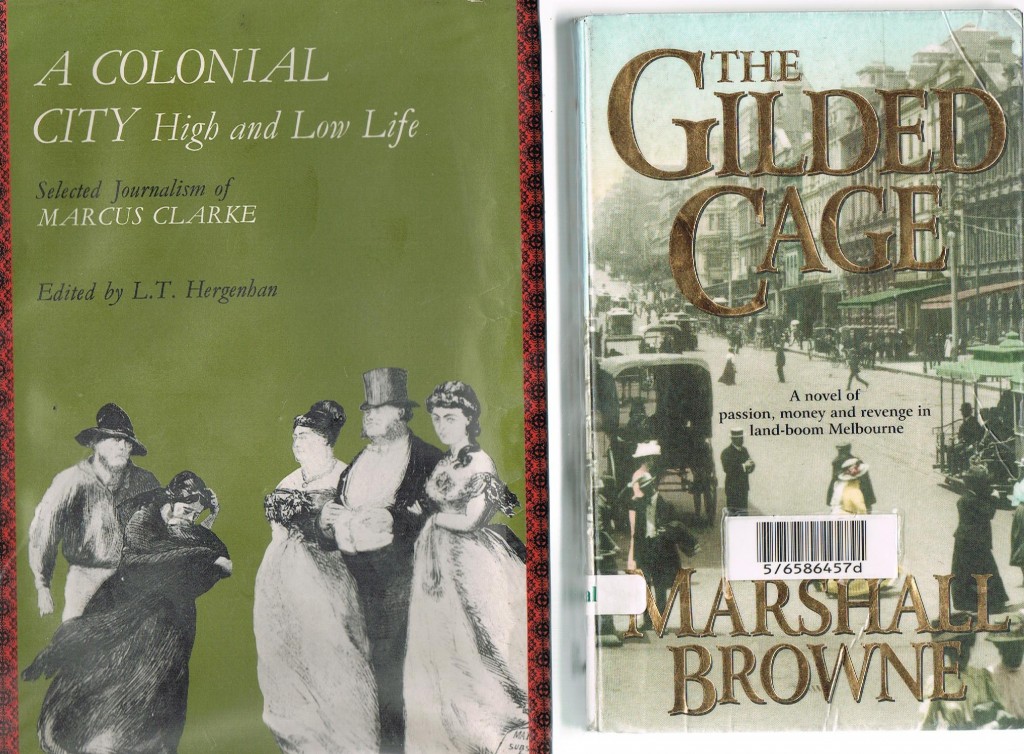
The creative imagining of Melbourne began when John Batman sailed up the Yarra River on 8 June 1835 and wrote in his journal ‘this will be the place for a village’. The figures of John Batman and John Pascoe Fawkner, generally cited as the founders of Melbourne, have been largely passed over by literary writers. Batman was the subject of the play Batmania (1997) and his courtship of his future wife Eliza features in Robert Close’s novel Eliza Callaghan (1957). Fawkner is a minor character in Eric Lambert’s The five bright stars (1954). However, the convict William Buckley (1780-1856) has provided writers with one of their most enduring characters. The title of James Bonwick’s biography, published in the year of its subject’s death, William Buckley, the life of the Wild White Man and his Port Phillip Black Friends (1856), was followed by Edward Williams’ De Buckley, or incidents of Australian life (1887), Marcus Clarke’s ‘William Buckley, the wild white man’ (1871) and John Bernard O’Hara’s Songs of the south: second series: The wild white man and other poems (1895), and in the 20th century Alan Garner’s Strandloper (1996), Barry Hill’s award-winning book of poetry Ghosting William Buckley (1993), and Craig Robertson’s Buckley’s hope (1980).

Richard Howitt, an early settler to the Port Phillip District, published Impressions of Australia Felix (1845). ‘The native woman’s lament’, narrated by a Kulin woman, is a sympathetic lyric about the loss of traditional hunting lands. A similar sentiment is to be found in Kinahan Cornwallis’ Yarra Yarra, or, the wandering aborigine: a poetical narrative (1857). ‘To the river Yarra’, on the other hand, celebrates the river and the new European settlement on its banks.

Thomas McCombie’s minor novel, The colonist in Australia, or, The adventures of Godfrey Arabin (1845), deals in part with his experiences in the Port Phillip District. Of greater significance is George Henry Haydon’s novel The Australian emigrant (1854), based on his Five years’ experience in Australia Felix (1846), a factual account of his time in the colony. Rolf Boldrewood’s Old Melbourne Memories (1884) includes memories of the Melbourne he came to in 1841. Georgiana McCrae arrived in the same year and provides in her journals, edited by her grandson Hugh McCrae and published as Georgiana’s journal in 1934, a detailed account of Melbourne in the 1840s. With her son George Gordon, she is also the subject of the title poem in Christina Mawdesley’s collection The Corroboree Tree (1944). More…

See Prices & Bookings

MARVELLOUS MELBOURNE – THE GOLDEN MILE

Journey along the ‘The Golden Mile’ of  Collins Street and experience almost 190 years of iconic Melbourne places. Explore the iconic architecture from the 1850s gold rush to the 1880s land boom until today. Starting from the Treasury at the eastern ‘Paris’ end, we explore downhill to the city’s spiritual, commercial and retail heart and continue on to the early village settlement at the western end. 

When visiting writer George Sala coined the term ‘Marvellous Melbourne’ in 1885, the ’Queen of the South’ was the biggest and wealthiest city in the British Empire after London. Terms such as New Gold Mountain and the Land of the Golden Fleece described a city only 50 years old yet bustling with palaces of commence, theatres, hotels, cathedrals, galleries, banks, artists, and stock exchanges.

Starting Points: We usually start from the Old Treasury on Spring Street corner Collins Street. However we have run also these tours for conferences, staff events, tour groups and schools (two hours) from different starting points such as Melbourne Museum, The Immigration Museum, the Hyatt Hotel, Sofitel, City CYC and Flinders Street Station.

See: BOOKINGS

‘A wonderful way to get an overview of the best of this beautiful city as well as its history and buildings. It was also great fun’.
Henry and Marcia, Philadelphia.

‘Our kids had a wonderful walk. For years its has been a highlight of our annual city camp
.
Karoo Primary School.

Melbourne was established in 1835 at the height of a globalised wool industry. Only sixteen years later it became known as New Gold Mountain with a tremendous gold rush. Named for Lieutenant-Governor David Collins, the western end near the port developed quickly but the eastern end initially was bushland, and the centre section between Swanston and Elizabeth was a haberdashery district. The gold rush funded a boom of neo-Gothic and Italianate bank and insurance buildings, handsome stone churches, and the most fashionable shops in the country. Doctors built townhouses at the Spring Street end and grand hotels like the Federal went up. Artists lived in studios in the west end and businessmen hung their artworks in their private clubs.

The street’s fortunes plunged after the 1890s Depression, then boomed in the roaring 1920s and plunged again during the 1930s Depression.  An extraordinary renaissance has come since the late 1990s with heritage restorations, new CBD residents, soaring modern architecture and an egalitarian mix of shops and street-level cafes.

SOME KEY HERITAGE AND CIVIC BUILDINGS ON COLLINS STREET

  • Cnr Spring Street, Old Treasury, 1862, JJ Clark
  • 137 Spring Street, Windsor Hotel 1888, Charles Webb
  • 1 Collins Street, 1983 Denton Corker Marshall Peck
  • 5-7 Collins Street, merchant’s houses, 1888
  • 61 Spring Street House of Hon William Campbell 1871, Leonard Terry
  • 2 Collins Street, Alcaston House 1930, A and K Henderson 1930
  • 9 Collins Street, Grosvenor Chambers (Heidelberg School and Angry Penguins) 1887
  • 15 Collins Street, WCTU Rooms
  • 35-55 Collins Street Towers, Sofitel 1975,  I M Pei, Bates Smart McCutcheon (BSM)
  • 36-50 Collins Street, Melbourne Club, 1858, Leonard Terry
  • 81 Collins Street  Alexandra Club (oldest women’s club).
  • Collins Place 1980 cnr Exhibition Street, Cobb, Bates Smart, McCutcheon
  • 101 Collins Street 1986-90, Denton Corker Marshall
  • 107 Collins Street, Francis House 1927, Blackett and Forster,
  • 115-119 Collins Street, Austral Building 1890, Nahum Barnet
  • 100-104 Collins Street, Gilbert Court 1955, John A La Gerche
  • 110-14 Collins Street, Collins Professional Chambers 1908, Ussher and Kemp
  • 120 Collins Street 1991, Daryl Jackson
  • 122-6 Collins Street, St Michael’s Church (first polychromatic), 1866, Reed and Barnes
  • 140-54 Collins Street, Scots Church, 1873 Reed and Barnes.
  • 156-160 Collins Street, Scots Church Assembly Hall 1915, Henry Kemp.
  • 162-168 Collins Street, Georges Store 1883, Grainger and Kemp.
  • 140-174 Collins Street Baptist Church 1845, John Gill.
  • 141 Collins Street, T & G Building 1938, Anketell And Kingsley.
  • 167-73 Collins Street, Auditorium Building, 1913 Nahum Barnet.
  • 191-7 Collins Street, Regent Theatre 1930, Cedric Ballantyne.
  • 188 Collins Street, Athenaeum Theatre 1839.
  • 90-130 Swanston Street, Melbourne Town Hall 1867, Reed and Barnes
  • 109-117 Swanston Street, Capitol Theatre 1924, WB Griffin and M Mahoney
  • 91 Swanston Street, Manchester Unity1933, Marcus Barlow
  • 250 Collins Street, Lyric House 1930, A and K Henderson.
  • 252 Collins Street Kodak House 1935, Oakley And Parkes.
  • 247-49 Collins Street, Newspaper House 1933, Stephenson and Meldrum, Napier Waller.
  • 259-63 Collins Street, Centreway Building 1912, H And F Tompkins, 1987 Cocks, Carmichael, Whitford.
  • 287-301 Collins Street, Royal Banking Chambers 1941, Stephenson and Turner.
  • 282-284 Collins Street, Block Arcade 1891, Twentyman And Askew, Buchan Group 1983.
  • 115-117 Elizabeth Street, Paton Building 1905, Nahum Barnet.
  • 333 Collins Street CBA Bank, 1891, Taylor And Dunn, Nelson Architects 1990.
  • 376-380 Collins Street, Melbourne Stock Exchange 1891, William Pitt.
  • 390 Collins Street, ES&A (ANZ Gothic) Bank Collins 1884, William Wardell.
  • 389-399 Collins Street, AC Goode House, former Bank NZ 1891, Wright Reed and Beaver.
  • 401 Collins Street, Trustees Building, HQ General Macarthur 1941-3.
  • Bank Place Mitre Tavern 1860s, Savage Club 1894,
  • 419-429 Collins Street, Former AMP Building 1931, Bates Smart And McCutcheon
  • 412 Collins Street, Collins Hill 1941, Percy Everett PWD.
  • 422-448 Collins Street, Temple Court 1924, Grainger, Barlow and Hawkins.
  • 430-44 Collins Street Royal Insurance Building 1965, Yuncken, Freeman
  • 435-55 Collins Street, National Mutual Life 1965,
  • 477 Collins Street, Olderfleet 1889, William Pitt, 1985 Von Hartel Denton Corker Marshall.
  • 497-503 Collins Street Old Rialto 1889, William Pitt.
  • 525 Collins Street, Rialto Towers 1986, De Preu And Mathieson
  • Cnr Collins and King Streets, Enterprize House, former Federal Coffee Palace.
  • 546-566 Collins Street, McPhersons Co. 1937, Reid Pearson and Calder
  • Cnr Collins and Spencer Street, Southern Cross Station 2006, Nicholas Grimshaw.

FURTHER INFORMATION

BOOKS ABOUT MELBOURNE

  • Bearbrass, Imagining early Melbourne, Robyn Annear, Melbourne : Black Inc., 2005.
  • Liardet’s water-colours of early Melbourne, Introduction and captions by Susan Adams, edited by Weston Bate, Melbourne University Press 1972.
  • Old Melbourne Town, Before the Gold Rush, Thomas Nelson , Australia, Limited. Cannon, M., 1991,
  • Essential but Unplanned: the story of Melbourne’s Lanes, Bate, Weston, Main Ridge: Loch Haven Books 1994
  • The Land Boomers, Michael Cannon 1966: Melbourne University Press, Melbourne.
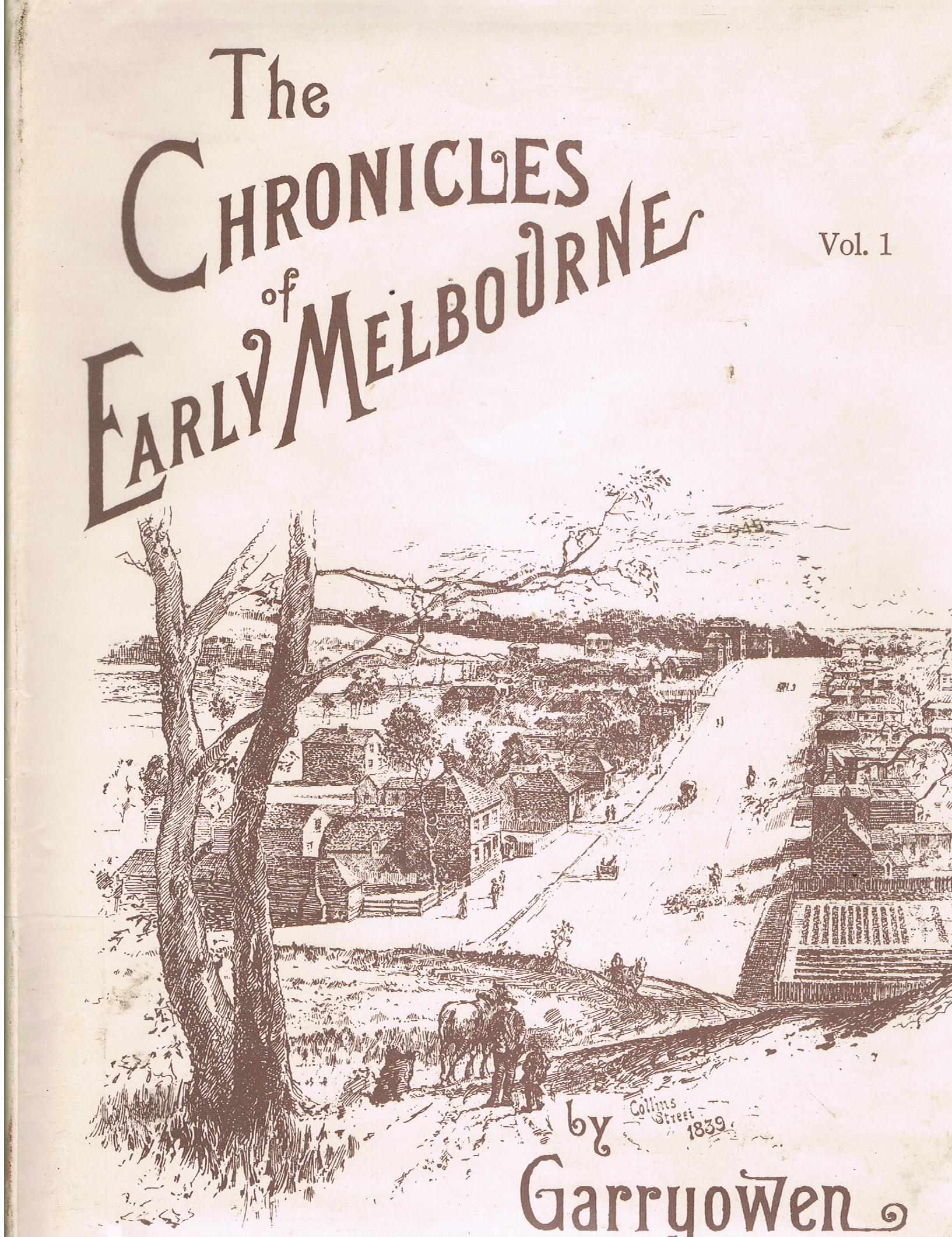
  • Chronicles of Early Melbourne 1835-51 E. Finn, 1888, 2007 (CD); www.gould.com.au/Chronicles-of-Early-Melbourne-1835-51-p/au7030.htm.
  • The Old Melbourne Cemetery 1837 – 1922, Marjorie Morgan, Australian Institute of Genealogical Studies in 1982.
  • Old Pioneers Memorial History of Melbourne, Isaac Selby, 1924.
  • A City Lost and Found. Whelan The Wrecker’s Melbourne, Robyn Annear, Black Inc. 2005.
  • Melbourne The Biography of a City, W.H. Newnham, F.W. Chesire, 1956.
  • The Birth of Melbourne, Tim Flannery, The Text Publishing Company, 2002.
  • A Walking Guide to Melbourne’s Monuments, Ronald T. Ridley, Melbourne University Press, 1996.
  • A New City: Photographs of Melbourne’s Land boom, Ian Morrison, The Megunyah Press, 2003.
  • Melbourne’s Yesterdays, 1851-1901, A Photographic Record, Don Bennetts, Souvenir Press (Australia) Pty Ltd 1976.
  • A Guide to Melbourne Architecture by Philip Goad Watermark Press.
  • A Pictorial Guide to Australian Architecture, Styles and terms from 1788 to the present by Richard Appleby, Robert Irving. Peter Reynolds, Angus and Robertson.
  • Walking Melbourne, A National Trust guide to the historic and architectural landmarks of central Melbourne by Rohan Storey.
  • Melbourne: The City’s History and Development Lewis, Miles, City of Melbourne, 1995
  • The Streets of Melbourne From Early Photographs, Peter McIntosh, published by H&WT c1988
  • The James Flood Book of Early Melbourne, H H Paynting (ed)
  • Photographs of Melbourne’s Land Boom, Ian Morrison (ed), A New City: Carlton (Victoria) 2003.
  • 150 Years of Australian Architecture, Philip Goad, ‘Bates Smart: Fishermans Bend, 2004.
  • A Short History of Melbourne Architecture, Philip Goad, Pesaro Publishing, 2002.
  • Sun Pictures of Victoria Fauchery & Daintree, Reilly & Carew Currey O’Neil Ross, 1983.
  • 1835: The Founding Of Melbourne And The Conquest Of Australia by James Boyce 2011.
    Melbourne by Sophie Cunningham 2011.
  • Characters: Cultural Stories Revealed Through Typography by Stephen Banham 2011.
  • The Place for a Village. How Nature has shaped the city of Melbourne. Gary Presland.
  • Melbourne Remade. Seamus O’Hanlon. The Inner city Since the 1970s. Arcade Publications 2010.

INDIGENOUS HISTORY

  • Aboriginal Melbourne: the lost land of the Kulin people, McPhee Gribble, Ringwood, Vic. 1994.
  • The Melbourne Dreaming. A Guide to the Aboriginal Places of Melbourne, 1997, Aboriginal Studies Press.
  • Aboriginal Victorians. A history since 1800, Richard Broome, Allen and Unwin 2005.
  • I Succeeded Once. The Aboriginal Protectorate on the Mornington Peninsula, Marie Fels 2011.
  • Meerreeng-an. Here is my Country. The Story of Aboriginal Victoria told through art. Chris Keeler and Vicky Couzens 2010.
  • 1835: The Founding Of Melbourne And The Conquest Of Australia by James Boyce 2011.
  • The Australian Aborigines, A. P. Elkin. Angus and Robertson, 1986.
  • Wild Medicine in Australia, A.B. and JW Cribb, Collins, 1988.
  • Wild Food in Australia, A.B. and JW Cribb, Collins, 1988.
  • Archaeology of the Dreamtime, J Flood, Angus and Robertson, 2001.
  • Remains to be Seen. Archaeological insights into Australian pre-history. David Frankel.
See Prices & Bookings

DOCKLANDS HISTORY & ARCHITECTURE TOUR

Docklands is Beautiful | Docklands News

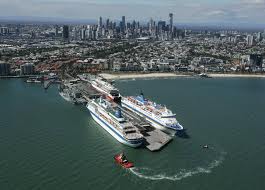
OUR WALKING TOUR tells the story of Melbourne’s Docklands precinct from its Indigenous heritage to colonial settlement to shipping wharves to a new suburb containing some of Australia’s most spectacular buildings, public spaces, artworks, waterfrontages, library, recreational and hospitality venues designed by leading Australian architects.
EXPLORE why Docklands has many of Australia’s leading NABERS-rated buildings with 5-6 Star ratings for energy, water, waste and interiors.
TOURS for school groups (2 hours) and adult groups (2.5 hours) leave and finish at Southern Cross Station by arrangement.

SEE  –  BOOKINGS –  FOR INDIVIDUALS, GROUPS AND SCHOOLS.

According to the City of Melbourne, more than 16,000 residents now call Docklands home. The waterfront sits on the lands of the Wurundjeri Woi-wurrung people of the Eastern Kulin.  This lower delta of the Birrarung or Yarra River was once a wetland rich with natural resources. After European settlement, industry crept to prominence. By 1908, Victoria Dock was handling around 90 percent of Victoria’s imports represented by buildings today such as the giant Cargo Sheds. But by the 1970s the dock and wharves were in decline. Urban renewal began in the 1990s. When Docklands was absorbed into the City of Melbourne, it doubled the size of Melbourne’s central city and returned a significant area of waterfront to the city.  The suburb now stretches out over 200 hectares of land and water just west of the CBD, hugging Victoria Harbour.  By 2024  Docklands had evolved into a spectacular waterfront precinct. It is increasingly in dialogue with the central city through the use of iconic Melburnian themes, such as laneways, new parks and bluestone pavers.

See Prices & Bookings

ALL OUR TOURS (50)

We provide over 50 different walking tours as well as designing and combining tours to meet special requests. Choose your theme  and suggest a time and date of your convenience.  

SEE  – BOOKINGS AND PRICES  –  FOR INDIVIDUALS, GROUPS AND SCHOOLS

SEE  –  SCHOOL EXCURSIONS e.g. Explorer, Sustainability, Architecture Federation, Geography, Indigenous Landscapes, Colonial, Lanes, Literature, ‘Runner’, Street Art, Science and many more…

AMAZING LANES AND ARCADES TOUR
Explore the fascinating labyrinth in Melbourne’s historic warehouse, fashion, maritime and residential precincts. More….

MELBOURNE STREET ART AND GRAFFITI TOUR  
Melbourne’s back lanes are internationally famous as creative galleries and feature thousands of amazing stencils, posters, paintings, murals, light boxes, graffiti and installations as well as historic typographies.  More…

BEARBRASS: THE FOUNDING OF MELBOURNE      
Explore the original places of colonial settlement in the heart of the CBD. More…

‘LOST MELBOURNE’ TOUR
More…

MELBOURNE CITY OF LITERATURE TOUR
A walking tour of booksellers and books: Melbourne is the world’s second UNESCO City of Literature. More

MELBOURNE INDIGENOUS LANDSCAPES TOURS
More…

MELBOURNE CRIME TOUR
Explore crimes, cold cases and mysteries in the heart of the city. More…

MELBOURNE ARCHITECTURAL TOUR 
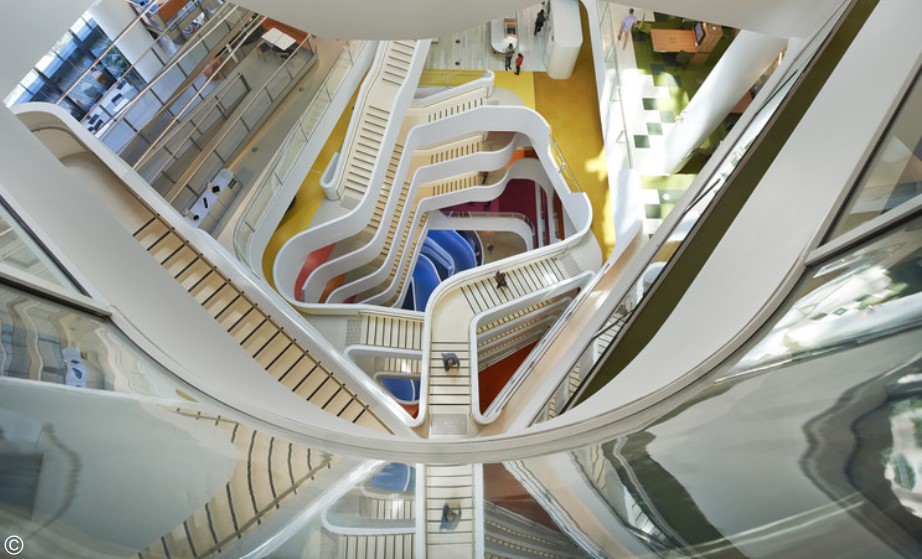
Visit landmark architectural buildings that tell the story of Melbourne. More…

MELBOURNE SUSTAINABILITY TOUR
More…

MELBOURNE SOCIAL JUSTICE TOUR
More…

MADAM BRUSSELL’S MELBOURNE
Explore the places, times and 19th-century life of the city’s most infamous ‘Madam.’ More

SQUIZZY TAYLOR TOUR
Visit CBD sites places associated with the notorious gangster, bootlegger, jury rigger, thief, murder, blackmailer and gambler. More…

MELBOURNE DUNNY LANES TOUR   
Join an 1880 dunny crew and undergo training in the maze of historic lanes and arcades exploring Melbourne’s hidden infrastructure. More…

ST KILDA MURDER AND MYSTERY TOUR
More…

GREAT MARKETS OF MELBOURNE TOUR
Explore the historic locations, images and stories of famous markets from 1842 to 2020. More…

LOST CEMETERIES TOUR (including QV market) 
Did you know that there are 9000 bodies of early settlers, Aboriginals, Quakers, and bushrangers buried under the Queen Victoria Market Car Park? More…

SIGNS IN THE CITY – A MELBOURNE CULTURAL TYPOGRAPHY TOUR
Explore the City of Melbourne’s oldest heritage letterforms. More…

OP SHOPS BY THE BAYSIDE BY BICYCLE
Cycle to bargains at Op shops in the beautiful basyside suburbs of St Kilda, Port Melbourne and South Melbourne. More…

LAST MAN HANGED – THE RONALD RYAN TOUR
More…

MELBOURNE WOMEN TOUR
Retrace the historic places and significant buildings which tell the story of Melbourne’s women campaigners for equality and social justice from settlement to today. More…

MELBOURNE HALLOWEEN TOURS
Experience the lost cities of the dead at Flagstaff Gardens and Queen Victoria Market. More…

WALKING TOUR OF MELBOURNE’S MONUMENTS 

THE CREATIVE CITY TOUR
More…

LIVING WILD OFF THE LAND
More…

MELBOURNE WILDFLOWERS TOUR
More…

YARRAVILLE  WALKING TOUR
Explore the delightful village of Yarraville with its fascinating mix of railways, picture theatre, traders, clubs and community groups. See Pictures.

PORT MELBOURNE WALKING TOUR
More…

ELWOOD WALKING  TOUR
Explore the extraordinary built and natural heritage of Elwood with the author of the ‘History of Elwood’ including the canal, the Ormond Road village, the foreshore, architecture and indigenous sites. More…

ELWOOD POETRY TOUR
More…

RIPPONLEA WALKING TOUR
Ripponlea’s historic places from indigenous times to heritage village by the author of ‘Ripponlea. The Village’ (2010). More…

FOOTSCRAY WALKING TOURS
Take a stroll through the heart of Footscray and explore the fascinating history of its, people, homes, hotels, businesses, immigration, warehouses, transport and changes over time and the Heritage Wharf  precinct. See pictures…

MARVELLOUS MELBOURNE
Explore the golden age of the Melbourne boom of the late nineteenth century: the mansions, palaces of commerce, civic buildings, churches, great hotels, vaults, cathedrals, galleries, banks and stock exchanges.

MULTICULTURAL MELBOURNE   
Explore iconic cultural places of Melbourne influenced by waves of immigrants.  More…

WILLIAM BUCKLEY’S MELBOURNE
In the footsteps of the ‘wild white man’: Retrace the escape route of convict William Buckley who lived with Aboriginal people for thirty-two years before settlement in 1835. 

MELBOURNE GEOGRAPHY TOUR
More…

YARRA BEND
Explore the archaeological and natural history of the Yarra River and Merri Creek junction. 

THE MARIBYRNONG VALLEY
Explore the archaeological and natural history of the Maribyrnong Valley, one of Australia’s great pre-history locations.

ST KILDA, THE DARK SIDE
Walk the back lanes of St Kilda at night to discover 175 years of murder, arson, prostitution, slygrog, cannibalism, bushrangers, theft and the redoubtable Squizzy Taylor. More…

ACLAND STREET
Walk the length of legendary Acland Street to visit the amazing architecture, history, cafes, cake shops, pubs, mansions, theatres, churches, artists, writers, and more.

LITERARY ST KILDA
St Kilda is Melbourne’s greatest setting for thrillers, books, screenplays and writers.  Experience places used in up to fifty Australian books and films.

ELWOOD: FLOOD, FIRE & FEVER
Explore the Elwood village and streets to discover the history of its early settlers, wetlands, poets, landscapes, homes, transport, businesses and local identities.

ST KILDA HILL
Walk St Kilda Hill from the Astor down to the Carlisle Street village to explore a crowded landscape of theatres, churches, army base, cottages, mansions, synagogues, pubs, parks, post office and drains. Explore St Kilda’s architecture since settlement from its wealthy seaside mansions, great hotels, amusement palaces, seabaths, boarding houses, flats, brothels, punk venues and immigrant cafes.

ART DECO ST KILDA
Visit the great art deco buildings of the St Kilda foreshore.

ART DECO ELWOOD
Visit the delightful art deco flats and buildings of Elwood

BUSHRANGERS TO BIOPOLIS
Explore the fascinating history of the St Kilda Road precinct.

MARVELLOUS MIDDLE PARK
Discover the fascinating range of architecture, streets, building styles and historic personalities revealed in the landscape.

POETRY STREETS OF ELWOOD
Take turns to read the poetry of the thirty or so authors and poets whose names are borne aloft on street signs such as Dickens, Tennyson, Byron, Browning, Barrett and Gordon.

THE CHARGE OF THE LIGHT BRIGADE
Relive the events and personalities of the Crimean War by traveling the score of war-named streets such as Odessa, Malakoff, Nightingale, Alma, Balaclava and Inkerman.

THE SPIRIT OF ST KILDA
Discover 180 years of the spiritual heritage of St Kilda’s places of worship established by Aboriginals, settlers, refugees, today’s communities and the persecuted for ‘matching, hatching and dispatching’.

HISTORIC PUB CRAWL ST KILDA
Discover fascinating stories behind St Kilda’s great 150-year-old hotels including The Gorge, Esplanade, Elephant and castle, Prince of Wales and others.

ELWOOD CANAL
Explore the Elwood canal (formerly Elster Creek) at Point Ormond near its junction with the sea and discover the history, wildlife, flora, early settlement, and indigenous places of this ancient swamp and coastline.

MERRI CREEK MEANDER
Travel down the Merri creek valley from Northcote to its confluence at the Yarra and discover the amazing, natural, indigenous and cultural heritage of this urban waterway

IN THE FOOTSTEPS OF THE DUNNT MAN
Explore the maze of 19th century lanes in historic Albert Park as a night soil worker and discover extraordinary workers’ cottages, bluestone, chimneys, characters and the great Australian outhouse. A time travel journey to the rear end of Victorian architecture and working life.

HOUSING THE POOR AND THE PRIVILEGED
Garden City is home to five extraordinary housing estates including ‘Baghdad’ or Fishermens Bend and the heritage Bank Houses built to an English visionary ideal.

Further Reading about Melbourne’s history

See Prices & Bookings

Melbourne Innovation Tour

MELBOURNE has been voted the world’s most liveable city seven times. What are the innovations that put this city on the world map?
EXPLORE places, events and characters in Melbourne that have or are demonstrating Innovation.
EXPERIENCE an historical overview of innovative Melbourne from creation to today including architecture, sustainability, social enterprise, venues, retail, lanes, artworks, transport, sculpture, and identities.
TOURS are 2.5 hours for adults and 2 hours for student groups, usually starting from Federation Square.

WHAT IS INNOVATION?
‘Introducing new and improved ideas, devices, methods, products and processes for more efficient and effective work, creativity and social good.’

SEE  –  BOOKINGS AND PRICES  –  FOR INDIVIDUALS, GROUPS AND SCHOOLS 

See our OTHER TOURS including our Science Tours and School Excursions

People, events, places and themes we may explore on the day depending on location, time and age of participants:

  • Nearamnew
  • One 9 billion dollar hole
  • Walking Woman
  • Fonts, springs, triangles, fossils and tunnels
  • Mechanical emails
  • Sparrow mysteries
  • Bohemian Indexes
  • Biomimicry and Design Melbourne
  • Street art and the homeless
  • Rubbish, rats and crime to Liveability.
  • Treaty: from theft to salvation.
  • Monash, Jacka, Eastman, Stone, Cole, Deakin, Walker
  • The patriotic building and sacred geometry
  • Prophesying the future
  • Smellboom: the death of Marvellous Melbourne
  • Promenades
  • Clean energy transport
  • Salysylic acid and art deco
  • The Neoclassicist
  • Helvetica riddles
  • Anti-innovation
  • Trams, tickets and connies
  • Haydraulics
  • Evangelists and social protesters
  • Singer and Kodak
  • Chocolate frogs and bridges
  • And more…
See Prices & Bookings

WALKING TOURS FOR CLUBS $30

Over fifty cultural, historic and Indigenous walking tours! The perfect learning and social event for club members of U3A, Probus, Rotary, Life Activities, Senior Citizens, Reconciliation, Meetup.

We continue our special discount rate for Probus, Rotary, U3A, Life Activities Clubs and Seniors Clubs of only $30 per person for a 2-hour tour if they have ten or more persons  Our usual maximum per group is 20-25 or more depending on which tour. Book early!

Melbournewalks.com is one of Melbourne’s oldest walking companies. We deliver over fifty highly-researched walking tours (examples below) in Melbourne’s city centre and also suburbs including Lanes and Arcades, Street Art, Unsolved Crimes, Early Melbourne, Indigenous, Architecture, Rooftop tours, Subterranean tours and many more.

“On behalf of the Sherbrooke U3A members who took the Bearbrass Early Melbourne Tour last Thursday, I wish to express our thanks and appreciation…everyone enjoyed it immensely. Most of us have lived in the Melbourne area for many years, yet know very little about its history. The facts and stories that you shared with us will whet our appetite and encourage us to research into our collective past. I hope to plan further walks in the future. Kind regards”.    Sherbrooke U3A

‘Many thanks for the tour on Monday last. We all learnt a great deal about our wonderful city from you.’   U3A Emerald

SEE  –  BOOKINGS AND PRICES  –   FOR INDIVIDUALS, GROUPS AND SCHOOLS 

SOME POPULAR TOURS

MELBOURNE LANES TOUR:
Explore the fascinating labyrinth of lanes in Melbourne’s historic warehouse, fashion, maritime and residential precincts with their amazing culture, shops, architecture, hidden places. More.. 

MELBOURNE WOMEN TOUR:
Retrace the historic places and significant buildings which tell the story of Melbourne’s women campaigners for equality and social justice from settlement to today including Vida Goldstein, Emma Silcock,  Saint Mary MacKillop, Clarence, Mary and Clara Stone, Helen Dugdale and others.

LIVING WILD OFF THE LAND:
Go on a foraging expedition on suburban parks, waterways, street and foreshore and learn how Indigenous people, pioneers and locals harvested wild food, medicine, tools, shelter and other resources from before and after settlement to today.. More…

MELBOURNE STREET ART TOUR:
Melbourne’s back lanes are internationally famous as creative galleries and feature thousands of amazing stencils, posters, paintings, murals, light boxes, graffiti and installations as well as historic typographies. Journey with us through the maze to learn how the radical transformation of industrial lanes into urban canvases occurred. More…

MELBOURNE DUNNY LANES TOUR:
Re-enact an 1880 dunny crew undergoing training in the maze of historic lanes and arcades exploring Melbourne’s hidden infrastructure… More…

1835. THE FOUNDING OF MELBOURNE (BEARBRASS):
Explore all the original places of settlement before the gold rush in the heart of the CBD… More   

ON TOP OF MELBOURNE TOUR:
An unforgettable history tour on top of Melbourne. Adventure to the high places of Melbourne often by mysterious access routes, to discover secret places and extraordinary views from rooftop cafes, car parks, fire-escapes, stairwells or whatever it takes.Normal fitness required.  Don’t forget your binoculars and camera! See Pictures. More…

LOST MELBOURNE TOUR
More…

MELBOURNE BOOKSHOPS AND WRITERS TOUR:
A walking tour of booksellers and books: Melbourne is the world’s second UNESCO City of Literature. Explore, with a local writer, many of the 70 CBD booksellers hidden in obscure and historic locations.  Learn about the history of Melbourne writers and read extracts from stories, poems and scenes from books set on location in Melbourne.  More…

MELBOURNE ARCHITECTURAL TOUR:
Take a tour of landmark architectural buildings in the Melbourne CBD that reflect local and international achievements. More…

MELBOURNE DREAMING:
Explore Melbourne’s Aboriginal history: the characters, events, places, landscapes, corroborees and ceremonies of the traditional owners before and after settlement. Our hunting and gathering tours are located variously in the CBD, Footscray, Merri Creek, Black Rock – or  choose a local site convenient to yourself. More…

MELBOURNE’S CRIMES TOUR (COLD CASES):
Explore the history if crimes inclouding unsolved and crimes and mysteries from settlement to today including gangland, theft, conspiracy, robbery, bombings,  fraud, bombing, Ned Kelly. More…

SOCIAL JUSTICE MELBOURNE:
Discover the packed history of left-wing oppositional troublemaking rebels in the back lanes of Melbourne – communists, ‘wobblies’, mutiny, anarchists, Chinese activists, bombers, rebellion, rioters, suffragettes, feminists, gays, stirrers, eccentrics and madmen. More…

MADAM BRUSSELL’S MELBOURNE:
Explore the 19th century life and times of Marvellous Smellboom during the reign of the city’s greatest ‘Madam’ visiting the slum sites of former opium dens, brothels,  music halls, joss houses, sweatshops, dance halls, gold rush theatres, lodging, houses, ‘salvation janes’ and ‘slum sisters. More…

AROUND AND UNDER QUEEN VICTORIA MARKET:
Did you know that there are 9000 bodies of early settlers, Aboriginals, Quakers and bushrangers buried under the Queen Victoria Market Car Park and nearby Flagstaff Gardens?  Walk the market and learn their astonishing stories using maps, photos and records. Find the last monument standing. Read the many grave inscriptions on record. We remember, honour and pay our respects. More…

SIGNS IN THE CITY – A MELBOURNE CULTURAL TYPOGRAPHY TOUR:
Explore the City of Melbourne’s oldest historic neon and electric signs as well as other heritage letterforms in architecture,  infrastructure , murals, puzzles and stencils and learn their cultural stories. More…

MELBOURNE ARCHAEOLOGY TOUR:
Explore the archaeological sites of magnificent Half Moon Bay, Black Rock including pre-history wells, ochre site, stone scatters, shell middens, fossils, lookouts and stone tool ‘knapping’.

THE LAST MAN HANGED – THE RONALD RYAN TOUR
More…

MELBOURNE HALLOWEEN TOURS
On the evening of Hallows Day the boundaries  with the Otherworld fade and the dead can cross to the world of the living. Experience the lost cities of the dead at Flagstaff Gardens and Queen Victoria Market. Or travel though the haunted back world of St Kilda at night. More…

SQUIZZY TAYLOR TOUR
More…

See Prices & Bookings

SQUIZZY TAYLOR TOUR

Take a walking tour through the CBD of places associated with the notorious ‘Squizzy’ Taylor. The diminutive ex-jockey was a self-promoting gangster,  bootlegger, jury rigger, blackmailer, thief and on occasion, a killer. His notorious vendetta with the Fitzroy ‘push’ eventually resulted in his death in mysterious circumstances in 1927. Squizzy’s life has been highlighted by a new TV series and the brilliant novel ‘Runner’ by Robert Newton. Taylor was a product of the 1893 depression, life in Struggletown (Richmond) and the rise of the christian temperance movement which led to prohibition gave rise to lucrative criminal markets in sly grog, drugs, betting and brothels.

Our walk is a voyage through the incredible era and architecture of Squizzy’s Melbourne (1888-1927):  In his short forty years he witnessed the birth of planes, motor cars, electric lights, telephones, radio, talking pictures, vaccination programs,  electric trams (1919), Federation (1901), the flu and polio epidemics, the women’s vote, VFL, World War One, the Roaring Twenties, the Labour Party, the Jazz Age, Art Deco, Prohibition, the 1893 depression and the 1923 police strike.

SEE: BOOKINGS AND PRICES  –   FOR INDIVIDUALS, GROUPS AND SCHOOLS

SCHOOLS: See our Squizzy Taylor School Tour based on The Runner by Robert Newton.

RESOURCES:

‘SQUIZZY LOCATIONS IN CENTRAL MELBOURNE:

Little Lonsdale Street:
While Taylor was in Melbourne Gaol, his girlfriend Dolly Gray (she was 30, he was 19) supported herself by operating a venue from her house in Little Lonsdale Street, Melbourne.

189 Lonsdale Street:
In 1929, a former Squizzy gambling venue was bombed.

120-122 Lit Lonsdale Street:
Former Squizzy sly grog shop and brothel occupied by girlfriend Dolly Gray part of a mini heritage precinct between Bennetts and Exploration Lane.

Cnr Exhibition and Bourke Street: Eastern Market
A notorious location where the Gun Alley murder  occurred in 1921 and where the mysterious Madam Ghurka told fortunes, analysed your head shape and sold clothes and cosmetics. Squizzy was rumoured to stand over traders at the market.

39 Collins Street:

In June 1918, Kilpatrick & Co, the fashionable Jeweller was robbed, triggering the Fitzroy  Vendetta. A carefully planned and audacious robbery of £1,435 worth of diamond rings

540 King Street, Melbourne:
In June 1921 Taylor’s luck ran out  when was caught  red-handed one night in A W Scales Bond Store  He was committed to stand trial for breaking and entering  and released on bail of £600. However, when Taylor’s trial date arrived, he disappeared. For more than a year the police searched for Taylor without success. He was eventually acquitted as the jury ‘couldn’t make up its mind’.

Little Collins Street:
In 1922 a violent confrontation between gang heavies Stokes and Slater  ended in Slater’s admission to hospital with five bullet wounds  and Stokes under arrest for attempted murder. Stokes claimed he shot Slater in self defence and when tried was found not guilty.

St Kilda Road:
In May 1924, in a hit and run, Squizzy ran down and killed Daphne Alcorn who was alighting from a tram. He lied about his whereabouts successfully.

336 Russell Street:
Squizzy publicly surrendered to Police HQ  in 1922 in front of a crowd and reporters after a year of hiding

377 Russell Street:
Angus Murray, Tyalors accomplice in the Berriman killing was hanged in 1924.

Melb Mag Court, Russell Street:
In Feb 1924 charged with assisting the escape from Pentridge of Angus Murray.

Melb Mag Court, Russell Street:
When two of their members were arrested and faced trial over robbery, the Fitzroy gang became suspicious that someone from Richmond had tipped off the police and suspicions were raised further when Stokes, a member of the Richmond gang, gave evidence for the prosecution in exchange for the police withdrawing charges against him. The two men were found not guilty, but that was not the end of the matter. Outside court after the trial, angry words above were exchanged by the opposing factions and both Stokes and Taylor were struck by punches.

Flinders Street:
In 1921 posters for the arrest of Taylor and Pender were circulated to all police stations across Victoria. Pender was arrested by police in July 1922 after she was spotted window shopping in Flinders Street, Melbourne.

Flinders Street:
Hatters Shop, Flinders St Station: Bullet hole in window. Claims that Squizzy fired from Young and Jackson.

Flinders Street:
Young and Jackson: Witness claims he was run over by horse and cab.

Victoria Parade:
Trades Hall, Victoria Street: Taylor accused of involvement in murder of a policeman due to a failed burglary. Probably innocent.

186 Bourke Street: Cnr Russell and Bourke:
In 1921 Joseph Lennox Cotter shot Squizzy in the leg  in the crowded street as he was entering the Bookmakers Clerk Association.

111 Bourke Street:
The Eastern Market In 1921 Squizzy donated a reward re the Gun Alley murder that occurred there. The wrong man was hung. (See also p103 The Runner).

Palace Hotel, Royal Lane, Bourke Street, (Gaiety Theatre):
A hidden basement was discovered reported to be Squizzy’s hideaway.

Waratah Lane, Chinatown:
Notorious for gambling rooms

St Vincents Hospital:
On 27 October 1927  an automatic pistol was found in Taylor’s pocket after he arrived at St Vincents hospital and two other pistols were discovered in the vicinity of Cutmore’s house, one was hidden in the cistern of a toilet in the backyard and the other was found in a right-of-way some distance away.
– Squizzy treated after Bourke Street shooting
– Scene from The Runner – p.151 nostril treated

Melbourne Hospital, Lonsdale Street:
15 Oct 1919. Three shooting victims were admitted. Squizzy charged and acquitted. Oct 20 1927 Bridget Cutmore was treated and interviewed.

403 George Street:
Home of Arthur trotter murdered by Squizzy Taylor in a robbery in 1913 by Bush Thompson.

31 Fleet Street:
Squizy seen running from house after 3 people shot in the Fitzroy Vendetta, 1919.

Corrs Lane:
Gaurdian office of the Community office (Berlin Bar) where Frank Hardy type-set Power and Glory depicting Squizzy Talor as Snoopy Tanner who committed the murder of a constable at Trades Hall.
Gertrude and Brunswick Street, Fitzroy. ‘The Narrows’ centre of Fitzroy Gang, today Housing Commission.

CHRONOLOGY JOSEPH LESLIE THEODORE TAYLOR, ‘SQUIZZY’ (1888-1927)  

Squizzy’ was a colourful figure in the drinking and gambling clubs of Fitzroy, Richmond and Carlton. A dapper little man who dressed loudly=”http://melbournewalkss, race-courses and theatres. While hiding from the police, he wrote letters and verse to the press. Yet he had few redeeming qualities. Taylor won lasting notoriety by imitating the style of American bootleggers; he never matched their influence or immunity from the law, and at the time of his death made the mistake of cutting into the cocaine trade without commanding sufficient fear or loyalty from the underworld Convicted eighteen times mainly for minor offences, his efficient and lucrative business in jury rigging was used with great effect.

Known as ‘The Turk’ for his hiding in dugouts, his harem and his strategy (Kemal Ataturk was regarded as a military mastermind). Squizzy resulted from one drooping eyelid making him ‘squint’.

Squizzy lived in era of depression, war and the rise of the moral majority. The era saw the rise of profitable illegal industries such as race-fixing, illegal gambling, sly grog and cocaine and prostitution. Bourke street east was a flourishing red light district a recruitment area for his gang of Bourke Street Rats and a network of informers to provide blackmail and theft opportunities. Terror was essential for jury fixing, stand over and blackmail.

1906-08: Apprenticeship – minor thefts and crime

1910-16: Rise to power: blackmailing and mastermind

1917-27: Gangster: cunning underworld figure

St Kilda connections:

  • Hideout 1921 at 60-66 Glenhuntly Road Elwood
  • Hid girlfriend and future wife Irena Kelly at brothers home in Albert Park
  • Mother living in 1923 at 54 Empress street East St Kilda
  • Lived at a flat in Alma Road with Ira Pender.
  • Angas Murray and Richard Bentley his alias robbed the State Savings Bank in Middle Park
  • Lived with Ira and Angas Murray and Richard Bentley who murdered Berriman in 1923 where 12 police in 3 cars raided 443 Barkly Street.
  • Appeared at St Kilda Court House corner Grey Street and Barkly Street, St Kilda
  • On the night of the murder 1927 responded to Snowy Cutmore abusing girls at his sly grog shop in Tennyson Street.

29 June 1888
Born on 29 June 1888 at Brighton, Victoria, son of Benjamin Isaiah Taylor, coachmaker, and his wife Rosina, née Jones, both Victorian born.

1893
The family moved to Richmond as a result of the 1893 depression and Leslie tried to make a career as a jockey on the inner city pony circuit where he came to the notice of the police. Corruption in racing gave Sqiz the taste.

1902
Pint sized at 5’2”, he became a jockey apprentice and it was while mingling with the shady characters of the pony circuit realized the easy money to be made in crime.

1906
At 18 he was convicted of assault. Other convictions followed, mainly on minor charges of theft.

1908
The longest he spent in jail was two years’ imprisonment for pickpocketing a watch at Burrumbeet racecourse near Ballarat in January 1908. Leader of the ‘Bourke Street Rats’ – a rough mob of brawling thieving hooligans who abetted Taylor in his audacious deeds of extortion; a popular plan was to use female decoys to lure a married man of money into a private room, and when in a compromising position, one of Taylor’s lieutenants acting as the ‘husband’ would burst in threatening repercussions unless a tidy payment of silence was made.

1913 to 1916
Taylor was linked to several more violent crimes including the murder and robbery of Arthur Trotter, a commercial traveller and the burglary of the Melbourne Trades Hall, in which a police constable was killed. He was probably innocent of this latter crime. After all he was accused of rigging the Grand final at the MCG several years after his death!

  • In spite of the sensational claim in “Power Without Glory” (1950), Taylor was not apparently involved in the burglary of the Melbourne Trades Hall in which Constable David McGrath was killed.
  • 28 February 1916.The cunning of Taylor was evident in his acquittal of the infamous ‘Bulleen Road’ murder of William Haines a cab driver who refused to participate in the hold-up of a bank manager on A doxen witnesses Witnesses who before the trial positively swore the identity of Squiz had been ‘got at’ and found themselves suffering memory loss

1917
Although rarely convicted after 1917, Taylor remained a key figure in an increasingly violent and wealthy underworld. His income came from armed robbery, prostitution, the sale of illegal liquor and drugs, as well as from race-fixing and protection rackets. With Paddy Boardman, he conducted an efficient and lucrative business in rigging juries, a service of which he made regular use.

1918
Not long after his enforced holiday in Pentridge prison, Squiz masterminded his most successful robbery, that of Kilpatrick’s jewellery store in the city in which £2,000 worth of diamonds were audaciously stashed away under the nose of the shop assistant;

1919
Squiz ‘shelved’ associates in the split of proceeds, upsetting the Fitzroy faction and thus beginning what became known as the 1919 Fitzroy vendettas. The real ‘war’ began one winter’s night when Taylor’s ‘moll’ Dolly Grey was sent to a sly-grog place at 27 Webb Street to test the feeling of the Fitzroy faction only to have her jewels whisked away and left semi-naked; within three weeks some eighteen bullets had been extracted from men who could think of no motive.  

 1920
Taylor had married Irene Lorna Kelly at the manse of St James’s Congregational Church, Fitzroy, on 19 May 1920. He stashed her in Albert Park at his brother’s home to keep his former girlfriend off the track but she located her and dragged her to see Squizzy.

1921
The artful dodger provided the public with first-class entertainment when he absconded bail after being caught red-handed for breaking into a warehouse on 16 June 1921.  For the next fourteen months he eluded the entire detective force taunting them with letters to the press (“…I have not quite fixed up my private business yet, but as soon as I have I will pop to the C.I.D, knowing that I will be quite welcome…” and “…I trust that others who are wanted by the police will follow suit and join in the “Back-to-Pentridge” celebration, which they will find under better conditions than of old…”). Reputedly hid at 66 Glenhuntly Road, Elwood.

1922
Gave himself up in September 1922. He was acquitted after two trials. It was while awaiting a decision of the courts he attended a race meeting at Caulfield but was ordered off resulting in the mysterious burning of the administrative offices on the night before the Caulfield Cup.

1923
On 8 October bank-manager Thomas Berriman was robbed and murdered in underpass at Glenferrie railway station. Angus Murray and Richard Buckley were charged with the murder. Taylor faced charges of aiding and abetting the crime, and of assisting Murray’s escape from Pentridge prison. On both counts he again escaped conviction. 12 police cars raided 443 Barkly Street St Kilda where Ira Pender, Taylor, escapee Angas Murray and Richard Bentley were holed up.  He was eventually found guilty of harbouring Murray and sentenced to six months imprisonment. 7 January 1913; Taylor was at first charged with being an accessory along with Angas Murray and Richard Buckley but won a nolle prosequi. Subsequently tried twice to break Murray out of gaol. Murray  was eventually hung.

1999
In 1923 they had Muriel Pender co-starred in a film about Taylor’s life, Riding to Win; banned by the Victorian censor, it was released in Brisbane in 1925 as Bound to Win.

1924
Taylor had married Irene Lorna Kelly at the manse of St James’s Congregational Church, Fitzroy, on 19 May 1920. On 6 May 1924 they were divorced. On 27 May again at St James’s he married Ida Muriel Pender, the woman with whom he had shared much of his adult life

On the eve of the 1935 Football Grand Final, Bob Pratt (the champion full forward of South Melbourne Football Club) was getting off a tram when he was hit by a brick truck. He  blamed “the Collingwood Gangster” (ie Squizzy Taylor) for arranging the accident. Squizzy’s greatest achievement considering he’d been dead for seven years.

27 October 1927
On his release from prison Taylor continued thieving, but concentrated his efforts on race-tracks. Involved in selling cocaine, he came into conflict with several Sydney gangsters. He was wounded in a gunfight with one of them, John ‘Snowy’ Cutmore, at a house in Barkly Street, Carlton, and died in St Vincent’s Hospital, Fitzroy, on 27 October 1927. Survived by his wife and by a daughter of his first marriage. Taylor was buried with Anglican rites in Brighton cemetery. The circumstances of the shooting have become shrouded in mystery even though the coroner settled the matter by finding a simple fatal gun duel between two opposing criminals.  This was in spite of the Eibar “Destroyer” .32 calibre used to shoot Squiz being found under the picket fence of a house in McArthur Square some 200 paces from the house while the Melbourne Truth contended that three more bullets than what could have been discharged by the revolvers of Cutmore and Taylor were fired.  Were Squiz and Cutmore knocked off in one go?

See Prices & Bookings

FLAGSTAFF HILL TOUR

EXPLORE Melbourne’s oldest park and its extraordinary history of first burials, signal station, observatory, corroboree site, promenade for early Melbournians, historic buildings and rare trees.
THERE is no better way to learn the history of Early Melbourne in a single place!
VIEW the historic paintings of early Melbourne’s landscape as painted from the hill.
THIS unique parkland is classified by the National Trust of Australia (Victoria) and  the Australian Heritage Commission for its iconic surrounds including:

  • Kulin Nation site
  • Melbourne’s first signal station and shipping office.
  • Melbourne’s first science facility – the Observatory
  • Melbourne’s first cemetery.
  • Melbourne’s first park.
  • Melbourne’s first church  St James Cathedral
  • Melbourne’s first public playground.
  • Melbourne’s first ‘clock’ – the time ball tower.
  • Melbourne’s celebration of the creation of Victoria ie Separation.
  • Melbourne’s oldest market.
  • Melbourne’s oldest home
  • Some of Melbourne’s oldest trees.

SEE  –  BOOKINGS AND PRICES  –   FOR INDIVIDUALS, GROUPS AND SCHOOLS

See Prices & Bookings

Daylesford Goldfield Tour

Melbourne Walks is a member of Friends of Cornish Hill. Any income from this tour is donated to bushland restoration.

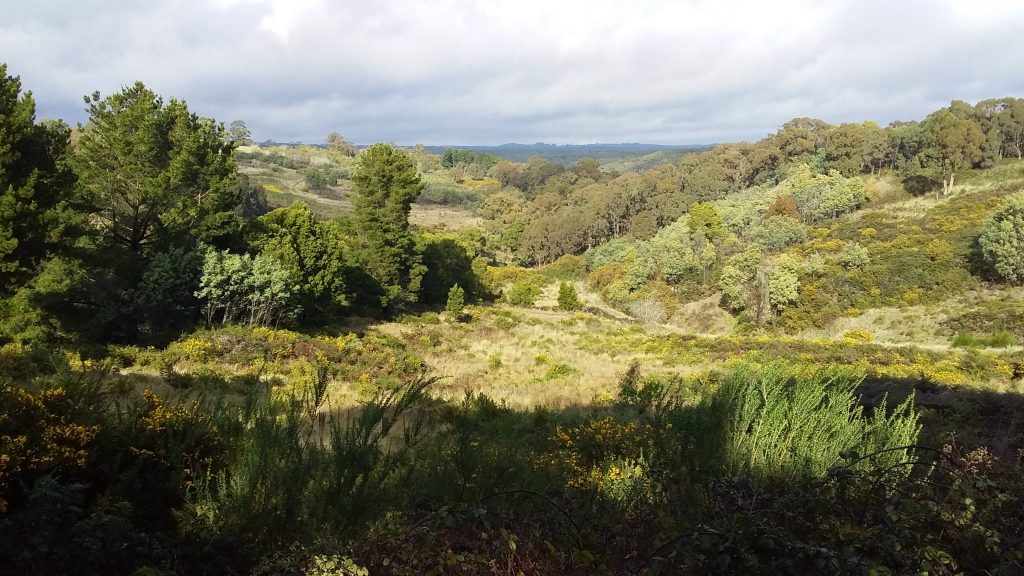
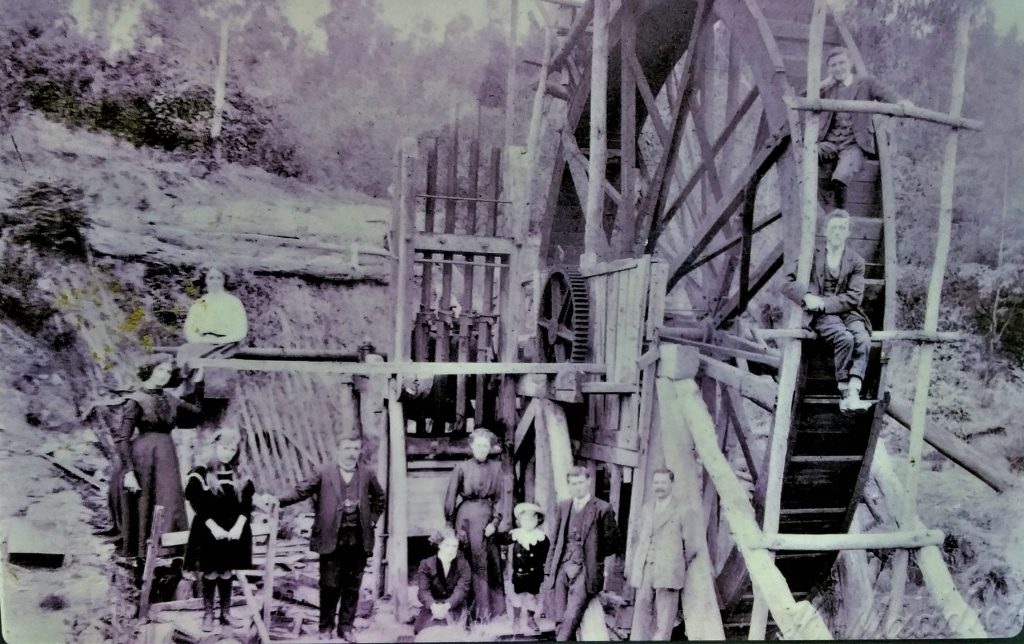
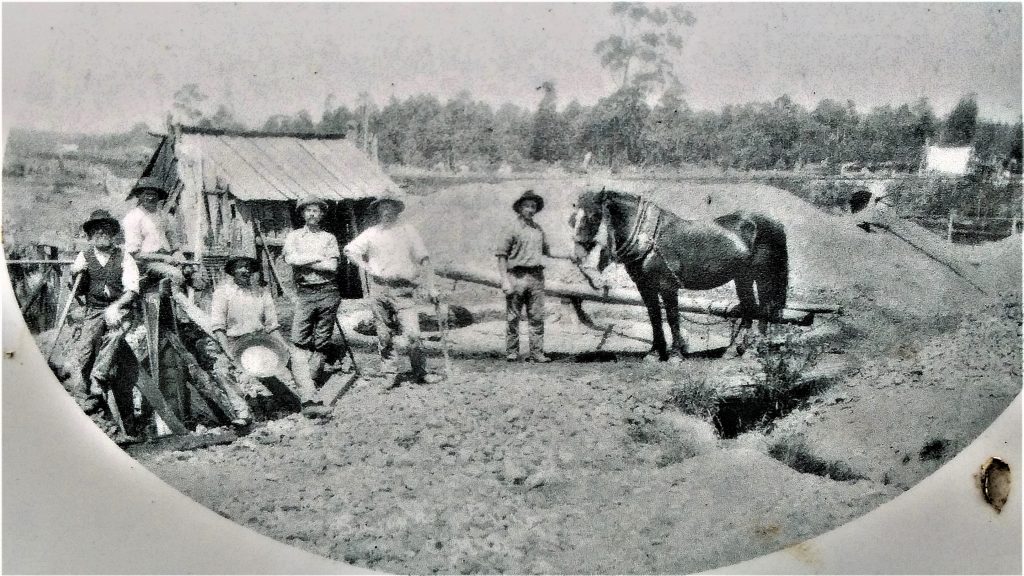
THIS TWO-HOUR WALK explores the stunning Cornish Hill Reserve located in the town of Daylesford. The Cornish Hill river valley, traversed by Smiths Creek, is rich in mining sites including tunnels, mullock heaps, puddling circle, sluices, water races and mine workings. Explore the gold rush history of this spectacularly successful goldfield from the 1850s onwards that yielded over 8 tons of gold.
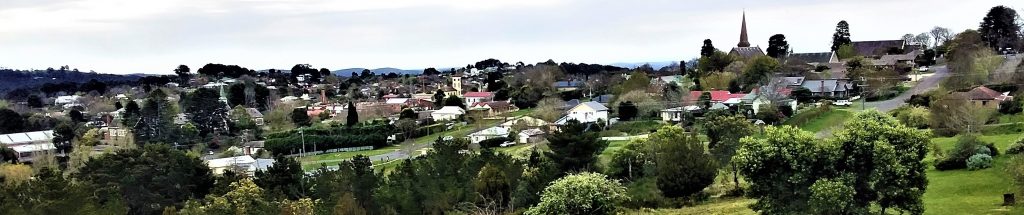
Daylesford, ninety minutes north-west of Melbourne, has been a popular mountain retreat since the 1880s, famous for its Victorian architecture, lakes, forests, heritage guesthouses, mineral springs, fine rural cuisine and Swiss Italian heritage.
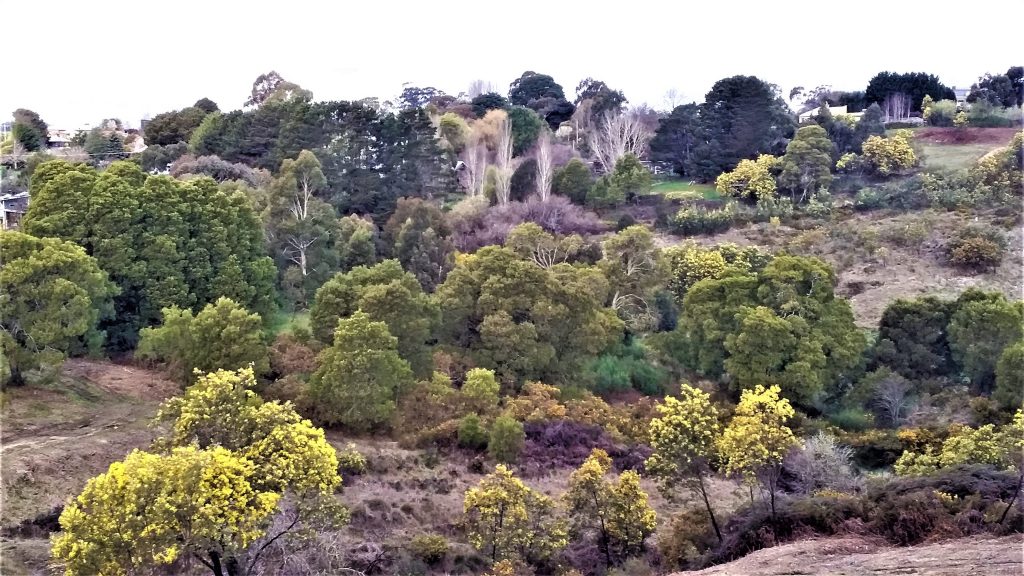
CORNISH HILL RESERVE is rich in fauna and flora. Our tour includes the extraordinary restoration of the Indigenous lands of the Dja Dja Wurrung traditional owners from the landscape once ravaged by mining.
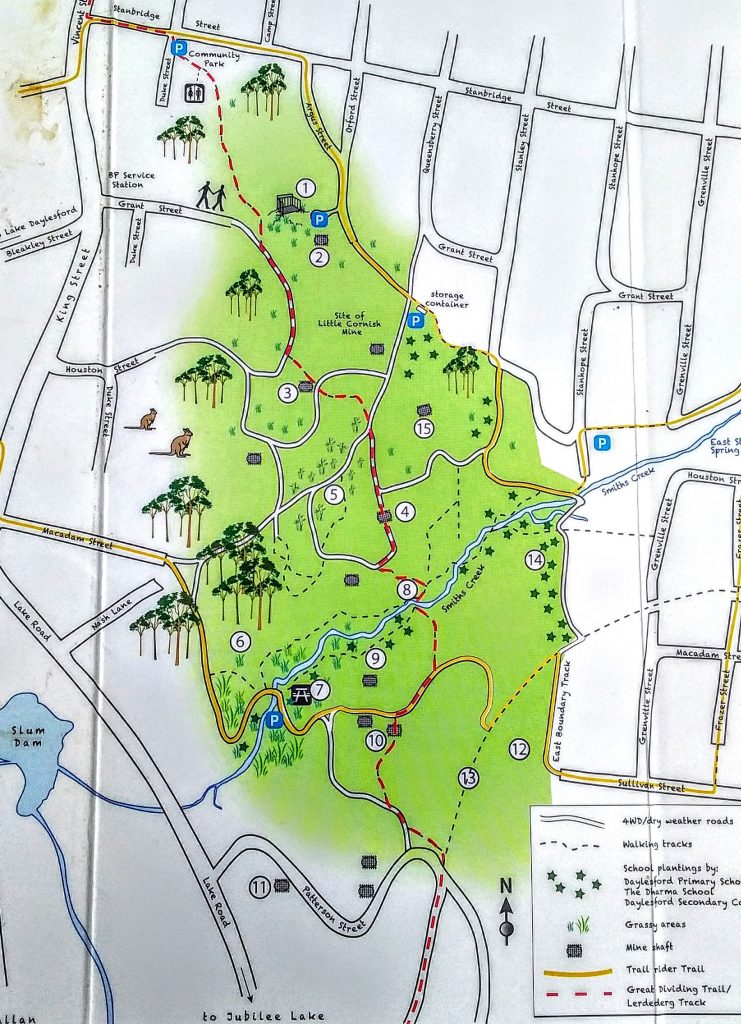
WE START from Thomas Lookout with spectacular views over the town, lake, forest and mountains. We pass mine sites such as Bonnard’s, Old Cornish, Argus and Mitchell before descending to the delightful Smiths Creek. Walking along the old water race, we come to the former water wheel site, then ascend to the South Cornish Mine site. On route, we pass bushland restoration sites and learn about the rich bird and animal life and traditional Indigenous foods and tools. Travelling west, we visit the puddling circle of Swiss-Italian pioneer Giuseppe Scascighini before following a scenic ridge back to our starting point.

Contact: melbwalks@gmail.com I

THE CORNISH HILL TRAIL

The 38-hectare Cornish Hill Reserve is on the traditional lands or Djandak of the Dja Dja Wurrung traditional owners. Cornish Hill was once a forested landscape rich in birds, insects, and other wildlife. The discovery of gold in 1851 transformed the landscape, with dozens of mines covering the area. The reserve was named for the Cornish miners whose deep mining skills were incredibly effective in extracting gold from quartz reefs running beneath the hill. The earliest miners sought alluvial gold near Wombat Flat (now Daylesford Lake), then turned to buried stream beds and eventually the deep reefs beneath the basalt running south from from the former Wombat Hill volcano. Water from spring-fed Smith’s Creek, which flows through the reserve into Wombat Creek and Daylesford Lake, supported these operations. The mining left the hill stripped of vegetation, later overrun by goats and invasive weeds such as gorse, blackberry, and broom.

FRIENDS OF CORNISH HILL
In 1994, a government plan to sell the 118-acre Crown Land reserve for housing prompted 360 residents to sign a petition. The community successfully campaigned to preserve it as a historic and natural reserve. Today, Cornish Hill is undergoing bushland restoration by the‘Friends of Cornish Hill’ in collaboration with groups like DEECA, Hepburn Shire, Djaara, CFA, Dharma School and others. Supported by grants and volunteers, the group has made great strides in weed control, habitat restoration, and replanting native species that once thrived before mining.

THOMAS LOOKOUT
The 1945 Thomas Lookout, atop a vast mullock heap of mined stone, provides a panoramic view of Dayleford and surrounds. From here you can view Daylesford Lake, where gold was first mined on Wombat Flat in 1851. The nearby post office (1858) marks Daylesford’s growth into a municipality in 1859. The Methodist Church to the north once served the Cornish community, and the modern skate park occupies the site of Freemans Battery where tramways once carried ore for crushing. The landscape, shaped by volcanic activity from Wombat Hill and beyond, is part of a vast volcanic plain of over 400 former volcanoes extending to South Australia.

BONNARD’S MINE
Bonnard’s Mine is one of many former deep quartz mines on Cornish Hill running through the landscape of folded Ordovician (460m) marine sandstones and slates. Hundreds of tons of gravel removed during excavation now support the lookout. The remains of the brick engine bed and shaft indicate where the timber frame or ‘poppet head’ supportrd the winder mechanism that lifted miners and ore from a thousand feet underground. An estimated billion dollars’ worth of gold in today’s value was mined at Cornish Hill between 1850 and 1925.

CORNISH CAIRN
The cairn honours Cornish miners and their families who helped establish deep quartz mining in Daylesford. Hardship in Cornwall causes many to migrate to Victoria after 1851. Wombat Flat (Daylesford Lake) was among the earliest goldfields. Within an hour’s travel from Daylesford, Cornish miners discovered two of the world’s largest nuggets — the 69kg Welcome Nugget (1858) and 109kg Welcome Stranger (1869).

MITCHELL’S AND ARGUS MINES
The shafts of Mitchell’s and Argus mines reached depths of 1000 feet. The two operations were later joined underground. Large mullock heaps mark their sites, and the shafts are capped with steel grids. The ore was transported to Freemans Battery (today’s Skate Park) for crushing. The physical remains of these mines date from the peak of mining in the late 19th and early 20th centuries.

WOODLANDS HILL
From Argus Mine or ‘the Argie’, the trail descends through box–ironbark forest to Smith’s Creek. Box Iron-bark forest is unique to central Victoria and hosts diverse wildlife, including wallabies, kangaroos, wombats, and over 180 bird species such as honeyeaters, rosellas, robins, and kookaburras. Wattles bloom in winter, followed by orchids, grevilleas, and heaths.

ADIT OR HORIZONTAL TUNNEL
The path ends leads to an ‘Adit’ or horizontal tunnel at Smith’s Creek. Adits were driven into hillsides to access gold, drain away water, or provide ventilation. This tunnel was likely connected to the Argus Mine. Many similar tunnels lie hidden beneath the Daylesford and Hepburn hills.

SMITH’S CREEK BATTERY AND WATERWHEEL SITE
Spring-fed Smith’s Creek rises near East Street and flows through the reserve into Lake Daylesford. Along its course, a historic water race once carried water to wash away clay and soil, exposing gold-bearing reefs. A trench nearby marks where a large waterwheel powered a stamp battery that crushed quartz until the 1890s. By the late 1860s, hundreds of miles of water races crisscrossed the diggings.

SOUTH CORNISH MINE SITE
Up the rise to the south of the Adit lies the South Cornish Mine, marked by a large mullock heap, a metal cap grid, and remnants of old fence lines. This site represents the southernmost extent of major mining activity on Cornish Hiill.

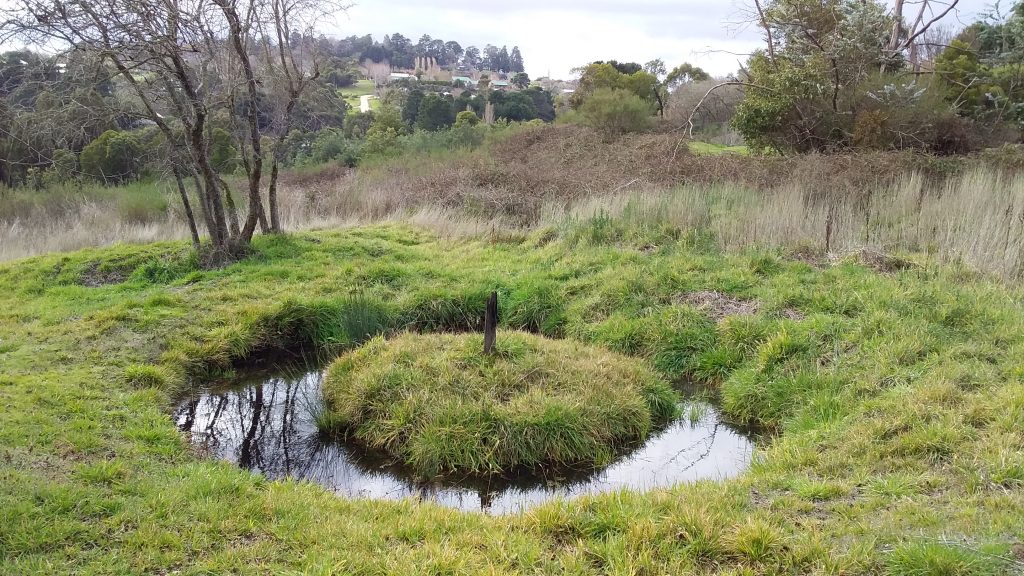
SCASCIGHINI’S PUDDLER
Near Sullivan Street, Swiss-Italian miner Guiseppe Scascighini worked a ‘puddling circle’, still visible today, using water from a nearby spring. A horse dragged a harrow around a shallow circular pit to separate gold from clay. His cottage site and mine drive were very close by.

LERDERDERG TRACK I
From 1880 to 1978, a steam train ran from Daylesford to Carlsruhe. The old line now forms part of the 89km Lerderderg Track — the south-eastern leg of the Great Dividing Trail — which passes through Cornish Hill to Jubilee Lake and beyond.

See Prices & Bookings

HISTORIC PUBS & PLACES TOUR ST KILDA

VISIT over a dozen past and present drinking holes in seaside St Esplanade-72-81Kilda dating from the Gold Rush. Travel from the Elephant and Wheelbarrow in Fitzroy Street to the Village Belle Hotel in Acland Street.
EXPLORE the secret sly grog and two-up lanes of the Prohibition gangsters.
HEAR the fascinating storIes of pub connections to
 ghosts, wowsers, sport, bushrangers, drag queens, Yanks, cops and crims, Squizzy, musicians, films, gamblers and more.
THIS TOUR  also provides an overview of  170 years  of iconic St Kilda places – mansions, railways, baths, architecture and more.

Tours are usually 2.5 hours by arrangement on a date and time of your choosing. They commence from Elephant and Wheelbarrow  Hotel 169 Fitzroy St cnr Princes St. They finish Village Belle Hotel, cnr Acland and Barkly Streets.

SEE  –  BOOKINGS AND PRICES  –   FOR INDIVIDUALS, GROUPS AND SCHOOL

Past and present hotels near Fitzroy and Acland Streets:

  • Elephant & Wheelbarrow, corner Princes and Fitzroy Streets, formerly European Hotel, British Family Hotel, British Hotel, Victoria Hotel, Cricket Club Hotel and The Ritz 1854.
  • Junction Hotel (former), later Grand Junction Hotel 1853 – 1973.Corner Hotel (former), formerly Sparrow’s Hotel, and Rolland’s Hotel 1864 – 1967.
  • George Hotel, once the The Terminus and Seaview 1857.
  • Prince of Wales Hotel 1862 –29 Fitzroy Street,
  • Club Hotel (former), (1 Fitzroy St, corner The Esplanade, St Kilda, adjacent south of Summerlands.
  • Beaconsfield Hotel (former),  1881 – 2004, 341 Beaconsfield Parade, corner Cowderoy Street, St Kilda
  • Esplanade Hotel, once New Bath, Carlyons and Criterion 1856.Royal Hotel (former), once the  Family Hotel 1847 – 1930s
  • 22 The Esplanade, corner Robe Street, St Kilda (former). Now belvedere flats. 
  • Pembroke 1857, now the Dog’s Bar,  Acland Street.
  • Star and Garter Hotel, Robe Street,  (now residences), once Pitt’s Hotel, Oakley’s Family Hotel, International, Mager’s Family Hotel, and Morgan’s Family Hotel 1854 – 1920s.
  • Carlton Family Hotel
  • Carlton House and Hotel 1858 – 1862 (now residences).
  • St Kilda Hotel , once St Kilda Family Hotel and Tradesmen’s Hotel 1851 – 1919
  • The Jacka Bar, The Memorial, 1926 –
  • Village Belle Hotel 1855 –     ,
  • St Kilda Inn, once the Hare and Hounds, The Court House,and Prince Charles Hotel 1853 (now residences). 

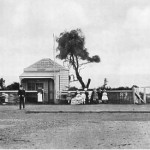
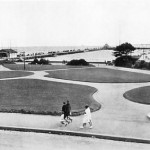
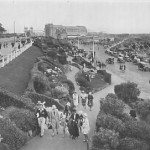
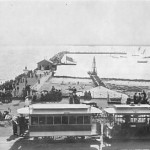
Images of St Kilda below from Cooper’s History of St Kilda, Vols 1 and 2


See Prices & Bookings

QUEEN VICTORIA MARKET TOUR

EXPLORE the vibrant and historic Queen Victoria (QV) market, a colorful and popular destination for visitors and a food heaven.
FIND OUT about current proposals for extensive redevelopment of the site proposed by the Melbourne City Council.
LEARN  the  history of Melbourne’s many markets since settlement eg Western, Eastern, Paddy’s, Fish, Hantons, Kirks horse market, Hay and Corn and others.

DISCOVER the Old Melbourne Cemetery 1837-1922, today largely under the Market’s car park. We visit the former sites and read gravestone epitaphs which honour our pioneer women, men and children.
VISIT nearby beautiful and historic Flagstaff Gardens, the site of Melbourne’s first cemetery, park, signal station and observatory.
LEARN about the significant Aboriginal heritage of the market.

SEE  –  BOOKINGS AND PRICES  –   FOR INDIVIDUALS, GROUPS AND SCHOOLS

HISTORY OF THE MARKET
Melbourne remains a Market town with many large municipal markets including South Melbourne, Prahran and Dandenong Markets. However, Queen Victoria Market is the largest and most intact of all Melbourne’s great 19th century markets.

1857 Market allotment allocated. Used as livestock and hay market.
1867. Permanent market reserved.
1868 Wholesale Meat Market on Elizabeth Street but relocated to Metropolitan Meat Market, North Melbourne
1868 Retail Meat and Fish Market and slaughterhouse.
1878 Wholesale and Retail Fruit and Vegetable Market. Upper Market (G, H, I , J) built on northern edge of cemetery A-F constructed
1880, Elizabeth Street shops were constructed
1884 Elizabeth Street facade
1929 Dairy Produce Hall ( Deli Hall)
1877 Upper Market (stalls G,H,I,J)
1969 Wholesale Market Footscray (relocated from Queen Victoria) following Royal Commission).
1929-30 Wholesale agents and merchants brick stores (60) on car park.

The Lower Market (bounded by Elizabeth, Victoria, Queen and Therry Streets) is the oldest part of the Market. It was originally set aside in 1857 for a fruit and vegetable market due to over-crowding and congestion at the Eastern Market but the location was unpopular and the market gardeners wouldn’t use it. Instead, it was used as a livestock and hay market until it was permanently reserved as a Market in 1867. The following year, a substantial brick building was erected on Elizabeth Street and this became a Wholesale Meat Market. However, the wholesale meat trade soon became dissatisfied with the site and relocated to the Metropolitan Meat Market building in Courtney Street, North Melbourne.
The building was then turned over to a Retail Meat and Fish Market and slaughterhouse. In 1878, the Market sheds G, H, I & J were built on the site and wholesaling and retailing of fruit and vegetables occurred for the first time. While H & I Sheds still stand, G Shed was removed to construct the current Meat Hall loading bay and a block of public toilets. The original J Shed burnt down and is now a public plaza. In 1880, the Elizabeth Street shops were constructed following the realignment of Elizabeth Street. This also allowed the Meat Hall to be extended, and the present facade to be constructed in 1884.
The Dairy Produce Hall (also known as the Deli Hall) was the last of the buildings to be built on this part of the Market, and was constructed in 1929. 

The Upper Market

The Upper Market (bounded by Queen, Victoria, Peel and Franklin Streets) was not originally reserved as a market but had a number of other uses including a school and drill hall. Its predominant use, however, was as Melbourne’s first cemetery. Construction of A-F sheds began in 1877 at the northern-most edge of the Market. This site was chosen because it contained the school, drill hall and the least-used section of the cemetery.

By 1930, the remainder of the site had been built upon. Between 1903 and 1905 A-C Sheds were extended to Peel Street, while D-F Sheds were not extended until 1922. That same year, the Queen Street and Peel Street verandahs were also constructed. The roofing of the centreway occurred in 1927. In 1929-1930 the large K and L Sheds were constructed for growers.

In 1929-30, the City of Melbourne constructed 60 brick stores on the current car park to house the wholesale agents and merchants. However, allegations of corruption and racketeering and a Royal Commission in 1960 led to the decision to relocate the Wholesale Market to Footscray in 1969. A single row of the Agents stores along Franklin Street is all that remains of the Merchants section of the Market.

Protecting the Market

The separation of the Wholesale Market from the Retail Market lead to a plan to redevelop the Queen Victoria Market site into a trade centre, office and hotel complex in the 1970s. However, public outcry prevented this and resulted in the Market being classified by the National Trust. Later, the Market site and its buildings were listed on the Historic Buildings Register.Queen Victoria Market survives today as one of the largest and most intact examples of Melbourne’s great nineteenth century markets.

Market Conservation

The Queen Victoria Market site is listed as a historic place by Heritage Victoria. Many of the buildings are listed as notable buildings on the Historic Building Register of Victoria.

The Raids

One of the most intriguing stages in Queen Victoria Market’s history was during the 1960s, when the Market was associated with the infamous “Honoured Society”. Indeed, much of the innuendo and rumour surrounding the Market today can be attributed to this period.
It all began in 1960, when the complaining of suspicious growers unhappy with the handling of their consignments resulted in a Royal Commission being established to investigate price fixing at the Wholesale section of the Market.

Then, in 1963, a stallholder was shot. This was the first of 5 shootings associated with the Market. These shootings, it is claimed, were carried out by the “Honoured Society”, some of whose members had entered Australia through an illegal immigration racket and were using extortion to cheat immigrant Italian growers out of thousands of dollars.

This led on to the registration of merchants, saw limits placed on the commissions they could charge, and eventually resulted in the relocation of the Wholesale section of the Market to Footscray Road, where it remains today

The Cemetery

Between the years of 1837 and 1854, much of the land on which the Queen Victoria Market now stands was the site of Melbourne’s first official cemetery, which housed the remains of an estimated 10,000 early settlers, including those of John Batman.

In 1917, when that Market was extended upon much of the cemetery site, 914 bodies were exhumed and re-interred at other cemeteries around Melbourne, including Melbourne General Cemetery in Carlton, and Fawkner Cemetery, which is now the resting place of the “Old Pioneers”.
Numerous bodies remain buried beneath the existing car park. Unfortunately, there are limited records of those buried there. Following its closure, the Cemetery fell into disuse and many of the red gum head stones were stolen for firewood. Official records for the cemetery were destroyed during a fire in one of the wings of the Melbourne Town Hall.

Today, the John Batman memorial is housed on the north east corner of the car park site, and a further memorial “Passage” to the numerous persons still buried on the site is situated on the corner of Queen and Therry Street.

Old Melbourne Cemetery 

Queen Victoria Market holds many remains of  European founders of Melbourne as well as Aboriginal graves. The human remains of  an estimated 9000 people are on the sites.  Bizarrely most of them lie as little as 1.5 metres below the QV Market car park and adjacent market stalls. Thousands of vehicles regularly park above human bodies. How this happened is an extraordinary tale. Fortunately we have all the maps, images, stories, records and grave inscriptions to bring this story and the memories of our founding fathers and mothers to life.  This is a significant story that needs revealing not just to show respect, not just to learn how greed triumphed over decency but importantly because the QV Market and Melbourne City Council are planning to use cemetery land for development. 

Melbourne’s first cemetery:  Flagstaff Gardens  1836-7

Willie, the child of James Goodman was the first person to buried in Melbourne, Port Phillip District. He was buried on 13th May 1836 at the very first cemetery at Burial Hill which is today’s Flagstaff Gardens west of the market. Flagstaff was only used for about 8 burials. There is a memorial on the hill.

Melbourne’s second cemetery: ‘Old Melbourne Cemetery’ (today located on QV market) 1836-1922

A second cemetery  ‘Old Melbourne Cemetery’  was established in 1837 in West Melbourne bounded by Queen Street to the east, Peel Street to the west, Franklin Street to the south, and Fulton Street(which no longer exists) to the north. The first person to be buried on this site was also a child. He was Frederick William Craig, the infant son of Skene Craig. The Old Melbourne Cemetery (QV Market) was divided into areas according to religious denominations. It was the first of this kind in Australia. Two acres each were given to the Church of England, Presbyterians, Roman Catholics and one acre each was given to the Jews, Quakers, Methodists and Independents. Later half the Quaker section was allocated to the Aborigines. We visit each section and read the inscriptions for former headstones and discuss key personalities and events.

Key Dates below of the Old Melbourne Cemetery (QV Market) 

1854
The  Old Melbourne Cemetery (QV Market) was closed in 1854 as it was full, then re-opened in 1864 for the sale of new plots, re-closed in 1867, with the final burial taking place in 1917.  A third cemetery – Melbourne General Cemetery in Carlton was opened on 1st June 1853 to meet demand.

1864-1867
A Crown grant had been passed providing land for a nearby general market on 4th March 1867. Today’s meat hall dates back to 1869.

1878
When the QV Market first expanded into the cemetery in 1878, it was the northern part, the Quaker/Aborigine area near Fulton Street which it acquired first.Two grants that provided more land for the market, were dated 1878 and 1880 (see Queen Victoria Market Lands Act 1996 – Act No. 78/1996 at www.dms.dpc.vic.gov.au).

1880’s
Legislation was passed requiring all bodies in the Old Cemetery to be exhumed.

1913-14.
Transcriptions of legible headstones made by G. P. Townend. A gentleman in his late 60’s he saw the urgency of making a record of these markers.

1920-22
From 1920-22, 914 graves with identifying monuments were re-interred at Fawkner, Kew, St. Kilda, Cheltenham and the Melbourne General Cemetery. Many of the headstones crumbled when shifted. At this stage, the cemetery was in a terrible state of neglect, with very long grass.  Identification of the burial plots was made difficult because the register of burials prior to 1866 was lost or destroyed. Many graves were unmarked. Others had ‘headstones’ of red gum, which had weathered away.
As there were about 10,000 burials on the site, there still remain approximately 9,000 people buried under the sheds and car park of the Queen Victoria Market. When any work is carried out at the market, bones are often disturbed. It was closed permanently in 1922. A Market Bill was rushed though parliament to overcome protests by groups formed to protect the heritage of the site.

1924
Isaac Selby wrote an extensive book called “Old Pioneers Memorial History of Melbourne” about the market site. This was part of an extensive campaign to alert the people ofMelbourneto the site’s significance.

1996
In 1996, the previous Crown grants were revoked and the Queen Victoria Market Lands Act 1996 came into being. A sculpture memorial to the deceased called ‘Passages’ stands on the corner o fQueen Street and Therry Street.

2011
Melbourne City Council announces it is considering a proposal to convert the site into a supermarket with a huge underground car park. This would effectively destroy or remove any remains of the 9000 early settlers. They are still working on development proposals (2012).

SOURCES

  • Proposals by Melb City Council 2017
  • Marjorie Morgan’s book, “The Old Melbourne Cemetery 1837 – 1922” published by the Australian Institute of Genealogical Studies in 1982, has names of people buried there from transcriptions of legible headstones made by G. P. Townend in 1913-14.
  • Isaac Selby wrote a book called “Old Pioneers Memorial History of Melbourne” in 1924 which extensively outines the history of persons connected to the cemetery.
  • Royal Historical Society of Victoria’s Historical Magazine, Volume 9, No. 1, pages 40-47 has an article on the cemetery.
  • Another book, “Melbourne Markets 1841-1979, the story of the fruit and vegetable markets in the City of Melbourne” (Footscray, 1980), edited by Colin E. Cole has material on Melbourne markets

See Prices & Bookings

PORT MELBOURNE REBORN

WWW.MELBOURNEWALKS.COMEXPLORE the historic suburb of Port Melbourne, transformed in recent years from working-class docks and suburb to one of Victoria’s most desirable locations. As a result, Port Melbourne is a diverse and historic area, featuring industrial and port areas along the Yarra, to open parklands, bayside beaches, amazing views, heritage buildings, apartments, Bay Street’s restaurants and cafes and striking modern architecture.

We also investigate the important Indigenous Boon Wurrung history of the area.

This walk also celebrates the contribution to the City of Port Phillip by immigrants and settlers. For many of these new arrivals, Station Pier was their first landfall in Australia after a long and hazardous journey by sea. This shipping trade has left its historic imprint on Port Melbourne, which retains many public buildings from settler days. Tasmanians were the first to arrive in 1835, keen to open up the country to expand the wool trade. Other pioneering settlers followed, particularly English, Scottish and Irish, travelling in wind- powered ships on extraordinary journeys round the Cape of Good Hope and through the Rip.

The Gold Rush in 1851 brought a huge influx of eager immigrants from all over the world. Post-war migration saw hundreds of thousands of immigrants, many from Southern and Eastern Europe, first setting foot on Australian shores at Station Pier, seeking refuge from persecution, war and economic hardship. Later arrivals from Asian, African and many other countries have added to a diverse multicultural community.

The suburb also has important  World War history and sites. A third of Australia’s solders departed from Princess and Station Pier. For many who did not return, this was their last glimpse of home.

SEE: BOOKINGS


See Prices & Bookings